

Humidity is an essential environmental parameter that influences comfort, health, industrial processes, product quality, and equipment performance. Whether in residential buildings, commercial facilities, manufacturing plants, data centers, pharmaceutical laboratories, agricultural operations, or HVAC systems, maintaining the proper humidity level is critical for achieving optimal conditions and operational efficiency.
As industries continue to adopt automation, smart building technologies, and advanced environmental monitoring systems, humidity sensors have become indispensable components for precise climate control. These devices provide real-time measurements of moisture levels in the air, enabling organizations to improve energy efficiency, protect sensitive equipment, preserve product quality, and enhance human comfort.
The global demand for humidity sensors continues to grow as regulations regarding indoor air quality, energy conservation, and environmental monitoring become increasingly stringent. Modern humidity sensors offer exceptional accuracy, long-term stability, compact designs, and seamless integration with IoT platforms and building management systems.
This article explores the fundamentals of humidity sensors, their operating principles, major sensor technologies, applications, benefits, challenges, and future developments shaping the industry.
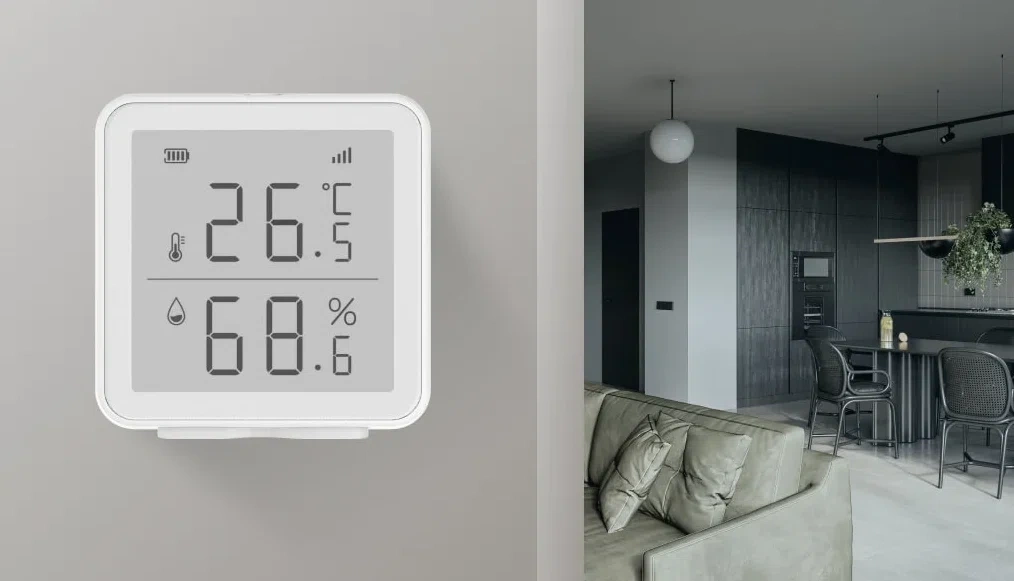
A humidity sensor is an electronic device designed to detect and measure the amount of moisture present in the air. It converts humidity levels into electrical signals that can be interpreted by monitoring systems, controllers, or data acquisition equipment.
Humidity sensors are available in various sizes and configurations, ranging from portable handheld instruments to miniature sensors embedded within smart devices, industrial equipment, and environmental monitoring systems.
The primary function of a humidity sensor is to monitor atmospheric moisture and provide accurate data that helps maintain desired environmental conditions. When humidity levels deviate from specified ranges, corrective actions such as ventilation, humidification, or dehumidification can be initiated automatically.
Modern humidity sensors are typically manufactured using advanced sensing materials, including:
- Ceramic materials
- Semiconductor materials
- Polymer-based materials
- Thin-film technologies
- Nanostructured sensing elements
These materials respond to water vapor absorption and release by changing their electrical characteristics, enabling accurate humidity measurement.
Before exploring sensor technologies, it is important to understand the different methods used to express humidity.
Absolute humidity represents the actual amount of water vapor contained within a specific volume of air.
It is typically expressed in grams of water vapor per cubic meter of air (g/m³).
Absolute humidity is calculated by determining the mass of water vapor present in a given volume of air, regardless of temperature.
Industries that require highly precise environmental monitoring, such as pharmaceutical manufacturing and scientific research, often rely on absolute humidity measurements.
Relative humidity is the most commonly measured humidity parameter.
It represents the percentage of water vapor present in the air compared to the maximum amount of water vapor the air can hold at the same temperature and pressure.
The formula is:
Relative Humidity (%) = (Actual Water Vapor / Saturation Water Vapor) × 100
For example, if the air contains half the moisture required for saturation, the relative humidity is 50%.
Most commercial humidity sensors are designed to measure relative humidity because it provides practical information for comfort control, HVAC systems, and industrial processes.
Dew point is the temperature at which air becomes fully saturated and water vapor begins to condense into liquid water.
The dew point is an important measurement in:
- Industrial drying processes
- Compressed air systems
- Meteorology
- Semiconductor manufacturing
- Food processing
- Cleanroom environments
A high dew point indicates significant moisture content in the air, while a low dew point indicates dry conditions.
Humidity affects numerous aspects of daily life and industrial operations. Poor humidity control can lead to discomfort, health issues, product degradation, equipment failure, and increased energy consumption.
Indoor humidity directly impacts occupant comfort and well-being.
Low humidity may cause:
- Dry skin
- Eye irritation
- Respiratory discomfort
- Increased susceptibility to infections
Excessive humidity may lead to:
- Mold growth
- Dust mite proliferation
- Allergic reactions
- Poor indoor air quality
Maintaining humidity levels between 40% and 60% RH is generally considered optimal for human comfort.
Excess moisture can damage building materials and infrastructure.
Potential problems include:
- Wood warping
- Paint deterioration
- Corrosion
- Mold contamination
- Structural degradation
Humidity sensors help building managers maintain proper environmental conditions and prevent costly repairs.
Many manufacturing processes require strict humidity control.
Examples include:
- Pharmaceutical production
- Electronics assembly
- Semiconductor fabrication
- Food processing
- Textile manufacturing
- Paper production
Accurate humidity monitoring ensures product consistency and process reliability.
Sensitive electronic devices can be affected by moisture-related problems such as:
- Condensation
- Corrosion
- Short circuits
- Electrostatic discharge
Humidity sensors help protect critical equipment in data centers, telecommunications facilities, and industrial control systems.
Humidity sensors can be classified into three major categories:
Capacitive humidity sensors are the most widely used humidity measurement devices today.
Operating Principle
These sensors contain a hygroscopic dielectric material positioned between two conductive electrodes.
As moisture in the air changes, the dielectric constant of the sensing material changes accordingly.
The sensor measures variations in capacitance and converts them into humidity readings.
Advantages
- High accuracy
- Wide humidity measurement range
- Excellent long-term stability
- Fast response time
- Low power consumption
- Compact size
Applications
- HVAC systems
- Weather stations
- Medical equipment
- Building automation
- Automotive climate control
- Consumer electronics
Capacitive sensors are preferred for applications requiring reliable and continuous humidity monitoring.
Resistive humidity sensors operate by measuring changes in electrical resistance caused by moisture absorption.
Operating Principle
The sensing element consists of a hygroscopic conductive material deposited between electrodes.
When humidity increases, the material absorbs water molecules, altering its conductivity and reducing electrical resistance.
The sensor circuitry interprets resistance changes as humidity values.
Advantages
- Cost-effective
- Simple construction
- Easy integration
- Good sensitivity
Applications
- Household appliances
- Industrial monitoring
- Agricultural systems
- Portable instruments
Although resistive sensors are generally less accurate than capacitive sensors, they remain popular in cost-sensitive applications.
Thermal conductivity sensors measure absolute humidity rather than relative humidity.
Operating Principle
These sensors typically utilize two thermistors arranged in a bridge circuit.
One thermistor is sealed within dry air, while the other is exposed to the surrounding atmosphere.
Differences in thermal conductivity between dry air and humid air influence heat dissipation, allowing the sensor to determine moisture content.
Advantages
- Direct absolute humidity measurement
- Suitable for high-temperature environments
- Good performance in industrial processes
Applications
- Industrial dryers
- Compressed air systems
- Environmental chambers
- Scientific research
Modern humidity sensors typically consist of several key elements:
The sensing material directly interacts with water vapor and generates measurable electrical changes.
This circuit amplifies and processes the raw sensor signal to improve accuracy and reliability.
Many modern sensors convert analog measurements into digital outputs for communication with control systems.
Because humidity measurements are temperature-dependent, integrated temperature sensors are often included for compensation.
Advanced sensors may support:
- I²C
- SPI
- RS485
- Modbus
- BACnet
- Wireless communication protocols
These interfaces facilitate integration with modern automation systems.
Heating, ventilation, and air conditioning systems rely heavily on humidity sensors.
They enable:
- Indoor climate control
- Energy optimization
- Condensation prevention
Improved occupant comfort
Smart HVAC systems continuously adjust humidity levels based on sensor feedback.
Modern commercial buildings use humidity sensors as part of integrated building management systems.
Benefits include:
- Reduced energy consumption
- Improved indoor air quality
- Automated environmental control
- Predictive maintenance
Data centers require precise humidity management to protect servers and networking equipment.
Humidity sensors help prevent:
- Static electricity buildup
- Condensation
- Corrosion
Reliable environmental monitoring improves uptime and equipment lifespan.
Many pharmaceutical products are highly sensitive to moisture.
Humidity sensors are used in:
- Production facilities
- Storage warehouses
- Cleanrooms
- Packaging operations
Compliance with regulatory requirements often depends on accurate environmental monitoring.
Moisture control is essential for maintaining product quality and shelf life.
Applications include:
- Food processing
- Cold storage
- Packaging facilities
- Dry ingredient handling
Humidity sensors help prevent spoilage and contamination.
Agricultural operations increasingly rely on humidity monitoring.
Applications include:
- Greenhouses
- Livestock facilities
- Grain storage
- Vertical farming
Optimized humidity levels support crop growth and improve productivity.
Electronic components can be highly sensitive to moisture.
Humidity sensors help maintain controlled environments during:
- PCB assembly
- Semiconductor production
- Component storage
- Testing operations
Modern vehicles incorporate humidity sensors for:
- Automatic climate control
- Windshield defogging
- Cabin comfort systems
As vehicle technology advances, humidity monitoring continues to play a larger role.
Improved Accuracy
Advanced sensing materials and calibration techniques provide highly accurate measurements across wide humidity ranges.
Enhanced Reliability
Modern sensors deliver stable long-term performance with minimal drift.
Energy Efficiency
Accurate humidity monitoring enables intelligent climate control and reduces energy waste.
Compact Design
Miniaturization allows sensors to be integrated into increasingly smaller devices and systems.
Digital Connectivity
Many humidity sensors now support direct integration with IoT platforms and cloud-based monitoring solutions.
Reduced Maintenance
Improved durability and self-calibration capabilities lower maintenance requirements and operating costs.
Despite technological advances, humidity measurement presents several challenges.
Contamination
Dust, chemicals, oils, and airborne particles can affect sensor performance.
Condensation
Exposure to water droplets may temporarily impair sensor accuracy.
Temperature Effects
Humidity measurements are strongly influenced by temperature variations.
Sensor Aging
Over time, sensing materials may experience drift that affects accuracy.
Harsh Environments
Industrial facilities often expose sensors to extreme conditions, including:
- High temperatures
- Corrosive gases
- Vibration
- Mechanical shock
Manufacturers continuously develop more robust sensor technologies to address these challenges.
Internet of Things (IoT)
IoT-enabled humidity sensors provide real-time monitoring and remote access to environmental data.
Organizations can analyze trends, optimize performance, and receive alerts when conditions exceed acceptable limits.
Smart Buildings
The adoption of smart buildings is driving demand for intelligent humidity monitoring systems integrated with HVAC and energy management platforms.
Wireless Sensors
Wireless humidity sensors reduce installation costs and simplify deployment in large facilities.
Artificial Intelligence
AI-powered environmental monitoring systems use humidity data to predict maintenance requirements and optimize building performance.
Miniaturization
Advances in microelectromechanical systems (MEMS) technology continue to reduce sensor size while improving performance.
Energy Harvesting
Future humidity sensors may operate using harvested ambient energy, reducing dependence on batteries and external power sources.
The global humidity sensor market is expected to experience significant growth over the coming years. Rising awareness of indoor air quality, stricter environmental regulations, increasing industrial automation, and the rapid expansion of smart infrastructure are driving market demand.
Industries are increasingly recognizing the value of precise humidity control for improving efficiency, reducing operational costs, protecting assets, and enhancing sustainability.
Technological innovations in sensing materials, wireless communication, cloud connectivity, and artificial intelligence will continue to improve sensor performance and expand application possibilities. As environmental monitoring becomes more important across virtually every sector, humidity sensors will remain a critical component of modern control and automation systems.
Humidity sensors play a vital role in maintaining safe, comfortable, and efficient environments across residential, commercial, and industrial applications. By accurately measuring moisture levels in the air, these devices help optimize HVAC performance, protect sensitive equipment, preserve product quality, and improve human comfort.
With various technologies available—including capacitive, resistive, and thermal conductivity sensors—users can select solutions tailored to their specific requirements. As smart buildings, IoT networks, and industrial automation continue to expand, humidity sensors will become even more essential for real-time environmental monitoring and intelligent climate management.
The future of humidity sensing is characterized by greater accuracy, connectivity, miniaturization, and intelligence, ensuring that these devices remain indispensable tools in the pursuit of efficient and sustainable operations.
Previous: How Optical Dust Sensors Improve Environmental Monitoring and Public Health
Next: Understanding Smoke Sensor Technology and Its Role in Fire Prevention



