

As the world faces increasing urbanization, industrialization, and environmental challenges, air quality monitoring has become a critical priority. Among the various air pollutants, carbon dioxide (CO₂) plays a unique role. While CO₂ is naturally present in the atmosphere, elevated concentrations in indoor or enclosed environments can indicate inadequate ventilation, potentially affecting health, productivity, and overall comfort.
CO₂ sensors, also referred to as carbon dioxide sensors, are specialized devices designed to detect, measure, and monitor the concentration of carbon dioxide in real time. These devices are widely deployed in homes, offices, schools, industrial facilities, vehicles, greenhouses, and laboratories to ensure healthy environments. By providing actionable data, CO₂ sensors help optimize ventilation, improve air quality, and support energy-efficient building management.
As technology evolves, CO₂ sensors are no longer simple detection devices—they now integrate with smart building systems, IoT networks, and industrial control platforms, offering predictive analytics, remote monitoring, and automated air quality management. This news article provides a comprehensive look at CO₂ sensor technology, applications, safety standards, market trends, and future developments.
Carbon dioxide is a naturally occurring gas, but elevated indoor levels can indicate poor air circulation. High CO₂ concentrations are associated with:
- Reduced cognitive performance
- Fatigue and drowsiness
- Discomfort and headaches
- Potential health risks in extreme cases
Indoor air typically contains higher CO₂ concentrations than outdoor air, which averages 300–500 ppm. Enclosed spaces with multiple occupants or limited ventilation can experience CO₂ levels exceeding 1,500 ppm, which may lead to noticeable effects on concentration and comfort.
Monitoring CO₂ levels is therefore crucial for:
- Ensuring occupant health and safety
- Optimizing HVAC performance
- Complying with indoor air quality regulations
- Improving energy efficiency by managing ventilation systems intelligently
The combination of safety, comfort, and efficiency has driven widespread adoption of CO₂ sensors across multiple industries.
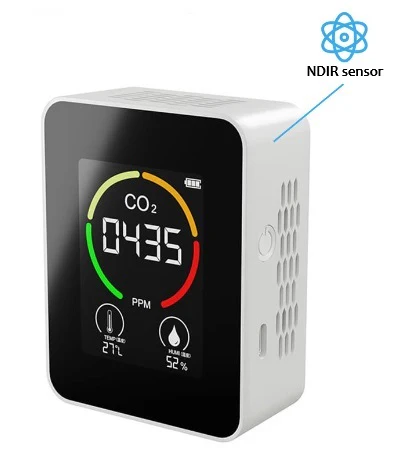
CO₂ sensors have a wide range of applications across residential, commercial, industrial, and agricultural settings. Their specific features and configurations are chosen based on accuracy, environmental resilience, output interfaces, calibration requirements, and cost considerations.
CO₂ is essential for photosynthesis, the process by which plants convert light and carbon dioxide into energy for growth. In greenhouse environments, maintaining optimal CO₂ concentrations can significantly enhance plant growth, increase yields, and improve resource efficiency.
Key sensor requirements for agriculture:
- High sensitivity for detecting small CO₂ fluctuations
- Durability under humidity, heat, and dust exposure
- Long-term stability without frequent calibration
By integrating CO₂ sensors with automated greenhouse systems, growers can maintain precise control over air composition, optimize fertilizer and water use, and maximize crop quality.
Indoor air quality is a key determinant of occupant health, productivity, and comfort. CO₂ sensors in buildings monitor air quality and integrate with HVAC systems to manage ventilation. When CO₂ levels rise beyond safe thresholds, the system can increase airflow or introduce fresh air to maintain comfort.
Benefits include:
- Improved occupant concentration and comfort
- Reduced energy consumption through intelligent ventilation
- Prevention of stale air accumulation
- Real-time monitoring and reporting for building managers
Modern buildings increasingly adopt smart building solutions with CO₂ sensors to optimize energy efficiency while maintaining safe, healthy air quality.
CO₂ monitoring is becoming common in vehicles, particularly in cars, buses, and commercial fleets. Elevated CO₂ concentrations in cabins can cause drowsiness and reduced alertness, posing safety risks. CO₂ sensors in vehicles help:
- Automatically adjust air recirculation and ventilation
- Maintain passenger comfort during long trips
- Support energy-efficient cabin climate management
With the rise of electric vehicles and connected car technologies, CO₂ sensors are being integrated with onboard systems to enhance safety and passenger well-being.
In industrial settings, CO₂ sensors monitor air quality to prevent hazardous exposure and detect refrigerant leaks in refrigeration systems. Early detection of elevated CO₂ levels prevents equipment damage, reduces downtime, and safeguards worker health.
Key features for industrial applications:
- Resistance to chemical exposure and harsh environments
- Long-term reliability and calibration-free operation
- Fast response times for early warnings
These sensors are critical in chemical plants, cold storage facilities, laboratories, and manufacturing environments.
In schools, universities, and healthcare facilities, CO₂ monitoring is essential to maintain healthy indoor air quality. Elevated CO₂ levels can:
- Reduce student concentration and learning outcomes
- Cause fatigue among staff and healthcare workers
- Affect patient recovery in healthcare environments
CO₂ sensors ensure that ventilation systems respond automatically, maintaining safe and comfortable indoor air for students, staff, and patients.
Understanding safe CO₂ levels is essential for maintaining healthy indoor air quality and for selecting the right CO₂ monitoring systems. Carbon dioxide is naturally present in the atmosphere, with typical outdoor concentrations ranging from 300 to 500 ppm. Indoor spaces, however, often experience higher CO₂ levels due to human occupancy, insufficient ventilation, or enclosed environments.
For comfortable and safe indoor conditions, CO₂ concentrations are generally recommended to stay within the 700–1,200 ppm range. Maintaining levels within this range helps ensure proper air freshness, supports concentration and cognitive performance, and provides a comfortable environment for occupants.
CO₂ levels between 1,500 and 2,500 ppm can cause mild discomfort, including drowsiness, headaches, and reduced alertness. Prolonged exposure to higher levels may lead to impaired focus, fatigue, and decreased productivity. While most buildings are unlikely to reach dangerous CO₂ concentrations, it is important to monitor levels to prevent prolonged exposure above the safe range.
Extremely high concentrations, such as 5,000 ppm or more, represent a significant health risk if exposure is long-term. Symptoms may include oxygen deprivation, dizziness, and in severe cases, serious health hazards.
By understanding these thresholds, building managers, homeowners, and industrial operators can configure CO₂ sensors effectively, optimize ventilation, and ensure safe and healthy indoor environments for all occupants.
When choosing a CO₂ sensor, several features ensure reliability and usability across applications:
- High Accuracy: Precise readings are essential for sensitive applications like agriculture, laboratories, and healthcare.
- Durability: Sensors must resist temperature fluctuations, humidity, and chemical exposure.
- Calibration-Free Operation: Reduces maintenance costs and ensures consistent long-term performance.
- Compact Design: Ideal for portable applications or limited space environments.
- Connectivity: Wi-Fi, Bluetooth, or industrial protocols enable integration with smart systems and IoT platforms.
- Configurable Alarms: Threshold-based notifications alert users when CO₂ exceeds safe limits.
- Display Options: E-ink or digital screens improve visibility and reduce power consumption.
- Rechargeable or Long-Life Batteries: Ensures uninterrupted operation in portable or remote deployments.
- Firmware Updates: Allows system improvements without replacing hardware.
These features enhance sensor versatility, usability, and applicability across multiple environments.
CO₂ sensors continue to evolve with technological advancements, creating smarter, more efficient monitoring systems.
Sensors now integrate with building automation systems to optimize energy consumption. By monitoring CO₂ levels, HVAC systems can adjust airflow in real time, reducing energy costs while maintaining optimal air quality.
Connected sensors allow remote monitoring, real-time alerts, and data analytics. Building managers can track CO₂ trends, detect anomalies, and schedule preventive maintenance based on collected data.
Compact, battery-powered CO₂ monitors enable individuals to track air quality in classrooms, offices, and homes. These portable solutions are increasingly popular among health-conscious users.
Advanced sensors combine CO₂ measurement with VOCs, CO, particulate matter, and other gases for comprehensive air quality management. These multi-parameter sensors are particularly useful in industrial and laboratory settings.
New sensor materials and algorithms reduce signal drift, ensuring accuracy over years of operation without frequent recalibration.
The global CO₂ sensor market is experiencing rapid growth, driven by:
- Increased awareness of indoor air quality
- Smart building and IoT technology adoption
- Stricter environmental and health regulations
- Demand for energy-efficient ventilation solutions
Applications in commercial buildings, healthcare, agriculture, transportation, and industrial safety are expanding rapidly. CO₂ sensors are no longer optional—they are becoming a standard component in modern environmental management systems.
CO₂ sensors are essential tools for monitoring and maintaining safe, healthy, and energy-efficient environments. By providing real-time data, precise measurements, and actionable insights, these sensors protect human health, improve productivity, optimize energy consumption, and support sustainable practices.
Whether in greenhouses promoting photosynthesis, classrooms improving student concentration, vehicles enhancing passenger safety, or industrial facilities preventing hazardous exposure, CO₂ sensors play a pivotal role in modern life.
As technology advances, smart, connected, and durable CO₂ sensors will continue to be central to indoor air quality management, offering solutions that combine safety, efficiency, and convenience across residential, commercial, industrial, and agricultural applications worldwide.
Investing in high-quality CO₂ monitoring technology is not just about compliance—it's about creating healthier, safer, and smarter environments for everyone.
Previous: Smart Smoke Alarm Sensors for Residential, Commercial, and Industrial Fire Safety
Next: Infrared CO₂ Sensors for HVAC: Improve Energy Efficiency and Indoor Air Quality