

Sensors are essential components in modern electronic and industrial systems, enabling machines and devices to detect, monitor, and respond to changes in their environment. They convert physical parameters such as temperature, pressure, motion, light, or particle concentration into electrical signals that can be processed by controllers, computers, or monitoring systems. With the rapid advancement of industrial automation, smart manufacturing, Internet of Things (IoT), and artificial intelligence technologies, sensors have become more important than ever across various industries.
Today, sensors are widely used in automotive systems, aerospace engineering, industrial machinery, medical equipment, environmental monitoring, consumer electronics, robotics, and energy management systems. Their ability to provide real-time data improves efficiency, safety, precision, and operational reliability.
Different sensor technologies are designed for specific applications and operating conditions. This article explores several major types of sensors, including accelerometer sensors, temperature sensors, infrared sensors, pressure sensors, and particle sensors, along with their working principles, advantages, and industrial applications.
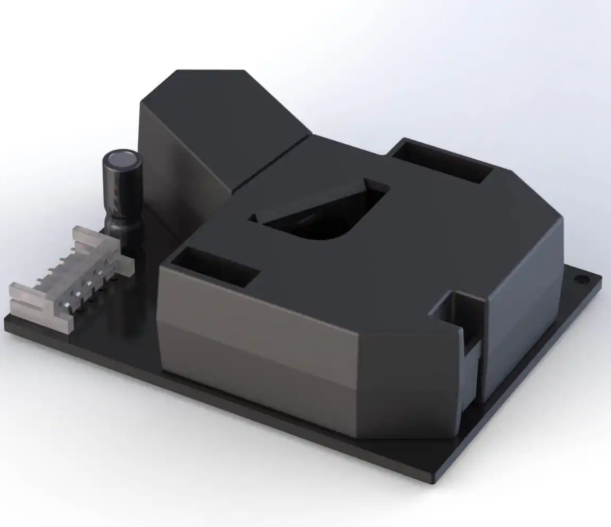
Accelerometer sensors are devices designed to measure acceleration forces acting on an object or system. These forces may be static, such as gravity, or dynamic, including vibration, movement, rotation, or shock. Accelerometers are widely used in motion detection, vibration monitoring, orientation sensing, and machine diagnostics.
Most accelerometers contain a small internal mass suspended within the sensor housing. When acceleration occurs, the mass moves slightly, and the displacement is converted into an electrical signal. Electronic circuits then process this signal to calculate acceleration magnitude and direction.
Several technologies are used in accelerometer design:
Capacitive accelerometers detect acceleration through changes in capacitance caused by movement of the internal mass. These sensors are compact, energy-efficient, and commonly used in smartphones, tablets, and wearable devices.
Piezoelectric accelerometers generate electrical charges when mechanical stress is applied to piezoelectric materials. These sensors are highly suitable for industrial vibration analysis and machinery monitoring.
These sensors measure acceleration through changes in electrical resistance caused by mechanical strain. They are often used in automotive crash testing and aerospace applications.
Micro-Electro-Mechanical Systems (MEMS) accelerometers are miniature sensors manufactured using semiconductor technologies. They are widely integrated into modern consumer electronics because of their compact size and low cost.
Accelerometers are used in a wide range of industries:
- Smartphones and gaming devices for motion sensing and screen rotation
- Automotive systems for airbag deployment and vehicle stability control
- Industrial equipment for predictive maintenance and vibration monitoring
- Aerospace navigation and flight control systems
- Medical devices for activity tracking and fall detection
- Robotics and drones for motion control and positioning
As automation technology continues to evolve, accelerometer sensors are becoming increasingly important in intelligent motion monitoring systems.
Temperature sensors are designed to measure thermal conditions and convert them into electrical signals for monitoring and control purposes. Accurate temperature measurement is essential in industrial processes, HVAC systems, transportation, healthcare, and energy applications.
Temperature sensors are available in multiple designs and technologies depending on the required temperature range, accuracy, response speed, and operating environment.
Thermocouples are among the most commonly used temperature sensors. They consist of two dissimilar metal wires joined together. When exposed to temperature differences, the junction generates a voltage proportional to temperature.
Advantages
Wide operating temperature range
- Fast response time
- Durable construction
- Cost-effective design
Applications
- Industrial furnaces
- Boilers
- Power plants
- Petrochemical systems
RTDs operate by measuring changes in electrical resistance of metallic materials, usually platinum, as temperature changes.
Advantages
- High measurement accuracy
- Excellent long-term stability
- Reliable repeatability
Applications
- Laboratory equipment
- Pharmaceutical production
- Food processing
- Industrial automation
Thermistors are semiconductor devices whose resistance changes significantly with temperature variations.
Advantages
- High sensitivity
- Compact size
- Quick response
Applications
- Medical thermometers
- Battery management systems
- Household appliances
- Automotive electronics
Semiconductor-based integrated circuit temperature sensors provide analog or digital outputs for modern electronic systems.
Advantages
- Small size
- Low power consumption
- Easy integration into digital systems
Applications
- Computers
- Smart home devices
- Consumer electronics
- IoT monitoring systems
Contact temperature sensors require direct physical contact with the measured object. They are commonly used for solids, liquids, and gases.
Non-contact sensors detect infrared radiation emitted by objects to determine temperature without physical contact. These sensors are ideal for moving equipment or extremely high-temperature environments.
Applications include:
- Thermal imaging systems
- Industrial inspections
- Medical screening
- Electrical maintenance
Infrared sensors detect infrared radiation emitted by objects with temperatures above absolute zero. These sensors are widely used for motion sensing, thermal measurement, proximity detection, and automation systems.
Most infrared sensors contain two main components:
- Infrared emitter (IR LED)
- Infrared receiver (photodiode or phototransistor)
The emitter generates infrared radiation while the receiver detects reflected or emitted infrared energy.
Active IR sensors emit infrared light and measure reflected signals from nearby objects.
Applications include:
- Obstacle detection
- Distance measurement
- Industrial automation
- Conveyor systems
Passive infrared sensors detect infrared radiation naturally emitted by humans or objects.
Applications include:
- Security alarms
- Motion detectors
- Automatic lighting systems
- Smart home technologies
Thermal Imaging
Infrared sensors are widely used in thermal cameras for:
- Industrial equipment inspection
- Fire detection
- Building maintenance
- Medical diagnostics
Consumer Electronics
IR sensors are commonly integrated into:
- Remote controls
- Smartphones
- Smart TVs
- Touchless interfaces
Automotive Industry
Modern vehicles use infrared sensors for:
- Night vision systems
- Driver monitoring
- Collision avoidance
- Occupancy detection
Gas Detection
Infrared absorption technologies are used to detect gases such as methane, carbon dioxide, and hydrocarbons.
Pressure sensors measure the force exerted by gases or liquids and convert it into electrical signals. These sensors are essential in industries where pressure monitoring is critical for safety and operational efficiency.
Pressure sensors typically include a flexible diaphragm and a transducer element. When pressure is applied, the diaphragm deforms, and the sensing element converts this mechanical movement into an electrical signal.
Piezoresistive Sensors
These sensors measure changes in electrical resistance caused by applied pressure.
Piezoelectric Sensors
Piezoelectric materials generate electrical charges when subjected to pressure or force.
Capacitive Pressure Sensors
Pressure changes alter capacitance between conductive plates.
Optical Pressure Sensors
These sensors use light-based measurement techniques for highly accurate pressure detection.
Absolute Pressure
Measured relative to a complete vacuum.
Gauge Pressure
Measured relative to atmospheric pressure.
Differential Pressure
Measures the pressure difference between two points.
Oil and Gas Industry
Pressure sensors monitor:
- Pipelines
- Drilling systems
- Compressors
- Refineries
Industrial Automation
Factories use pressure sensors in:
- Hydraulic systems
- Pneumatic equipment
- Process control systems
Medical Equipment
Pressure sensors are used in:
- Ventilators
- Blood pressure monitors
- Respiratory devices
Automotive Systems
Applications include:
- Tire pressure monitoring
- Fuel injection control
- Engine diagnostics
Aerospace Applications
Aircraft systems rely on pressure sensors for:
- Cabin pressure monitoring
- Altitude measurement
- Hydraulic control systems
Particle sensors are designed to detect and measure particles in air, liquids, or industrial materials. These sensors play an important role in environmental protection, industrial safety, healthcare, and clean manufacturing processes.
Increasing global concerns regarding pollution and air quality have significantly increased demand for advanced particle sensing technologies.
These sensors measure airborne particles such as dust, smoke, and pollutants.
Liquid particle sensors monitor contamination in water, oils, chemicals, and industrial fluids.
These sensors are used to monitor powders, granules, and material flow in industrial systems.
Optical Detection
Laser beams illuminate particles, and scattered light helps determine particle concentration and size.
Electrochemical Detection
Electrochemical sensors detect changes in electrical current or voltage caused by particle interactions.
Nanomaterial-Based Detection
Advanced nanomaterials improve sensor sensitivity and detection accuracy for microscopic particles.
Air Quality Monitoring
Particle sensors are widely used in:
- Environmental monitoring stations
- Smart city systems
- Indoor air quality management
- Industrial emission control
Healthcare and Pharmaceuticals
Applications include:
- Cleanroom monitoring
- Sterile manufacturing environments
- Respiratory equipment
Food Processing
Food manufacturers use particle sensors to identify contaminants and maintain product quality.
Industrial Automation
Factories rely on particle sensors for:
- Dust monitoring
- Combustion analysis
- Process optimization
Robotics and Navigation
Particle filters are used in robotics and SLAM systems to improve localization and navigation accuracy.
Sensor technologies continue evolving rapidly with advances in electronics, artificial intelligence, and connectivity.
Internet of Things (IoT)
IoT systems require intelligent sensors capable of transmitting real-time data through wireless communication networks.
Artificial Intelligence Integration
AI improves sensor performance by enabling predictive maintenance, pattern recognition, and automated decision-making.
Miniaturization
MEMS manufacturing technologies allow sensors to become smaller, lighter, and more energy-efficient.
Smart Manufacturing
Industrial facilities increasingly use interconnected sensor networks to improve productivity and operational control.
Energy Efficiency
Modern sensor designs focus on reducing power consumption for battery-powered and wireless applications.
Despite their advantages, sensors face several technical challenges:
- Environmental interference
- Calibration requirements
- Signal noise
- Temperature sensitivity
- Long-term reliability issues
- Cybersecurity risks in connected systems
Manufacturers continue developing improved materials, signal processing technologies, and protective designs to overcome these limitations.
Sensors are fundamental components in modern industrial and electronic systems. Accelerometer sensors support motion and vibration analysis, temperature sensors enable thermal monitoring, infrared sensors provide motion and heat detection, pressure sensors ensure safe fluid system operation, and particle sensors improve environmental and industrial monitoring.
As automation, smart manufacturing, renewable energy, and IoT technologies continue expanding worldwide, the importance of advanced sensor technologies will continue growing. Future sensor systems will become more intelligent, compact, connected, and energy-efficient, supporting higher levels of safety, precision, productivity, and sustainability across global industries.
Previous: Advanced RoHS Sensors For Industrial Automation And Environmental Monitoring
Next: How Formaldehyde Sensors Improve Indoor Air Quality and Safety



