

Particulate matter, particularly PM2.5, has increasingly become a pressing concern in the automotive industry, both in manufacturing plants and repair workshops. PM2.5 refers to airborne particles with diameters of 2.5 micrometers or smaller, roughly 30 times thinner than a human hair. Their small size allows them to penetrate deep into the lungs, bypassing the body’s natural defenses such as the nasal passage and mucociliary clearance mechanisms. Once lodged in the alveoli, these particles can cause inflammation, oxidative stress, and even enter the bloodstream, affecting organs throughout the body.
In automotive settings, PM2.5 arises primarily from welding, sanding, grinding, painting, and other surface treatments. Enclosed workshops with insufficient ventilation amplify the concentration of these ultrafine particles, posing significant health risks to workers. To combat this, PM2.5 sensors are increasingly being deployed in both vehicles and workplaces, providing real-time monitoring of air quality. These sensors allow for immediate detection of hazardous particulate levels, enabling automatic ventilation adjustments, activation of air purification systems, and informed health reminders for workers and passengers. Beyond dust, workers are often simultaneously exposed to hazardous chemicals such as solvents, gasoline, benzene, polycyclic aromatic hydrocarbons (PAHs), and heavy metals including zinc (Zn), cadmium (Cd), nickel (Ni), and lead (Pb). These substances are not only toxic individually but can have synergistic effects, compounding the potential for long-term health issues.
The health consequences of PM2.5 exposure are well-documented. Ultrafine particles can penetrate alveolar tissues and trigger a cascade of adverse effects. Oxidative stress and inflammation are among the primary mechanisms through which PM2.5 causes cellular damage. Research has demonstrated that chronic exposure can lead to DNA damage, genotoxic effects, and mutagenesis, potentially increasing the risk of cancers in the respiratory tract and other organs.
In addition to cancer risks, PM2.5 exposure contributes to cardiovascular problems. Studies link ultrafine particles to hypertension, atherosclerosis, arrhythmias, and even sudden cardiac events. Respiratory effects are also significant: chronic bronchitis, occupational asthma, pulmonary fibrosis, and decreased lung function are commonly reported among automotive workers exposed to welding fumes, dust, and chemical aerosols over extended periods. Workers with preexisting conditions such as COPD or cardiovascular disease are particularly vulnerable.
A 2019 study by the International Journal of Environmental Research and Public Health highlighted that workers in vehicle repair workshops exhibited higher levels of heavy metals and oxidative stress markers compared to office-based workers, demonstrating the compounded risks of occupational exposure. These findings underscore the importance of both monitoring and controlling PM2.5 levels in automotive environments.
Given the health risks, monitoring PM2.5 has become a critical strategy to protect workers and vehicle occupants alike. Modern PM2.5 sensors are compact, highly sensitive, and capable of providing real-time data. These sensors have a variety of applications in both vehicles and automotive workplaces.
Real-time PM2.5 monitoring allows for immediate awareness of air quality hazards. In automotive workshops, strategically placed sensors can measure particulate concentration levels at the breathing height of workers, providing instant alerts when levels exceed safe thresholds. These alerts allow supervisors and workers to implement protective measures, such as increasing ventilation, pausing high-emission activities, or equipping personal protective equipment (PPE).
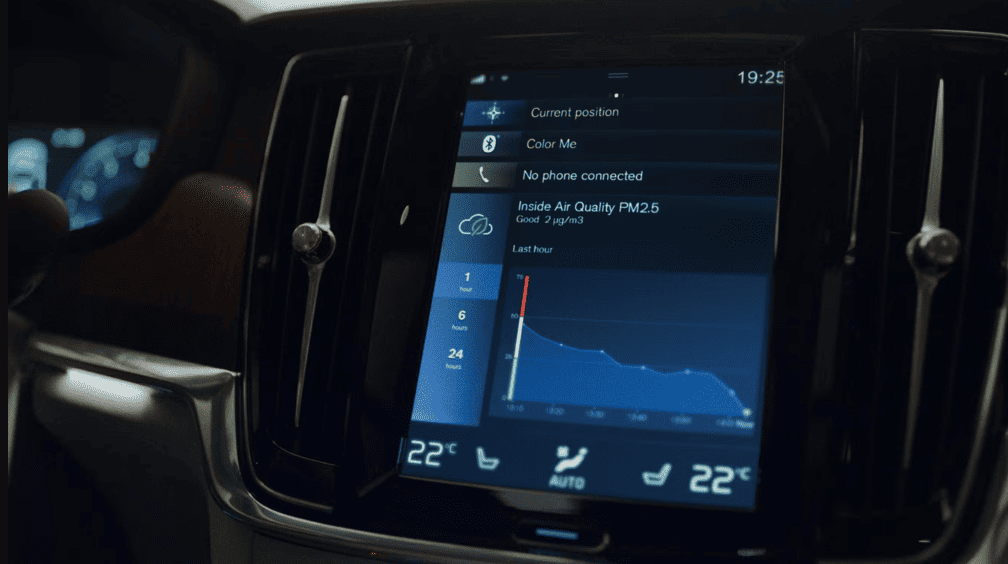
In vehicles, real-time sensors enable drivers and passengers to monitor the quality of air inside the cabin. Data can be displayed on dashboard screens or sent to connected smart devices, providing a user-friendly interface for understanding environmental conditions.
Advanced automotive designs now integrate PM2.5 sensors with automatic air conditioning systems. The system can adjust fan speeds, switch filtration modes, and activate air purifiers based on air quality data. For instance, if the concentration of PM2.5 exceeds a predetermined threshold, the system may automatically engage HEPA filters or ionization units, ensuring that cabin air remains safe for occupants without requiring manual adjustments.
PM2.5 sensors are increasingly being used to control vehicle ventilation systems dynamically. By monitoring both inside and outside air quality, the system can decide when to recirculate cabin air or allow fresh air intake. When external air quality is poor—such as during heavy traffic, industrial emissions, or wildfires—the system can prevent contaminated air from entering, significantly reducing passenger exposure. Conversely, when external air quality improves, fresh air can be safely introduced to maintain comfort and oxygen balance.
Beyond technical filtration, PM2.5 sensors can also provide behavioral guidance. Integrated with infotainment systems, these sensors can issue health reminders to passengers, such as opening windows, activating purifiers, or limiting exposure during high-pollution periods. In advanced systems, drivers may receive route-based recommendations to avoid areas with high PM2.5 levels, combining air quality management with intelligent navigation.
Data from PM2.5 sensors can also be integrated with ADAS to offer predictive air quality management. For example, a navigation system could reroute a vehicle through less polluted areas or suggest parking in shaded or low-traffic zones to minimize exposure. This integration not only protects health but also aligns with emerging smart city initiatives, where vehicles contribute to real-time environmental monitoring.
While in-vehicle monitoring is crucial for passenger health, controlling PM2.5 in manufacturing and repair environments requires additional interventions.
Effective engineering controls are the first line of defense. Local exhaust ventilation systems, fume hoods, and industrial dust collectors capture airborne particles at their source. For high-emission processes like welding and sanding, specialized extraction arms or downdraft tables are recommended to contain dust and fumes before they disperse.
PPE remains essential, especially when engineering controls cannot fully eliminate exposure. Respirators rated N95 or higher, protective gloves, eye protection, and chemical-resistant clothing significantly reduce inhalation and dermal absorption of hazardous substances. Proper training on correct use, maintenance, and replacement schedules ensures maximum effectiveness.
Substituting high-toxicity chemicals with safer alternatives can reduce both particulate and chemical exposure. For example, water-based paints and low-VOC solvents are less likely to generate airborne toxins. Process optimization, such as using wet sanding methods, robotic welding, and controlled spray techniques, can further minimize PM2.5 generation at the source.
The design of workspaces also affects exposure levels. Ensuring adequate airflow, separation of high-emission zones, and proper exhaust placement helps prevent particle accumulation. Combining mechanical ventilation with natural airflow allows continuous dilution of airborne contaminants.
Regular health assessments, including pulmonary function tests and biomonitoring for heavy metals, allow early detection of occupational illnesses. Education programs reinforce awareness of risks, proper handling of chemicals, and use of PPE, fostering a culture of safety.
Several countries have established occupational exposure limits (OELs) for PM2.5 and related pollutants in automotive workplaces. For example, the U.S. Occupational Safety and Health Administration (OSHA) and the National Institute for Occupational Safety and Health (NIOSH) provide guidance on permissible exposure limits for welding fumes, solvent vapors, and heavy metals. The European Union also mandates workplace air quality monitoring and exposure mitigation strategies, emphasizing the importance of engineering controls and worker education. Compliance with these standards not only protects worker health but also reduces liability and improves workplace productivity.
Emerging technologies are shaping the future of PM2.5 monitoring and mitigation.
IoT-Enabled Monitoring: Sensor networks in vehicles and workshops can transmit real-time air quality data to centralized dashboards. Advanced analytics and machine learning algorithms can predict high-risk periods, enabling preemptive interventions.
Wearable Monitors: Personal monitoring devices track individual exposure, offering a personalized assessment of health risks. Combined with workplace sensors, they can optimize shift schedules and exposure limits.
Next-Generation Vehicle Sensors: Multi-pollutant sensors are being developed to detect PM2.5, PM10, volatile organic compounds (VOCs), CO, NO2, and other harmful gases simultaneously. These sensors enhance in-vehicle air quality management while providing valuable environmental data to municipal monitoring systems.
AI-Driven Ventilation Systems: In industrial settings, AI can optimize ventilation rates based on occupancy, activity type, and particulate generation, reducing energy consumption while maintaining safety.
PM2.5 and ultrafine particles represent a silent but serious threat in the automotive industry. From manufacturing plants to repair shops, workers face significant risks from prolonged exposure to particulate matter and associated chemicals. Similarly, vehicle occupants can be exposed to harmful PM2.5, particularly in urban or industrial environments.
By leveraging real-time monitoring, intelligent ventilation, engineering controls, PPE, and advanced process optimization, the automotive industry can significantly reduce exposure to these hazardous pollutants. Integration of PM2.5 sensors with vehicle systems and ADAS further enhances passenger safety, providing actionable data and automated interventions to maintain air quality.
As technology evolves, IoT-enabled monitoring, AI-driven ventilation, and multi-pollutant sensors will continue to redefine occupational and in-vehicle air quality management. For automotive manufacturers, repair shops, and vehicle users alike, understanding the risks of PM2.5 and proactively mitigating exposure is essential for health, safety, and long-term productivity. The adoption of these strategies marks a pivotal step toward creating safer, healthier automotive environments and ensuring that workers and passengers can breathe easier, both literally and figuratively.
Previous: Understanding Indoor and Outdoor Air Quality: Monitoring, Technology, and Health Impacts
Next: Understanding the Difference Between PM2.5 and PM10 Air Quality Sensors