

In an era marked by increased focus on health, safety, and environmental sustainability, accurate air quality monitoring has transitioned from a regulatory requirement to a global priority. Central to this shift is the proliferation of laser particle sensors — advanced optical devices capable of detecting and measuring airborne particulate matter with remarkable precision. From smart cities to industrial facilities, indoor air quality systems to medical environments, laser particle sensors are redefining how societies understand and manage airborne contaminants.
This news report explores the technology behind laser particle sensors, their diverse applications, performance challenges, market growth, emerging trends, and their role in shaping healthier, safer environments worldwide.
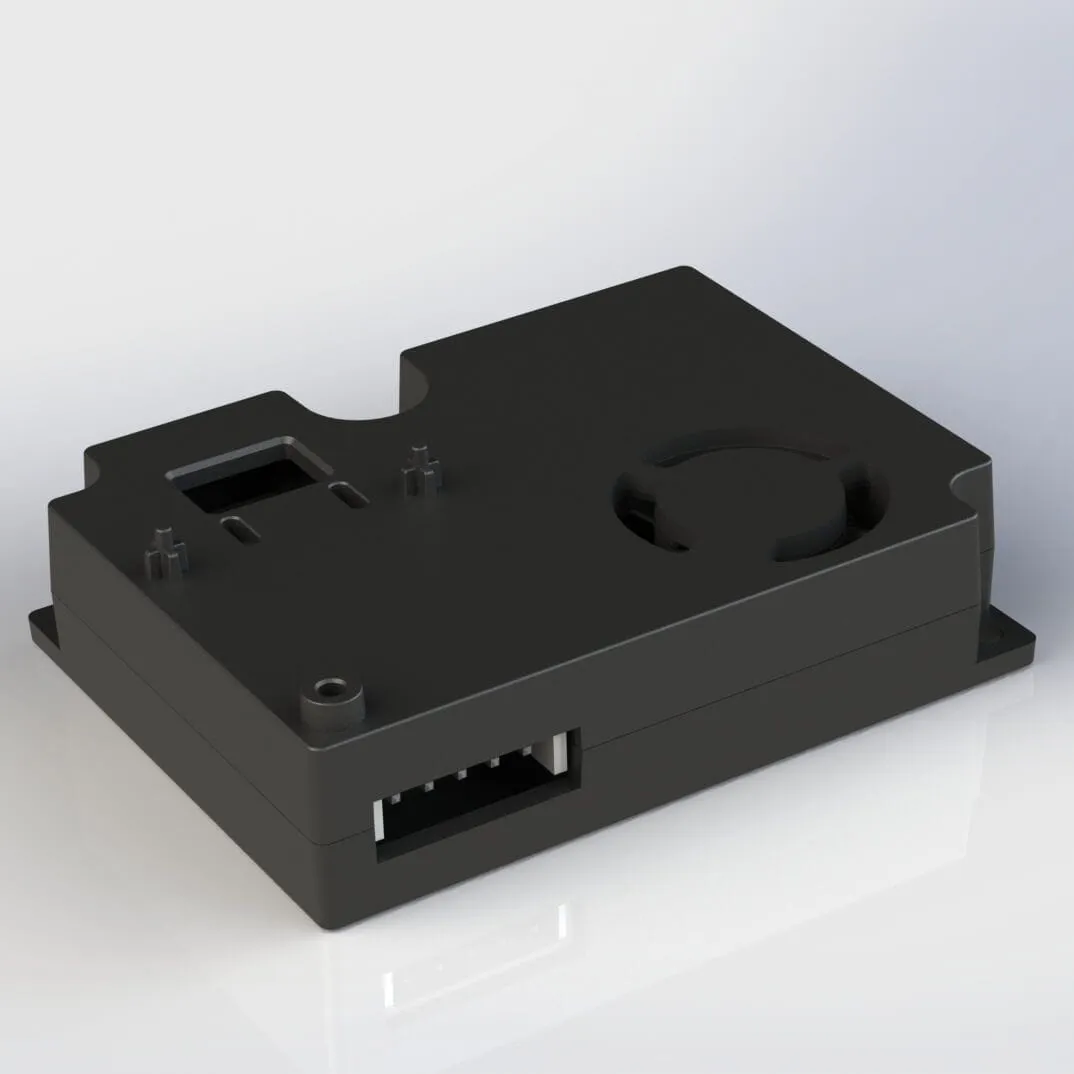
Laser particle sensors detect and quantify airborne particles by using a focused light source — typically a laser diode — to illuminate particles as they pass through a sensing chamber. When particles intersect the laser beam, they scatter light. Photodetectors capture this scattered light and convert it into electrical signals. By analyzing the intensity and pattern of scattering, the sensor can estimate:
- Particle size
- Particle concentration
- Particle count distribution
These measurements are critical for monitoring particulate matter such as PM1.0, PM2.5, PM10, and ultrafine particles that impact human health and industrial processes.
Laser particle sensors operate based on the light scattering principle, where particles cause variations in the light path. Larger particles scatter more light, while smaller particles generate subtler signals. Advanced algorithms process these signals to provide accurate counts and size distribution data.
Airborne particles — whether from combustion, construction dust, biological sources, or industrial emissions — pose significant health and environmental risks. Exposure to high particulate concentrations contributes to respiratory diseases, cardiovascular problems, and ecosystem degradation. With rising urbanization, industrialization, and awareness of indoor pollution, demand for precise particle monitoring has surged.
- High Sensitivity: Capable of detecting particles as small as 0.1 microns.
- Real-Time Measurement: Immediate data feeds enable timely decisions.
- Accurate Particle Sizing and Counting: Supports regulatory compliance and risk assessment.
- Low Maintenance: Laser systems require minimal calibration versus legacy technologies.
- Versatile Integration: Seamlessly embedded into air purifiers, HVAC systems, industrial monitors, and consumer IoT devices.
Laser particle sensors are now foundational technologies in many sectors where air quality matters.
Cities worldwide are deploying networks of laser particle sensors to map air quality in real time. These sensor networks inform policymakers, enable public advisories, and support emissions control strategies. With increasing investments in smart city infrastructure, environmental monitoring has become data-driven and highly granular.
Indoor environments — homes, offices, schools, hospitals — can harbor high concentrations of particulate pollutants due to cooking smoke, mold spores, VOCs, and allergens. Laser particle sensors integrated into IAQ systems continuously monitor indoor air, enabling automatic ventilation control and air purification.
Industrial facilities use laser particle sensors to monitor emissions, ensuring compliance with environmental regulations and optimizing filtration systems. From semiconductor fabrication cleanrooms to pharmaceutical production suites, particle monitoring is essential for product quality and safety.
In medical settings, maintaining particulate-free environments is critical. Laser particle sensors help ensure sanitary operations in surgery theaters, cleanrooms, and isolation facilities by providing continuous monitoring and alarm triggers for contamination breaches.
Laser particle sensors are increasingly found in consumer air purifiers, smart thermostats, wearable health monitors, and mobile environmental detectors. Their size, cost-efficiency, and precision make them ideal for connected home applications.
A typical laser particle sensor consists of several critical components:
Laser Diode
The light source that emits a focused beam. Unlike LED-based sensors, laser diodes produce coherent and intense light, enhancing detection of fine particles.
Optical Chamber
A controlled environment where particles pass through the laser beam. Chamber design impacts detection accuracy — with anti-reflection coatings, precise geometry, and controlled airflow.
Photodetector
Captures scattered light from particles. High-sensitivity photodiodes and photomultiplier tubes translate light intensity into electrical signals.
Signal Processor
Advanced algorithms filter noise, classify particles, and determine counts and size distribution. Machine learning and signal-processing enhancements are increasingly common.
Airflow Control System
Ensures consistent sample flow through the sensing chamber, using micro-fans or pumps, enabling stable measurement conditions.
Despite their advantages, laser particle sensors face several challenges:
Environmental Interference
Humidity, temperature variation, and turbulent airflow can impact measurement accuracy. Sensor systems must compensate through design and software correction.
Calibration Drift
Over time, sensor sensitivity may drift due to component aging or contamination. Periodic calibration — either automated or manual — is required for long-term accuracy.
Size Resolution Limitations
While modern sensors can detect particles as small as 0.1 microns, distinguishing nanoparticles below this level remains challenging.
Cost and Integration Complexity
High-precision sensors with advanced features cost more and require careful integration into industrial systems, raising upfront investment.
The global laser particle sensor market has experienced robust growth driven by environmental regulations, health consciousness, and technological innovation. Analysts forecast continued expansion, with key factors including:
- National air quality standards
- Industrial pollution monitoring mandates
- Growth in connected smart devices
- Rising demand for home air quality solutions
In developing economies with expanding urban populations, air quality has become a public health priority — further driving investment in particle sensing infrastructure.
Governments and international bodies have established guidelines and regulations for air quality monitoring:
World Health Organization (WHO)
WHO sets global air quality guidelines for particulate matter (e.g., PM2.5/PM10) to protect human health.
Environmental Protection Agencies
National agencies — such as the U.S. EPA — enforce emissions rules and ambient air monitoring standards, requiring accredited particle measurement systems.
Industrial Compliance
Facilities subject to emissions permitting must deploy certified monitoring systems to report discharge levels, often using laser particle sensors as core components.
Regulatory compliance continues to drive deployment at scale, as industries seek both accuracy and reporting transparency.
Laser particle sensing technology continues to evolve rapidly, driven by research, AI integration, miniaturization, and new materials.
AI-Enhanced Signal Processing
Machine learning algorithms are now used to classify particle types and predict trends, improving reliability in diverse environments.
Sensor Fusion
Combining laser particle sensors with other air quality sensors (gas, VOC, humidity) enables holistic environmental analysis.
Miniaturization
Advances in semiconductor fabrication and optics have enabled smaller, low-power sensors suitable for battery-powered and wearable applications.
Edge Computing
Processing data at the edge reduces latency and protects privacy in real-time monitoring systems.
Urban Air Monitoring Networks
Major metropolitan areas now deploy dense sensor networks across neighborhoods, highways, schools, and industrial zones. These networks report particulate levels hourly, enabling city planners to adjust traffic flows, issue health advisories, and measure the impact of environmental policies.
Smart Buildings and Healthy Workspaces
Corporate headquarters integrate laser particle sensors into building management systems. Real-time monitoring triggers ventilation adjustments, reduces sick leave, and supports employee wellness initiatives.
Cleanrooms and Precision Manufacturing
Semiconductor fabs and pharmaceutical facilities employ laser particle sensors at critical control points to ensure ISO class compliance and prevent contamination risks.
In private homes, consumer awareness of indoor air quality has increased dramatically due to health concerns, allergies, and pandemic experiences. Laser particle sensors embedded in air purifiers, HVAC units, and portable monitors provide:
- Real-time air quality data
- Alerts on harmful pollution spikes
- Integration with smart home ecosystems
- Automatic activation of filtration systems
This consumer adoption trend is reshaping expectations for air quality awareness and control.
The market features a mix of specialized sensor manufacturers, optical technology firms, and IoT ecosystem providers. Competitive differentiation focuses on:
- Detection range and sensitivity
- Power efficiency
- Cost-effectiveness
- Software analytics and connectivity
- Support and calibration services
As demand grows, new entrants — especially in low-cost consumer markets — are challenging incumbents in innovation and scalability.
Accurate measurement of particulate matter has direct implications for public health. Higher PM exposure correlates with heart disease, asthma, lung cancer, and reduced life expectancy. By enabling proactive intervention, laser particle sensors help:
- Governments enforce air quality standards
- Hospitals monitor at-risk populations
- Employers protect indoor environments
- Communities advocate for cleaner air
Quantifying pollution precisely empowers decision-makers and communities to act.
As smart infrastructure becomes more prevalent, laser particle sensors form a foundational data layer for:
- Smart traffic systems
- Urban planning analytics
- Environmental dashboards
- Public health forecasting
- Climate resilience programs
Data streams from sensors feed into cloud analytics platforms and AI engines that predict pollution hotspots and seasonal trends.
Future advancements are set to expand capabilities beyond current limitations:
Nanoparticle Detection
Research focuses on sensing particles below 0.1 microns to track ultrafine contamination from combustion engines and industrial processes.
Wireless Mesh Sensor Networks
Next-generation networks enable scalable, cost-effective coverage across cities and campuses.
Energy-Harvesting Sensors
Self-powered sensors with solar or kinetic power reduce installation and maintenance costs.
Personal Wearables
Miniaturized sensors integrated into wearables enable individuals to monitor their exposure in real time.
Despite rapid adoption, challenges remain:
Standardization
Global measurement standards vary. Harmonizing sensor calibration methods helps ensure data comparability across regions.
Data Privacy
Air quality data — when geolocated — raises privacy considerations. Secure data handling and anonymization are required.
Maintenance and Calibration
Laser particle sensors require periodic calibration to maintain accuracy. Remote calibration solutions and modular designs are helping address this issue.
Laser particle sensors are more than monitoring tools — they are catalysts for healthier, smarter, and safer environments across residential, industrial, and urban landscapes. Through real-time detection, precise data output, and scalable deployment, these sensors have redefined how societies understand air quality and take action.
As technology continues to advance, enhanced accuracy, reduced costs, and broader integration into connected systems will make laser particle sensors indispensable. From protecting public health to optimizing industrial performance, the impact of these devices will be felt for decades to come.
In a world increasingly aware of environmental challenges and human health risks, laser particle sensors are leading the charge toward cleaner air, informed decision-making, and technological resilience.
Previous: How to Choose the Best Indoor Temperature and Humidity Monitor
Next: Indoor Air Quality and the Role of Laser Particle Counters: A Complete Guide