

Indoor environmental quality has become a major focus in modern life, particularly since people spend more than 80–90% of their time inside homes, offices, factories, hospitals, and schools. Among the many environmental factors that influence indoor conditions, temperature and humidity stand out as two of the most critical, affecting comfort, health, equipment reliability, and even building durability. To maintain balanced and stable conditions, temperature and humidity monitors have become essential instruments for households, commercial spaces, and industrial facilities.
These compact yet advanced devices deliver real-time measurements, historical data analysis, and sometimes automatic alerts, allowing users to better understand and manage their surroundings. From preventing mold formation and safeguarding sensitive electronics to improving sleep quality and workplace productivity, temperature and humidity monitors serve far broader purposes than basic environmental observation.
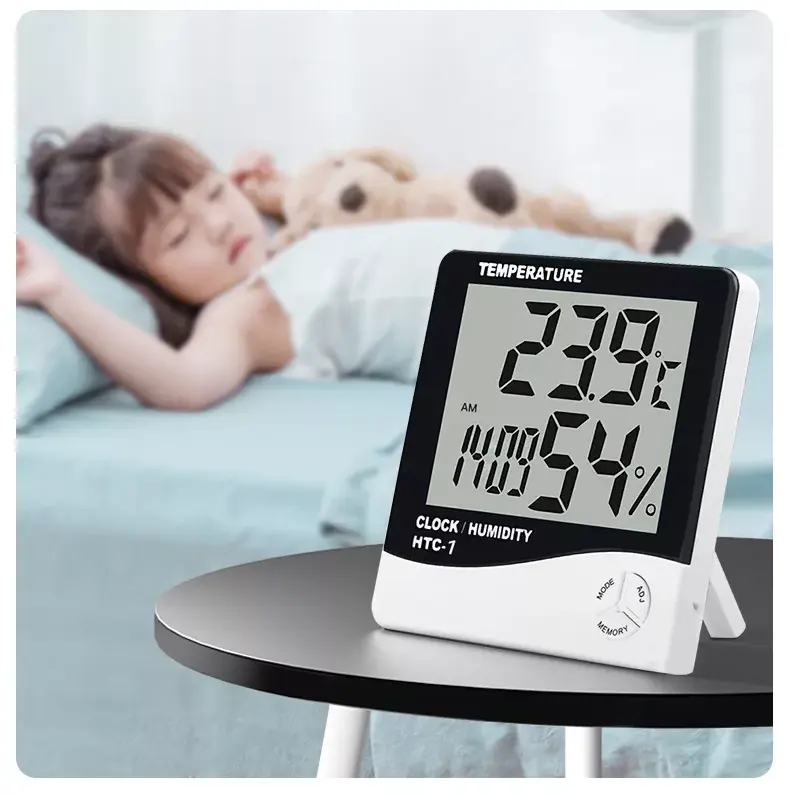
Temperature measures the average kinetic energy of particles in a substance, essentially indicating how hot or cold an environment is. Humidity, on the other hand, refers to the concentration of water vapor present in the air. While these two parameters may seem independent, they are actually closely connected.
Warm air has a greater capacity to hold water vapor than cold air. As temperature rises, relative humidity decreases unless additional moisture is introduced. Conversely, when air cools to its saturation point, condensation forms, resulting in dew, fog, or even precipitation. This interaction explains why humidity often feels higher on warm days and why cold indoor surfaces may develop moisture.
Humidity also influences perceived temperature. The human body relies on sweat evaporation to cool itself. When humidity is high, sweat evaporates more slowly, making the air feel hotter than it actually is. This effect is measured by the heat index, sometimes called “apparent temperature,” which estimates how hot it feels under typical humidity conditions. Most people feel comfortable when indoor temperatures range between 20°C and 27°C and humidity stays between 35% and 60%.
Monitoring both temperature and humidity together provides a more accurate understanding of environmental conditions than measuring either parameter alone.
Maintaining proper indoor conditions is not just about comfort—it directly affects health, productivity, and safety. Excessive humidity encourages mold, bacteria, and dust mites, all of which can trigger allergies and respiratory problems. Low humidity can cause dry skin, throat irritation, and increased susceptibility to infections.
Temperature extremes also have consequences. Overly warm environments may cause fatigue and reduced concentration, while cold spaces can impair circulation and increase heating costs. In industrial and commercial settings, improper environmental conditions can damage materials, alter product quality, or disrupt sensitive equipment.
For example:
- Museums and archives must maintain strict humidity levels to preserve artifacts and documents.
- Pharmaceutical storage facilities require controlled environments to protect drug stability.
- Server rooms rely on stable temperature and humidity to prevent overheating and condensation damage.
- Greenhouses depend on precise monitoring to optimize plant growth.
- These examples highlight why accurate monitoring devices are essential rather than optional.
Selecting the right monitor involves evaluating several technical and practical factors. Understanding these considerations helps ensure reliable performance and suitability for the intended application.
Accuracy is the most important specification in any monitoring device. Temperature accuracy is typically expressed in degrees (such as ±0.5°C), while humidity accuracy is shown as a percentage (for example, ±2% RH). The lower the tolerance, the more precise the readings.
Reliability is equally critical. Sensors may drift over time due to aging, dust accumulation, or exposure to extreme conditions. Some professional-grade monitors allow manual calibration, while others must be recalibrated periodically by the manufacturer. In regulated industries, calibration certification is often required for compliance purposes.
High-quality sensors—usually produced by established manufacturers—tend to offer better long-term stability and consistent performance.
Standard indoor monitors typically cover temperature ranges from about −10°C to 50°C and humidity ranges from 10% to 90% RH. These ranges are sufficient for most homes and offices. However, specialized environments may demand broader capabilities.
Cold storage warehouses, for instance, require monitors capable of sub-zero measurements, while industrial ovens or high-temperature labs need sensors that withstand extreme heat. Outdoor or semi-outdoor installations must tolerate wide fluctuations and environmental exposure.
Choosing a device with an appropriate measurement range ensures accuracy and longevity.
Response time indicates how rapidly a sensor reacts to environmental changes. Faster response times are essential in environments where conditions shift quickly or where real-time alerts are necessary. Laboratories, data centers, and manufacturing facilities often require monitors capable of detecting variations within seconds.
Slower response devices may be adequate for residential use, where conditions change gradually and immediate alerts are less critical.
Modern temperature and humidity monitors often include built-in data logging features. Instead of providing only real-time readings, these devices record measurements at predetermined intervals, such as every minute or every hour.
This capability offers several advantages:
- Identifying daily or seasonal patterns
- Detecting abnormal fluctuations
- Supporting troubleshooting
- Providing documentation for regulatory compliance
- Analyzing long-term environmental performance
Storage methods vary. Some devices store data internally and require manual downloading, while others transmit information to cloud platforms for remote access. Cloud-based systems are especially useful for facilities managers overseeing multiple locations.
As smart home and IoT technologies advance, many monitors now support wireless connectivity through Wi-Fi, Bluetooth, or Zigbee protocols. Connected monitors allow users to view data remotely via mobile apps or web dashboards.
Additional smart features may include:
- Real-time alerts when conditions exceed preset limits
- Integration with HVAC or dehumidifier systems
- Voice assistant compatibility
- Multi-sensor networks for large buildings
Such features transform monitors from passive measuring tools into active environmental management systems.
Ease of use plays a major role in practical operation. Some monitors feature large LCD screens displaying temperature, humidity, time, and trend indicators. Others rely on smartphone apps instead of built-in displays.
Important interface considerations include:
- Readability from a distance
- Backlighting for low-light conditions
- Simple navigation menus
- Clear alarm indicators
In professional environments, intuitive interfaces reduce training time and minimize operational errors.
Indoor monitors typically operate using batteries, USB power, or direct electrical connections. Battery-powered models offer portability and flexibility, while wired versions provide continuous operation without maintenance.
Battery life varies widely depending on sensor type, display brightness, and wireless connectivity. Some advanced models can operate for months or even years on a single set of batteries, while others require more frequent replacement.
The physical design of a monitor affects its lifespan and reliability. Durable enclosures protect internal sensors from dust, moisture, and accidental damage. In industrial settings, rugged housings with protective ratings such as IP65 or higher may be necessary.
For residential use, aesthetics may also be a consideration. Sleek, compact designs blend more easily with interior décor.
Different monitoring devices use different sensing technologies. Understanding these technologies helps users choose a model suited to their needs.
Capacitive humidity sensors are among the most common. They measure changes in electrical capacitance caused by moisture absorption in a polymer film. These sensors are accurate, stable, and suitable for most indoor environments.
Resistive humidity sensors detect changes in electrical resistance as humidity varies. They are cost-effective and durable but may be less precise than capacitive sensors.
Thermal conductivity sensors measure humidity by comparing the heat conductivity of dry and moist air. These are typically used in specialized industrial applications.
Temperature measurement is usually handled by thermistors, RTDs (Resistance Temperature Detectors), or semiconductor sensors, each offering different levels of precision and response speed.
Indoor temperature and humidity monitors are used across a wide range of industries and environments.
Homeowners use monitors to maintain comfort, prevent mold, and protect belongings such as musical instruments, artwork, and electronics. They also help optimize heating and cooling efficiency, potentially reducing energy bills.
Hospitals and clinics require strict environmental control to maintain sterile conditions and protect sensitive medical supplies. Accurate monitoring ensures compliance with health regulations and patient safety standards.
Many manufacturing processes depend on stable environmental conditions. Electronics assembly, textile production, and pharmaceutical manufacturing all require precise humidity levels to ensure product quality.
Indoor farming operations rely heavily on environmental monitoring to maximize crop yields. Maintaining optimal temperature and humidity promotes plant growth, prevents disease, and conserves energy.
Office buildings, shopping centers, and hotels use monitoring systems to enhance occupant comfort and manage HVAC efficiency. Data collected over time can guide energy-saving strategies.
The advantages of installing a reliable temperature and humidity monitor extend beyond simple awareness.
- Health Protection: Balanced humidity reduces airborne pathogens and allergens.
- Energy Efficiency: Monitoring helps optimize heating and cooling systems.
- Asset Preservation: Proper conditions prevent corrosion, warping, and degradation.
- Early Problem Detection: Alerts warn users of leaks, HVAC failures, or abnormal fluctuations.
- Regulatory Compliance: Many industries must document environmental conditions for audits.
Together, these benefits contribute to safer, healthier, and more efficient indoor spaces.
Proper placement is essential for accurate readings. Monitors should be installed away from direct sunlight, heating vents, air conditioners, or open windows, as these can distort measurements. Ideally, they should be positioned at breathing height in a central location.
In larger rooms or buildings, multiple sensors may be necessary to capture variations across different areas. For example, humidity levels near a ceiling may differ from those near the floor, especially in poorly ventilated spaces.
Like any precision instrument, temperature and humidity monitors require periodic maintenance. Cleaning sensor vents, replacing batteries, and checking calibration ensure consistent performance. Some professional devices include automatic self-calibration features, while others require manual adjustment using reference standards.
Routine maintenance not only preserves accuracy but also extends the device’s operational lifespan.
Technological innovation continues to enhance monitoring capabilities. Modern devices increasingly incorporate artificial intelligence and predictive analytics to anticipate environmental changes. For example, a smart monitor may analyze historical data to predict when humidity is likely to rise and automatically activate a dehumidifier.
Miniaturization is another trend. Sensors are becoming smaller, more energy-efficient, and easier to integrate into smart home systems or industrial automation platforms. In the future, monitoring technology may be embedded directly into building materials, providing continuous environmental feedback without standalone devices.
Monitoring temperature and humidity can contribute to sustainability goals. By optimizing HVAC usage, organizations can reduce energy consumption and carbon emissions. Accurate environmental control also minimizes waste in industries where improper conditions could spoil materials or products.
As global attention shifts toward energy efficiency and climate responsibility, monitoring systems are expected to play an increasingly important role.
Indoor temperature and humidity monitors have evolved from simple measurement tools into sophisticated environmental management devices. By providing accurate, real-time data and long-term insights, they empower users to maintain comfortable living conditions, protect valuable assets, and improve operational efficiency.
Whether used in homes, hospitals, factories, or greenhouses, these devices support healthier environments, enhance productivity, and prevent costly damage. As technology continues to advance, indoor monitoring systems will become even more intelligent, connected, and essential—making them a fundamental component of modern indoor living and facility management.
Previous: How to Choose the Right Air Purifier: A Comprehensive Guide
Next: Laser Particle Sensors Explained: Applications, Benefits, and Market Trends



