

Maintaining healthy indoor air quality (IAQ) has never been more important. Across homes, offices, schools, hospitals, and industrial facilities, air pollution poses risks to health, productivity, and safety. From allergens like dust and pollen to ultrafine particles from smoke, cooking, or construction, indoor air can be contaminated in ways that are invisible to the naked eye. While traditional air purifiers and ventilation systems improve air quality, they often rely on guesswork and lack precise measurement tools. Enter laser particle counters, a technology that has transformed the way we monitor and manage indoor air quality.
Laser particle counters provide real-time, quantitative data about airborne particles, helping homeowners, building managers, and industrial operators make informed decisions. By understanding particle concentrations in the air, it is possible to reduce health risks, optimize air purification, and ensure compliance with safety regulations.
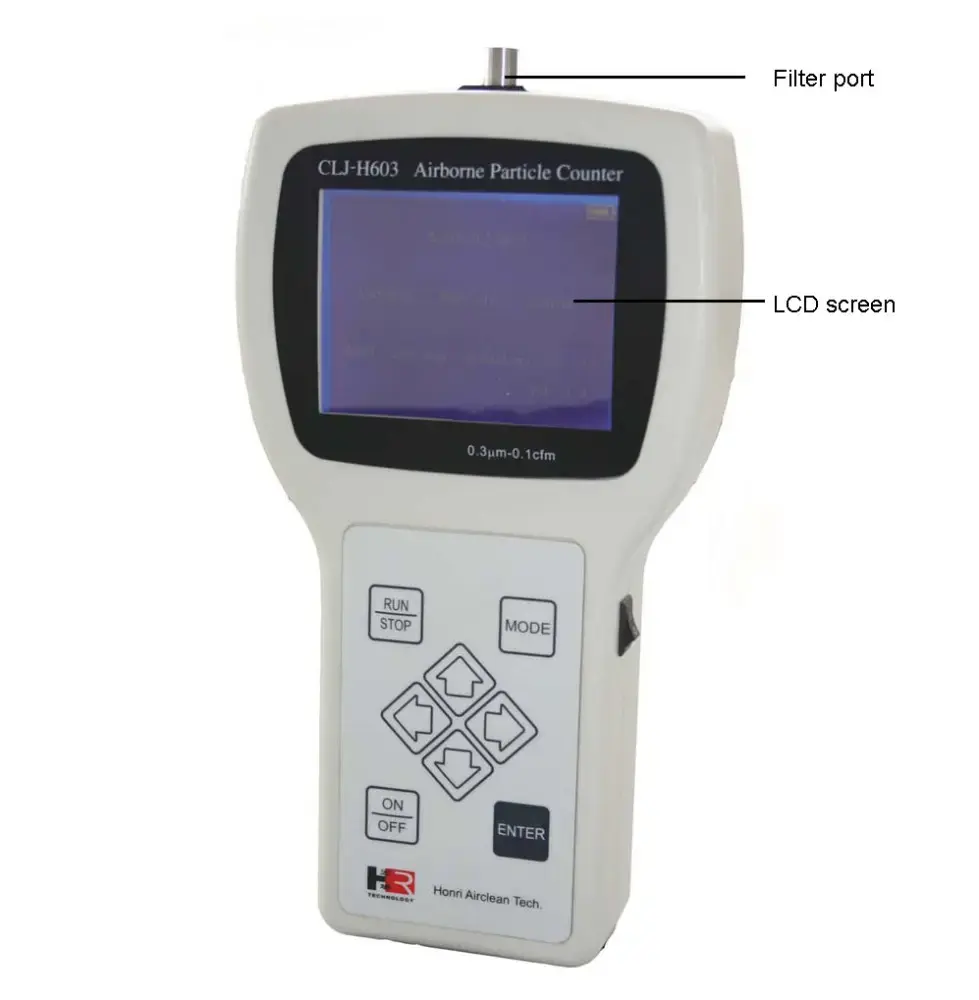
At the heart of laser particle counters is scattered light technology. This method detects airborne particles by shining a laser beam through an air sample. When particles pass through the beam, they scatter the light. Sensors in the device measure the intensity of scattered light to calculate the number and size of particles in the air.
The size of detected particles is a critical metric in indoor air quality. Laser particle counters can detect particles as small as 0.3 microns and as large as 25 microns, depending on the model. To put this in perspective:
- PM0.3-PM1.0: Ultrafine particles, including combustion byproducts and smoke, which can penetrate deep into the lungs.
- PM1.0-PM2.5: Fine particles from dust, pollen, and vehicle emissions, linked to respiratory and cardiovascular issues.
- PM2.5-PM10: Coarse particles like dust, pet dander, and mold spores, which can trigger allergies and asthma.
Laser particle counters quantify particle concentration, typically expressed as particles per cubic foot or cubic meter. While they cannot identify the type of particle, knowing the number of particles allows you to assess air quality and determine corrective measures.
Laser particle counters vary widely in price, capability, and functionality. Commercial models are highly sensitive and precise but are often expensive and overkill for home use. Residential or general-use models provide essential features suitable for home, office, or small commercial spaces. Key features include:
Most home-use laser particle counters detect particles 0.5 microns and above, sufficient for common pollutants like dust and mold spores. For allergy sufferers or those with respiratory issues, devices with 0.3-micron sensitivity are recommended. Ultrafine particles, although invisible, can aggravate asthma, allergies, and other health conditions.
Rapid measurement is essential for timely interventions. A high-quality laser particle counter provides readings in seconds or a few minutes, enabling you to detect sudden changes in air quality, such as when cooking, cleaning, or smoking indoors.
Sampling modes allow flexible monitoring:
- Continuous Mode: Monitors air quality in real-time, ideal for environments where air changes frequently, such as kitchens or labs.
- Intermittent Mode: Measures air at set intervals, which is useful for long-term trend analysis without overloading the device’s memory.
A particle counter that logs historical data is invaluable. Many modern devices offer cloud connectivity and mobile app integration, allowing users to track trends, view graphs, and analyze particle fluctuations over days, weeks, or months. This feature is critical for evaluating the effectiveness of air purifiers, HVAC filters, or other interventions.
Indoor air quality can vary significantly between rooms. A compact, portable particle counter allows users to monitor multiple locations without purchasing multiple devices. Lightweight and battery-powered models enhance flexibility.
Laser particle counters have widespread applications across residential, commercial, and industrial settings, each with distinct needs.
In homes, laser particle counters monitor air quality to protect family members from allergens, pollutants, and airborne pathogens. Common use cases include:
- Allergy and Asthma Management: Detecting pollen, pet dander, and mold spores to minimize exposure.
- Indoor Pollution Control: Measuring particles from cooking, smoking, or candle use.
- HVAC Optimization: Assessing air filter performance to ensure clean air circulation.
By using a particle counter, homeowners can take data-driven actions to improve indoor air, such as adjusting air purifiers, changing filters, or improving ventilation.
Offices, schools, and hospitals benefit significantly from particle counters:
- Employee Health and Productivity: Poor air quality can lead to fatigue, allergies, and reduced concentration. Monitoring ensures a healthier work environment.
- Hospital and Lab Compliance: Healthcare facilities require precise monitoring to meet safety and sanitation standards. Laser particle counters ensure environments meet strict cleanliness levels.
- Educational Institutions: Classrooms and auditoriums often accumulate dust, allergens, and pathogens. Particle counters help maintain safe air for students and staff.
Industries with cleanroom requirements, sensitive equipment, or airborne hazards rely heavily on particle counters:
- Cleanrooms in Semiconductor or Pharmaceutical Manufacturing: Precise monitoring ensures compliance with ISO cleanroom standards.
- Construction and Manufacturing Facilities: Detecting dust, fibers, and metal particles prevents equipment damage and protects worker health.
- Air Quality Compliance: Particle counters support adherence to occupational health and safety regulations.
Laser particle counters provide exact counts of airborne particles, enabling precise evaluation of indoor air quality.
By measuring particle concentration, these devices help identify sources of pollution, such as dust accumulation, mold growth, or cooking fumes.
Monitoring indoor air reduces exposure to allergens, ultrafine particles, and pollutants, lowering the risk of respiratory and cardiovascular problems.
Particle counters allow users to measure the effectiveness of air purifiers, HVAC filters, or ventilation improvements, ensuring investment in IAQ solutions pays off.
For industries and healthcare facilities, laser particle counters provide documented evidence of air quality compliance, critical for certifications and audits.
Monitoring is only the first step. Data from particle counters must guide actionable measures:
High particle counts can indicate sources such as cooking smoke, candle burning, pet activity, or poor ventilation. Identifying these sources allows for targeted interventions.
By tracking particle levels before and after air purification, users can quantify improvements and adjust purifier placement for maximum efficiency.
Particle counters highlight areas with poor air circulation. Increasing ventilation, opening windows, or upgrading HVAC systems reduces particle concentrations.
Pollen, dust, and construction-related particles fluctuate seasonally. Long-term data tracking allows for proactive IAQ management during high-risk periods.
Data-driven evaluation ensures that interventions, such as new air filters, purifiers, or ventilation improvements, deliver measurable results in particle reduction.
A family with severe allergies used a portable laser particle counter to monitor indoor air. They identified high pollen concentrations in spring and optimized their HEPA air purifier placement, reducing particle counts by over 60%.
A regional hospital implemented laser particle counters in operating rooms. Continuous monitoring ensured particle concentrations stayed below regulatory limits, maintaining ISO 14644 cleanroom compliance and reducing infection risks.
A manufacturing plant used counters to monitor airborne dust near machinery. Data helped implement targeted dust extraction systems, improving worker safety and reducing equipment maintenance costs.
Technological advancements continue to improve the utility and accessibility of particle counters:
- Wireless and App Connectivity: Real-time monitoring and notifications via smartphones.
- Multi-Parameter IAQ Monitoring: Combining particle counts with CO₂, VOCs, humidity, and temperature measurements for a complete IAQ picture.
- AI-Driven Analysis: Predicts air quality trends and provides proactive recommendations for IAQ improvement.
- Compact and Portable Designs: Lightweight, handheld devices allow users to monitor multiple spaces efficiently.
These advancements make IAQ monitoring more intuitive, accurate, and actionable, even for residential users.
With increasing awareness of the impact of indoor air on health and productivity, laser particle counters will play an even more critical role:
- Integration with Smart Homes: Future devices will connect with HVAC systems, air purifiers, and smart assistants to automatically adjust airflow and filtration based on real-time particle counts.
- Enhanced Sensor Sensitivity: New models will detect ultrafine particles below 0.3 microns, improving protection against viruses, smoke, and chemical aerosols.
- Regulatory Adoption: Particle counters may become standard equipment for schools, offices, and hospitals as IAQ standards tighten globally.
The combination of data-driven insights, automation, and real-time monitoring positions laser particle counters as an essential tool for maintaining healthy, safe indoor environments.
Indoor air quality is a critical determinant of health, comfort, and productivity. Laser particle counters provide a precise, reliable, and actionable way to measure airborne particles in homes, offices, and industrial environments. By delivering real-time data, trend analysis, and actionable insights, these devices empower individuals and organizations to make informed decisions about air purification, ventilation, and IAQ management. From allergy prevention and workplace safety to regulatory compliance and cleanroom monitoring, laser particle counters are transforming the way we monitor and improve indoor air quality. As technology evolves, these devices will become more accessible, portable, and integrated, ensuring cleaner air and healthier lives for all.
Previous: Laser Particle Sensors Explained: Applications, Benefits, and Market Trends
Next: Why You Should Invest in an Air Quality Monitor for Health and Safety



