

Carbon dioxide (CO₂) is a colorless, odorless gas that plays a fundamental role in the natural world. We exhale it every time we breathe, and plants absorb it during photosynthesis to produce oxygen. In nature, CO₂ is a crucial part of the carbon cycle, but in enclosed spaces—such as homes, schools, offices, and industrial facilities—excessive carbon dioxide can become a silent hazard.
The challenge with CO₂ is that it’s invisible and undetectable without specialized equipment. High levels of carbon dioxide indoors can cause headaches, fatigue, impaired concentration, and in extreme cases, unconsciousness or death. Despite its dangers at elevated concentrations, CO₂ is often confused with another invisible gas: carbon monoxide (CO). Although they share some similar characteristics—both are colorless, odorless, and potentially harmful—they are fundamentally different substances with distinct sources and risks.
Carbon monoxide is a byproduct of incomplete combustion and is deadly even in small amounts because it binds to hemoglobin in the blood, blocking oxygen transport. By contrast, carbon dioxide is naturally produced by respiration and combustion, but it only becomes dangerous when it displaces too much oxygen in an enclosed space. Because of this, accurate monitoring of CO₂ levels is critical for maintaining safe indoor air quality, ensuring proper ventilation, and protecting occupants’ health.
This is where carbon dioxide detectors come in. These specialized devices are designed to measure CO₂ levels in real-time and alert occupants if levels rise above safe thresholds. But how do they actually work? What technologies make it possible to detect an invisible gas? Let’s explore the science behind carbon dioxide detectors, the different types available, and why they are becoming an essential part of modern building safety.
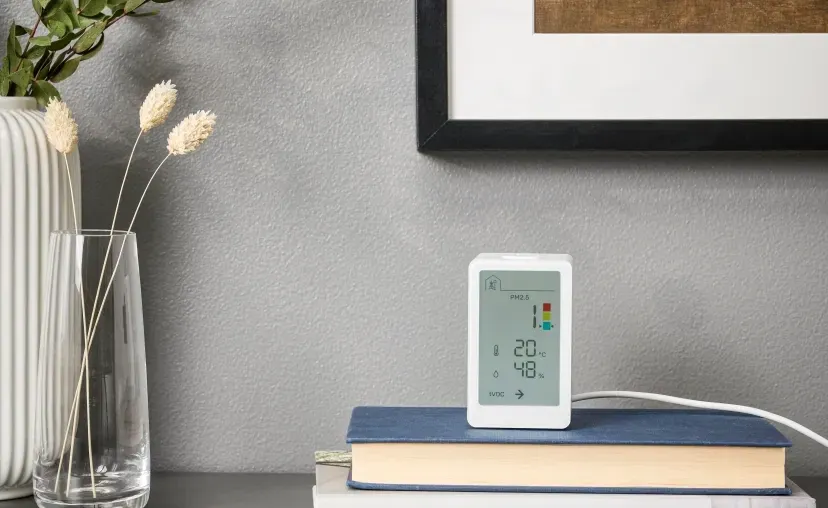
Before delving into how a carbon dioxide detector works, it’s important to understand why CO₂ monitoring is so vital.
In outdoor environments, carbon dioxide typically exists at concentrations of about 400 parts per million (ppm). Natural processes, including plant photosynthesis and air circulation, keep levels in balance. However, in confined indoor spaces, especially in energy-efficient buildings designed to minimize air leaks, CO₂ can accumulate quickly.
For example, in a crowded meeting room with poor ventilation, CO₂ levels can rise to 1,500 ppm or higher within an hour. Studies show that levels above 1,000 ppm can impair cognitive function, decision-making ability, and productivity. Prolonged exposure to very high levels—over 5,000 ppm—can lead to serious health effects.
Certain industries, such as breweries, wineries, laboratories, and food processing plants, also face higher risks because CO₂ is used or produced as part of daily operations. In these environments, CO₂ detection is not just about comfort; it’s about ensuring workers’ safety and complying with occupational health regulations.
At the heart of most modern carbon dioxide detectors is a scientific principle known as infrared (IR) absorption. CO₂ molecules absorb light at specific wavelengths in the infrared spectrum. By shining an infrared beam through a sample of air and measuring how much light is absorbed, a detector can accurately determine the concentration of CO₂ in that air sample.
This technique, known as non-dispersive infrared (NDIR) sensing, is widely regarded as the industry standard for CO₂ detection due to its reliability, accuracy, and long-term stability.
Here’s how it works in more detail:
Air Sampling: The detector draws an air sample into a measurement chamber.
Infrared Light Source: An IR lamp emits light at the specific wavelength absorbed by CO₂ molecules.
Optical Filter: A filter ensures that only the desired wavelength reaches the detector, improving measurement accuracy.
Detection: As the IR light passes through the air sample, CO₂ molecules absorb some of the energy.
Signal Processing: A photodetector on the other side measures how much light makes it through. The amount of absorbed light correlates directly to the CO₂ concentration in the air sample.
The result is a real-time measurement that can trigger alarms or integrate with ventilation systems to maintain safe air quality levels.
While the NDIR method is the most common and trusted for measuring CO₂, it’s not the only technology in use. Let’s break down the three primary types of CO₂ detection technologies and how each works:
How They Work:
NDIR sensors rely on the principle of infrared light absorption described above. They contain an IR light source, a gas chamber, an optical filter, and a photodetector.
When the sensor pulls in air, the IR light passes through the sample. The CO₂ molecules absorb a specific portion of the light. The photodetector measures the intensity of light that makes it through, and a processor calculates the CO₂ concentration.
Advantages:
Highly accurate and stable
Long service life (often 5–15 years)
Minimal cross-sensitivity to other gases
Common Uses:
NDIR sensors are found in HVAC systems, indoor air quality monitors, smart thermostats, and commercial safety systems.
How They Work:
Electrochemical sensors use a chemical reaction to generate an electrical signal proportional to the concentration of CO₂ in the air. Inside the sensor, CO₂ diffuses through a membrane and reacts with an electrolyte solution, producing an electrical current. The magnitude of this current is measured and converted into a CO₂ reading.
Advantages:
Compact and relatively low-cost
Suitable for portable or handheld detectors
Limitations:
Shorter lifespan compared to NDIR
Susceptible to cross-sensitivity from other gases
May require more frequent calibration
Common Uses:
Handheld gas detectors, personal safety monitors, or backup systems in industrial applications.
How They Work:
MOS sensors rely on changes in the electrical conductivity of a metal oxide surface when exposed to CO₂. The gas molecules interact with the metal oxide layer, altering its resistance. These changes are detected and converted into a CO₂ concentration reading.
Advantages:
Inexpensive and simple design
Useful for detecting trends or relative changes in CO₂ levels
Limitations:
Less accurate than NDIR
Can be affected by humidity and other gases
Typically used for non-critical applications
Common Uses:
Basic indoor air quality monitors, smart home devices, or consumer-grade air purifiers with CO₂ readouts.
Accurate carbon dioxide detection is more than just a nice-to-have—it’s essential for health, safety, and energy efficiency. Here are a few reasons why:
Many building codes and standards, including those from ASHRAE (American Society of Heating, Refrigerating and Air-Conditioning Engineers), recommend monitoring CO₂ levels to ensure adequate ventilation. Keeping CO₂ below recommended levels helps maintain a healthy indoor environment.
Modern smart building systems often use CO₂ sensors to optimize HVAC operation. Demand-controlled ventilation systems adjust fresh air intake based on real-time CO₂ levels, reducing unnecessary heating or cooling and cutting energy costs.
In industries where CO₂ is used or produced, regulatory bodies like OSHA (Occupational Safety and Health Administration) set strict exposure limits. Reliable CO₂ detection helps employers comply with these standards and protect workers from overexposure.
Some environments, such as breweries or dry ice storage facilities, pose a risk of sudden CO₂ leaks. A well-placed detector can act as an early warning system, giving people time to evacuate or ventilate the area before levels become dangerous.
Proper placement and maintenance are crucial to ensuring your CO₂ detectors work as intended. Here are some best practices:
For spaces occupied by people, detectors should be mounted at approximately head height to measure the air that people actually breathe.
Do not place sensors near air vents, fans, or windows where air currents could cause inaccurate readings.
Depending on the sensor type, periodic calibration may be required to maintain accuracy. NDIR sensors generally require less frequent calibration than other types.
Integrate with Building Systems: For larger facilities, CO₂ detectors can be connected to ventilation controls, alarms, or building management systems for automated response.
As we become more aware of the importance of healthy indoor air, the demand for reliable CO₂ monitoring continues to grow. Advancements in sensor technology are making detectors smaller, cheaper, and more energy-efficient. Many modern systems now offer wireless connectivity, integration with smart home platforms, and real-time data logging.
In schools, offices, hospitals, and factories alike, CO₂ detection is becoming standard practice. Whether you’re a facility manager, an employer, or simply a homeowner who wants peace of mind, understanding how a carbon dioxide detector works—and why it’s needed—can help you make informed decisions about your indoor air quality.
Carbon dioxide may be an invisible part of our everyday environment, but its impact is anything but hidden. By using proven technologies like NDIR, electrochemical, or MOS sensors, CO₂ detectors give us the ability to see what we can’t see, protect our health, and ensure our spaces are ventilated and safe.
So, the next time you take a deep breath in your home or office, you can breathe a little easier knowing that an invisible guardian is working silently in the background—monitoring, measuring, and helping keep your air fresh and your mind clear.
Previous: Indoor Air Quality Monitors: A Vital Tool for Healthier Living
Next: PM2.5 Sensor Installation: Practical Guide for Accurate Air Quality Monitoring



