

In today’s modern world, people spend nearly 90% of their time indoors—whether at home, in offices, schools, hospitals, or public facilities. The quality of the indoor environment directly influences human health, comfort, and productivity. Subtle fluctuations in air quality, temperature, humidity, and lighting can impact not only how comfortable a space feels but also how effectively people can work or learn within it.
This is where indoor environmental sensors come into play. These advanced devices continuously monitor key parameters such as temperature, humidity, CO₂ levels, volatile organic compounds (VOCs), and particulate matter (PM2.5 and PM10). By providing real-time data, they enable building managers, employers, and homeowners to take informed actions that enhance indoor air quality, promote well-being, and improve energy efficiency.
Pulsesensor offers a comprehensive range of indoor environmental monitoring solutions, from fixed installations to portable units, designed to help users maintain optimal conditions across a variety of environments—including industrial facilities, offices, educational institutions, and residential buildings.
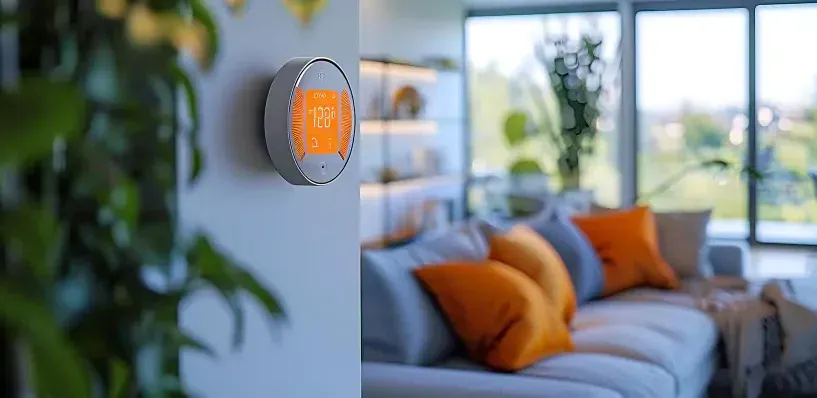
Humidity and temperature are among the most fundamental indicators of indoor environmental quality. They play a crucial role in ensuring comfort, maintaining product integrity, and supporting human health.
In industries such as food manufacturing and storage, improper humidity and temperature levels can lead to spoilage, microbial growth, and product degradation. Similarly, in pharmaceutical environments, precise temperature and humidity control are essential for the preservation of sensitive materials and ensuring compliance with quality standards.
Pulsesensor's solutions are tailored to these critical requirements. Whether you need a fixed sensor system integrated into your building management system or portable monitoring tools for field use, we provide reliable instruments that accurately measure and record environmental data. This empowers organizations to take proactive steps to maintain ideal indoor conditions—protecting both people and products.
One of the most compelling benefits of indoor environmental sensors is their ability to safeguard health and well-being. Poor indoor air quality is often linked to a range of health concerns—from short-term irritations such as headaches, eye discomfort, and fatigue, to more serious long-term issues including asthma, allergies, cardiovascular disease, and even mental health effects.
Sensors that track pollutants such as volatile organic compounds (VOCs), carbon dioxide (CO₂), and particulate matter (PM2.5 and PM10) can help identify when harmful substances accumulate in the air. Elevated VOCs may come from cleaning products, furniture, paints, or adhesives, while PM2.5 particles often stem from combustion sources or outdoor pollution infiltrating indoors.
By continuously monitoring these pollutants, building managers can trigger automated ventilation responses or alerts for corrective action. For example, if PM2.5 levels rise, the system can increase air exchange rates or activate air purifiers. These interventions reduce exposure to airborne contaminants, directly improving indoor air quality and the health of occupants.
Moreover, factors like humidity and temperature also affect well-being. Low humidity can cause dry skin and irritation, while high humidity promotes mold growth and dust mite proliferation. Properly monitored and controlled environments prevent such problems, ensuring healthier living and working spaces for all occupants.
There is growing evidence that environmental conditions significantly influence cognitive function, focus, and overall productivity. Studies have shown that people perform better in environments where air quality, lighting, and acoustics are optimized.
For instance, lighting that aligns with our circadian rhythm—bright and cool during the day, softer and warmer in the evening—can enhance alertness and mood. Conversely, poor lighting can lead to eye strain and fatigue. Air pollutants, including CO₂ and VOCs, can impair cognitive performance, while excessive noise disrupts concentration and memory retention.
Indoor environmental sensors play an essential role in identifying and mitigating these issues. By monitoring light levels, air quality, and sound intensity, facility managers can implement targeted adjustments. If lighting becomes too dim or warm for optimal focus, the system can automatically adjust brightness or color temperature. Similarly, detecting poor air quality may prompt increased ventilation to restore freshness and clarity of thought.
For workplaces, educational institutions, and healthcare environments, this translates into tangible benefits: higher productivity, fewer sick days, improved concentration, and greater overall satisfaction among occupants.
While comfort and health are important, energy efficiency is equally crucial in modern building management. Indoor environmental sensors contribute directly to sustainability goals by enabling intelligent energy use.
Through real-time data on temperature, occupancy, and air quality, building automation systems can dynamically control heating, ventilation, and air conditioning (HVAC) operations. For example, if sensors detect that a meeting room is unoccupied, the system can automatically reduce HVAC output, conserving energy. Conversely, when occupancy increases, the system restores comfortable conditions without wasting resources.
This demand-based control approach helps reduce both operational costs and carbon emissions. Additionally, sensors can identify inefficiencies in insulation or equipment, prompting timely maintenance or upgrades that further enhance performance.
In large commercial buildings, the integration of sensor networks can yield substantial energy savings—sometimes up to 30% reduction in HVAC-related energy consumption—while maintaining or even improving comfort levels.
By leveraging indoor environmental data, organizations not only cut costs but also demonstrate environmental responsibility in alignment with global sustainability initiatives such as LEED certification and ESG (Environmental, Social, and Governance) reporting.
Comfort is one of the most immediate and noticeable aspects of indoor environmental quality. It influences how people perceive their surroundings and how satisfied they feel within them.
Factors such as temperature, humidity, lighting, and acoustics collectively determine thermal and sensory comfort. If a room is too cold or warm, too humid or dry, occupants quickly become uncomfortable and less productive. Similarly, glare from improper lighting or background noise from HVAC systems can negatively impact well-being.
Indoor environmental sensors enable the continuous fine-tuning of these conditions. By gathering real-time feedback, automated systems can adjust settings to maintain optimal comfort levels throughout the day. For example:
Thermal Comfort: Sensors detect temperature variations across zones and trigger HVAC adjustments to maintain uniform conditions.
Lighting Comfort: Light sensors balance natural and artificial illumination, minimizing glare and optimizing brightness.
Acoustic Comfort: Noise level monitoring helps identify and reduce disruptive sound sources.
These adjustments make indoor spaces more pleasant and supportive—whether in offices, classrooms, hospitals, or homes. The result is greater occupant satisfaction, better focus, and improved overall well-being.
As awareness of health, sustainability, and well-being grows, organizations that prioritize indoor environmental quality can significantly enhance their reputation and brand value.
Providing a healthy, comfortable, and sustainable indoor environment signals a company’s commitment to its employees, tenants, and the broader community. For employers, this translates into higher retention rates, lower absenteeism, and a stronger appeal to talent seeking workplaces that value wellness.
From an investment standpoint, businesses that implement environmental monitoring systems align themselves with global trends in ESG (Environmental, Social, and Governance) performance. Transparent tracking of indoor environmental metrics demonstrates proactive management of environmental and social factors—key criteria for investors focused on sustainable and responsible growth.
Furthermore, compliance with emerging building health certifications such as WELL Building Standard, RESET Air, and Fitwel relies heavily on continuous environmental monitoring. By deploying reliable sensor systems, building managers can meet these certification requirements while showcasing their dedication to occupant welfare and environmental stewardship.
Pulsesensor has established itself as a trusted partner in environmental monitoring technology, offering precision instruments tailored to diverse indoor applications. Their solutions are designed with both functionality and flexibility in mind—allowing integration into new or existing systems for maximum control and visibility.
Key advantages of Pulsesensor's environmental sensors include:
High accuracy and reliability, ensuring consistent and trustworthy data readings.
Versatile installation options, from fixed sensors for large facilities to portable models for temporary or field-based assessments.
User-friendly interfaces, enabling quick interpretation of results and easy configuration.
Compatibility with building management systems (BMS) for seamless data-driven control.
Whether applied in manufacturing plants, office buildings, laboratories, or residential settings, Pulsesensor's technology empowers clients to maintain safe, efficient, and comfortable environments—aligned with both regulatory standards and sustainability goals.
The importance of indoor environmental monitoring is expected to grow rapidly as smart building technologies continue to evolve. Integration with the Internet of Things (IoT) and artificial intelligence (AI) will enable predictive maintenance, adaptive comfort control, and advanced data analytics that go beyond simple measurement.
Imagine a system that not only reacts to temperature or air quality changes but anticipates them—automatically adjusting ventilation before CO₂ levels rise, or fine-tuning lighting in anticipation of natural daylight shifts. This proactive approach will define the next generation of building management systems.
Moreover, as climate change and urbanization intensify, maintaining healthy indoor environments will become increasingly vital. With rising outdoor pollution and fluctuating weather patterns, indoor sensors serve as the first line of defense—ensuring that the air we breathe and the spaces we inhabit remain safe and comfortable.
Indoor environmental sensors are more than just monitoring tools—they are integral components of a sustainable, healthy, and productive built environment. From protecting health and enhancing comfort to improving productivity and reducing energy costs, the benefits they provide are both immediate and far-reaching.
By adopting these technologies, businesses, institutions, and homeowners can create indoor spaces that truly support human well-being while promoting operational efficiency and environmental responsibility.
Pulsesensor's advanced range of humidity, temperature, and air quality monitoring solutions exemplifies how precision instrumentation can empower smarter decisions and better outcomes for people and the planet.
In a world where indoor life dominates our daily experience, maintaining optimal environmental conditions is not just a luxury—it’s a necessity. Indoor environmental sensors make it possible to achieve that balance, paving the way for a healthier, more sustainable future for all.
Previous: Smart Sensors Revolutionizing the Automotive Industry
Next: Understanding NDIR Gas Sensors: Principles, Design, and Applications