

In the era of climate change, water scarcity, and increasing global food demand, agriculture faces unprecedented challenges. Farmers, researchers, and environmental managers are turning to advanced technologies to improve crop yields, reduce water consumption, and optimize land management. Among these technologies, the soil moisture sensor has emerged as a key tool for modern agriculture, smart gardening, and environmental monitoring.
Soil moisture sensors provide real-time insight into soil water content, allowing users to make informed decisions about irrigation scheduling, water conservation, and crop management. Once primarily used in scientific research, these sensors are now integrated into greenhouses, open-field farms, golf courses, landscaping projects, and smart home gardening systems. By combining accurate measurements with automation systems, soil moisture sensors are helping transform traditional farming into precision agriculture, where every drop of water and every plant growth factor is monitored and optimized.
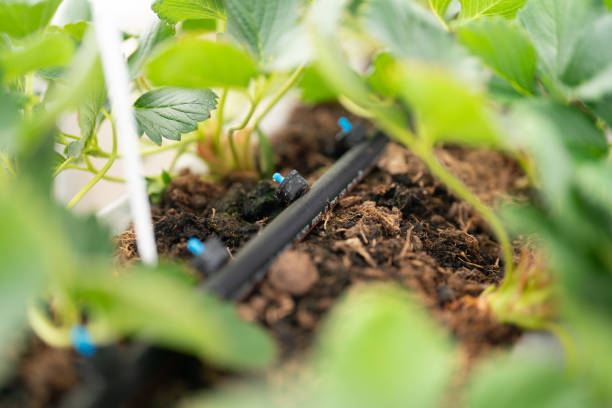
A soil moisture sensor is an electronic device that measures the amount of water present in soil. Moisture levels in soil directly affect plant growth, nutrient absorption, and the activity of beneficial microorganisms. Incorrect soil moisture—either too high or too low—can stress plants, reduce crop yields, and lead to long-term soil degradation.
Modern soil moisture sensors convert the physical water content of soil into an electrical signal. These sensors can then transmit the data to microcontrollers, monitoring systems, or cloud platforms for further analysis. This functionality forms the backbone of automated irrigation systems, which deliver water only when necessary, rather than on fixed schedules, saving water and energy.
The most common type of soil moisture sensor operates based on electrical resistance or conductivity principles. It typically includes two metal probes inserted into the soil. When powered through VCC (voltage supply) and GND (ground) pins, a small electric voltage passes through the soil via these probes.
Soil itself is a poor conductor of electricity. However, water in the soil, containing dissolved minerals and salts, enhances electrical conductivity:
Dry Soil:
Minimal water results in high electrical resistance. Less current flows between the probes.
Wet Soil:
Increased water content lowers resistance, allowing electricity to flow more easily.
The sensor detects changes in electrical resistance and converts this information into a corresponding voltage signal. This voltage represents the soil's moisture level, which can then be interpreted by connected electronics.
Soil moisture sensor modules usually provide two types of output signals, making them versatile for different applications.
The analog output generates a continuous voltage proportional to soil moisture:
- Higher voltage often indicates drier soil (depending on sensor design).
- Lower voltage corresponds to wetter soil.
This analog data allows precise monitoring of gradual moisture changes and is ideal for applications requiring fine-grained measurements, such as greenhouse management, research plots, or large-scale precision agriculture systems.
The digital output works using a comparator circuit and a built-in potentiometer, which sets a moisture threshold:
- If soil moisture drops below the threshold, the digital output goes HIGH, signaling that irrigation may be needed.
- If moisture exceeds the threshold, the digital output goes LOW.
Digital output is suitable for simple automation systems, such as turning irrigation pumps on or off automatically, without complex programming.
Soil moisture sensors vary in design, measurement method, and application. Some common types include:
- Resistive Sensors: Measure electrical resistance between two probes. Affordable and widely used but can suffer from probe corrosion over time.
- Capacitive Sensors: Use changes in capacitance caused by moisture variations in soil. They are more durable and accurate than resistive sensors and suitable for long-term monitoring.
- Tensiometers: Measure the soil water potential rather than direct moisture content. They are highly accurate but more complex and expensive.
- Time-Domain Reflectometry (TDR) Sensors: Advanced sensors that send a pulse along a probe and measure soil moisture based on the reflection time. Used in scientific research and large-scale irrigation systems.
- FDR (Frequency Domain Reflectometry) Sensors: Measure soil dielectric constant to determine moisture levels. Accurate and suitable for precision agriculture.
Soil moisture sensors have broad applications across agriculture, landscaping, research, and smart gardening:
Precision agriculture uses technology to optimize crop production and reduce resource waste. Networks of soil moisture sensors, combined with GPS data, weather stations, and automated irrigation systems, allow farmers to irrigate crops only when necessary, reducing water usage and increasing yield.
Greenhouses require stable, optimal soil moisture levels to produce high-value crops such as vegetables, flowers, and herbs. Sensors ensure accurate irrigation, promoting healthy plant growth and uniform crop quality.
Sports fields, parks, and golf courses rely on soil moisture sensors to maintain green, healthy grass while avoiding overwatering. Sensors help manage water usage efficiently across large areas.
Scientists use soil moisture sensors to monitor soil conditions in drought studies, climate change research, and ecosystem assessments. Accurate soil moisture data supports modeling and analysis of natural processes.
Home gardeners and hobbyists use soil moisture sensors to automate watering systems, protecting plants from both under- and overwatering. These systems often integrate with Wi-Fi or Bluetooth, allowing real-time monitoring via smartphones.
- Real-Time Monitoring: Continuous updates on soil conditions.
- Water Conservation: Irrigation only occurs when necessary, reducing water waste.
- Labor Savings: Automation reduces manual watering.
- Improved Crop Health: Maintains optimal moisture levels for different plant species.
- Cost Efficiency: Reduces energy and water expenses.
- Versatility: Compatible with multiple soil types, irrigation systems, and smart platforms.
Proper maintenance of soil moisture sensors is essential to ensure accurate readings, long service life, and reliable performance. Regular care prevents measurement errors caused by soil buildup, corrosion, or environmental factors.
- Regular Cleaning: Soil particles, salts, and organic matter can accumulate on the sensor probes or body. Gently clean the probes with a soft brush or cloth and mild water solution. Avoid harsh chemicals that can damage sensor surfaces.
- Check for Corrosion: For resistive sensors, metal probes can corrode over time, especially in wet or saline soils. Inspect probes periodically and replace them if corrosion affects readings. Using capacitive sensors can reduce corrosion-related issues.
- Proper Storage: When not in use, store sensors in a dry, dust-free environment to prevent moisture or dirt damage. For long-term storage, remove any soil residues and cover the probes.
- Calibration: Different soil types affect readings. Regularly calibrate sensors according to the manufacturer's instructions, especially after changing soil or irrigation conditions.
- Avoid Mechanical Stress: Do not bend or force probes into hard soil. Insert carefully at the recommended depth to prevent damage.
- Protect Wiring and Connections: Ensure cables and connectors remain dry and intact. Loose or damaged connections can cause intermittent or false readings.
Following these maintenance practices will help maximize sensor accuracy, durability, and efficiency, ensuring reliable soil moisture monitoring for agriculture, landscaping, and smart gardening systems.
Despite their advantages, soil moisture sensors face some challenges:
Accuracy Variations: Different soil types, including sandy, clay, or loamy soils, can affect sensor readings. Calibration is essential.
Probe Corrosion: Resistive sensors with metal probes can corrode over time, impacting performance.
Salinity Interference: High salt content in soil can affect resistance-based sensors.
Installation Depth: Soil moisture varies with depth, requiring proper sensor placement for accurate monitoring.
Cost for Advanced Systems: High-precision TDR or FDR sensors can be expensive, limiting adoption in small-scale farms.
Modern soil moisture sensors are increasingly integrated into IoT-enabled smart farming platforms. Connectivity options include:
- Wireless Communication: LoRa, Wi-Fi, Zigbee
- Mobile Applications: Real-time soil moisture data on smartphones
- Cloud Platforms: Historical data tracking, AI-based predictive irrigation
- Automated Irrigation Systems: Pumps, valves, and sprinklers triggered automatically based on soil conditions
These systems enable data-driven irrigation, helping farmers optimize water usage, improve yields, and reduce labor.
The soil moisture sensor market has grown rapidly due to:
- Increasing awareness of water scarcity
- Government initiatives promoting sustainable agriculture
- Rising adoption of smart irrigation solutions
- Advances in IoT and sensor technology
Global sensor adoption is expected to rise as precision agriculture becomes more mainstream and as smart home gardening systems gain popularity.
Emerging trends in soil moisture monitoring include:
Solar-Powered Sensor Nodes: Reducing energy dependency in remote farms
AI-Driven Irrigation: Machine learning algorithms predicting optimal watering schedules
Multi-Parameter Soil Sensors: Measuring moisture along with temperature, pH, and nutrient content
Long-Range Wireless Networks: Enabling large-scale, real-time soil monitoring in precision agriculture
As global water challenges intensify, soil moisture sensors will play a critical role in ensuring sustainable and efficient farming practices worldwide.
Soil moisture sensors have evolved from simple research tools into essential components of modern agriculture and environmental management. By measuring soil water content and converting it into actionable electrical signals, these sensors enable smarter irrigation, improved crop health, and reduced water and energy usage. From large farms to home gardens, soil moisture sensors are at the forefront of the transition to precision agriculture, sustainable resource management, and data-driven farming solutions. As technology continues to advance, their role will only become more significant in tackling global challenges related to food security and water conservation.
Previous: The Complete Guide to Infrared PM2.5 Sensors: Principles, Applications, and Trends
Next: How to Choose the Right Air Purifier: A Comprehensive Guide