

Carbon dioxide (CO2) plays a central role in the life cycle of plants. As one of the raw materials in photosynthesis, it provides the foundation for plant energy production, growth, and yield. Inside a greenhouse, where the environment can be tightly controlled, the concentration of carbon dioxide directly influences crop health and productivity. When maintained at appropriate levels, CO2 enhances photosynthesis and leads to increased yields, healthier plants, and more efficient use of resources. However, if CO2 levels rise too high, certain crops, such as mushrooms, become vulnerable to rot and spoilage.
For growers seeking to balance crop quality and productivity, monitoring CO2 concentration is no longer optional—it has become a critical part of modern greenhouse management. With the help of advanced carbon dioxide sensors, farmers and agricultural enterprises can track gas levels in real time, make precise adjustments, and integrate CO2 management into automated greenhouse systems.
This article explores how CO2 is measured, the technologies behind sensors, their working principles, and the benefits they bring to agriculture. We will also examine the role of anti-high humidity CO2 sensors, their applications in greenhouses, and how they are shaping the future of smart farming.
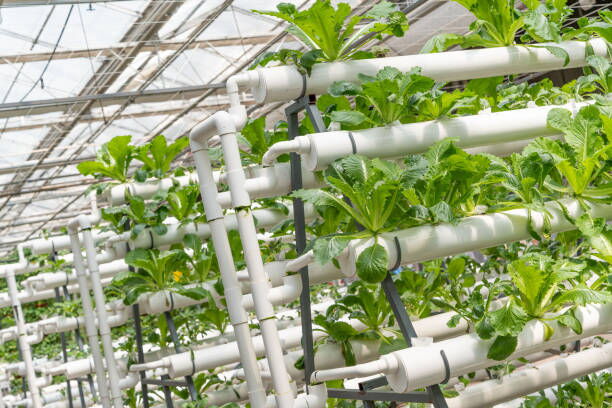
Measuring CO2 in the air requires specialized gas sensors designed to detect concentrations accurately and consistently. The three main types of sensors currently used in greenhouse environments are:
Electrochemical CO2 sensors rely on chemical reactions that produce electrical currents proportional to the concentration of CO2 present. They are compact, affordable, and relatively simple in design. However, their lifespan may be shorter, and they can be influenced by environmental conditions such as temperature and humidity.
NDIR sensors are the most widely adopted in agriculture today due to their accuracy and durability. These sensors measure CO2 levels by analyzing how much infrared light is absorbed by CO2 molecules in the air. Since CO2 has unique absorption properties, NDIR technology offers precise readings, even in challenging greenhouse environments. Their long lifespan and resistance to interference make them ideal for long-term monitoring.
MOS sensors detect CO2 by measuring changes in electrical resistance of a metal oxide layer when exposed to the gas. While generally more cost-effective, they are less accurate compared to NDIR and may be affected by the presence of other gases. These sensors are often used in applications where approximate readings are acceptable.
A modern CO2 sensor system for greenhouse use does more than simply provide readings. It integrates advanced features designed to simplify monitoring and improve decision-making. Key functionalities include:
Sensors precisely detect concentration levels, ensuring farmers know whether conditions are optimal or require adjustment.
Many modern systems connect wirelessly to apps or greenhouse control software, allowing growers to check CO2 levels remotely.
Some systems use artificial intelligence to analyze historical and real-time data, offering recommendations for ventilation, fertilization, and gas injection.
Integrated sensors can directly communicate with greenhouse systems, adjusting fans, vents, and CO2 injectors to maintain ideal levels without human intervention.
This level of automation not only improves precision but also reduces the need for constant manual monitoring, saving labor costs and improving efficiency.
The use of CO2 sensors brings a range of advantages to greenhouse operations:
When plants receive the right amount of CO2, their photosynthesis process accelerates, enabling them to produce more energy. This leads to faster growth rates and higher yields, making sensor technology a direct contributor to farm profitability.
Consistent CO2 management helps ensure that plants do not experience stress from low or excessively high concentrations. The result is stronger, healthier crops with better resistance to disease.
By automating CO2 regulation, farms can reduce manual intervention. This not only saves time but also reduces errors associated with human monitoring.
Access to real-time and historical data allows growers to make informed choices regarding ventilation, irrigation, and fertilization strategies. Over time, these insights help refine greenhouse management for maximum efficiency.
The greenhouse environment often involves high humidity levels, particularly in regions with warm climates or in setups designed to maximize plant hydration. However, these conditions can be challenging for standard sensors, leading to corrosion, inaccurate readings, or shortened sensor lifespans.
To address this, anti-high humidity CO2 sensors have been developed. These sensors are built with protective coatings and specialized designs that allow them to function reliably even in environments where humidity is consistently high.
In plant breeding and vegetable production, the importance of accurate CO2 monitoring cannot be overstated. About 95% of the dry weight of agricultural crops comes from photosynthesis. Through this process, leaves absorb CO2 and, with the help of water and inorganic nutrients, convert it into carbohydrates. These compounds—sugars, starches, amino acids, proteins, and vitamins—are essential for plant growth and fruit development.
As a result, many growers deliberately enrich greenhouses with CO2, also known as “gas fertilizer.” This practice increases carbon dioxide content, encouraging better growth and higher yields. Anti-high humidity sensors ensure that enrichment systems remain efficient by providing accurate readings, even in challenging environments.
Carbon dioxide is essential for photosynthesis, but its optimal concentration varies widely across different crops. This makes CO2 monitoring a critical factor in achieving both high yields and consistent quality.
Tomatoes and cucumbers, for instance, respond very positively to elevated CO2 environments. When concentrations are carefully maintained at optimal levels, these crops experience faster growth rates, stronger stems, and significantly higher yields. For commercial greenhouse operations, this translates into improved productivity and profitability.
Lettuce and other leafy greens also benefit from increased CO2, showing enhanced growth and improved leaf development. However, they are more sensitive to imbalances. Excessive levels can negatively affect leaf texture and overall crop quality, making careful monitoring essential to balance yield with consumer expectations for appearance and taste.
Mushrooms, on the other hand, require an entirely different approach. Unlike leafy or fruit-bearing crops, mushrooms are extremely sensitive to high CO2 levels. If concentrations are not properly controlled, they can quickly deteriorate, leading to rot and reduced harvest quality.
By tailoring CO2 levels to the specific needs of each crop, growers can create optimal conditions for healthy development. This targeted approach ensures maximum output while preserving the quality and market value of greenhouse produce.
While CO2 sensors provide clear advantages in greenhouse crop management, their adoption is not without challenges. One of the most significant barriers is installation cost. Advanced NDIR (Non-Dispersive Infrared) sensors and integrated monitoring systems deliver excellent precision and durability, but they often come with a higher price tag. For small-scale farmers or those operating on limited budgets, this investment can be difficult to justify, despite the potential long-term gains in productivity.
Another challenge is maintenance. To ensure reliable performance, CO2 sensors require periodic calibration and cleaning. Dust, plant debris, and residue from irrigation systems can accumulate on sensors, potentially skewing readings. Without proper upkeep, data accuracy may decline, undermining the benefits of monitoring.
Environmental interference also poses a concern. Greenhouses are dynamic environments with high humidity, condensation, and fluctuating temperatures. These conditions can affect sensor sensitivity or even damage less durable models.
To address these issues, manufacturers are continually developing robust, low-maintenance designs tailored to agricultural conditions. Innovations such as anti-humidity coatings, self-calibration features, and wireless connectivity are helping reduce the burden on growers, making CO2 monitoring more accessible and reliable across farms of different sizes.
CO2 sensors play a vital role in the evolution of smart agriculture, where data-driven tools and automation are transforming traditional farming practices. Instead of functioning as stand-alone devices, CO2 sensors are now integrated into IoT (Internet of Things) ecosystems that connect multiple environmental parameters in real time. By linking CO2 monitoring with temperature, humidity, soil moisture, and light sensors, growers gain a comprehensive picture of greenhouse conditions and can manage them with unprecedented precision.
This integration allows for automatic responses to changing conditions. For instance, when CO2 levels fall below an optimal threshold, the system can instantly trigger CO2 injectors. At the same time, it may adjust ventilation to maintain air quality while preventing excess gas buildup. Other interconnected systems, such as irrigation and lighting, can be fine-tuned to work in synergy, ensuring plants receive the ideal balance of resources.
Beyond real-time adjustments, AI-powered platforms enhance long-term greenhouse management. By analyzing historical data and identifying patterns, these systems predict crop needs, recommend strategies for improving yield, and help reduce waste. Ultimately, CO2 sensors—when paired with IoT and AI—empower farmers to increase efficiency, lower costs, and move toward more sustainable agricultural practices.
As global demand for food increases and agricultural resources face mounting pressures, precision farming technologies such as CO2 sensors will play a critical role in meeting these challenges. The shift toward sustainable farming practices will further accelerate adoption, as optimizing CO2 use reduces waste and energy consumption.
Manufacturers are now focusing on:
Developing more durable, humidity-resistant sensors suitable for extreme greenhouse environments.
Integrating AI and machine learning for predictive insights.
Creating affordable solutions that can be adopted by small and medium-sized farms.
Expanding wireless connectivity for seamless integration into modern smart farming networks.
Carbon dioxide sensors have become indispensable in modern greenhouse operations. By providing accurate, real-time monitoring of CO2 levels, they enable farmers to optimize photosynthesis, increase yields, reduce labor, and maintain crop health. The development of anti-high humidity sensors has further extended their application, making them reliable even in challenging environments.
As agriculture moves toward greater automation and sustainability, CO2 sensors will remain at the forefront of innovation. Their ability to turn raw data into actionable insights ensures that farmers can meet growing food demands while maintaining efficiency and quality. In the era of smart farming, these devices are not just tools—they are essential allies in cultivating the future of agriculture.
Previous: Unseen Threats in the Air You Breathe – How Air Quality Monitors Protect Your Health
Next: Comprehensive Guide to Formaldehyde Gas Sensors: Ensuring Safety and Air Quality