

Every time you take a deep breath, you probably imagine pulling fresh, clean oxygen into your lungs. But the reality is far more complicated. Invisible particles, chemical vapors, and microscopic pollutants drift in the air all around us—indoors and outdoors—often without our awareness. Some are harmless, but others can seriously impact human health, contributing to respiratory illness, cardiovascular disease, and even long-term neurological conditions.
These unseen invaders are collectively known as particulate matter (PM), and they are far more widespread than most people realize. Even when the sky looks blue and the air feels crisp, PM is present in levels that may affect health. Understanding what PM is, where it comes from, and how to reduce exposure is critical to protecting yourself and your family.
In this article, we’ll explore what particulate matter is, the surprising sources of air pollution in our everyday lives, how PM affects health, and how technology like indoor air quality monitors can help us breathe easier.
Particulate matter, or PM, is a broad term describing tiny solid particles and liquid droplets suspended in the air. Some particles are large enough to be visible—like dust swirling in a sunbeam—but the most dangerous ones are microscopic, invisible to the naked eye, and capable of penetrating deep into the human body.
PM is generally classified into three main size categories:
PM10: These particles are 10 micrometers or smaller, about the width of a grain of fine sand. They include dust, pollen, and debris from construction sites. While larger than other types of PM, they can still irritate the nose, throat, and upper lungs.
PM2.5: These particles are 2.5 micrometers or smaller, roughly 1/30 the width of a human hair. They originate from combustion sources such as vehicle exhaust, power plants, industrial processes, and even everyday cooking. Because of their small size, PM2.5 particles travel deeper into the lungs and are strongly linked to chronic respiratory and cardiovascular diseases.
Ultrafine Particles (UFPs): Measuring 0.1 micrometers or smaller, these are the most dangerous of all. UFPs are produced by modern devices such as 3D printers, welding equipment, and laser printers, as well as by vehicle emissions. Their microscopic size allows them to bypass lung tissue entirely, entering the bloodstream and spreading throughout the body.
Even when the air appears clean, these invisible particles are floating around us—indoors and outdoors—posing risks that often go unnoticed until health issues emerge.
Airborne particles come from both natural and human-made sources. While natural processes have always released particulates into the environment, industrialization, urbanization, and modern lifestyles have dramatically increased the concentrations we’re exposed to daily.
Wildfires: Smoke plumes from forest fires can travel hundreds of miles, carrying hazardous PM2.5 particles into urban and rural areas alike.
Volcanic activity: Ash clouds contain fine particles that affect air quality far beyond eruption zones.
Sea spray: Ocean waves release salt particles that contribute to local PM levels.
Soil and dust storms: Wind-driven dust can degrade air quality across regions, especially in arid climates.
Traffic emissions: Exhaust from cars, trucks, and buses is a leading contributor to PM2.5 and ultrafine particles in cities.
Industrial processes: Power plants, manufacturing facilities, and construction activities release dust, soot, and chemical byproducts.
Combustion sources: Cigarette smoke, fireplaces, wood-burning stoves, and even grilling food can generate harmful PM.
Household devices: Surprisingly, everyday electronics like laser printers, welding machines, and 3D printers release ultrafine particles indoors.
One particularly overlooked source? Kitchen fumes. Studies reveal that frying or grilling food can cause PM2.5 levels indoors to spike higher than those recorded on traffic-congested streets. This makes cooking one of the most significant contributors to poor indoor air quality.
Just because PM is invisible does not mean it is harmless. In fact, the smaller the particle, the more dangerous it becomes. The body’s natural defenses—like nose hairs and mucus—can filter out some larger particles, but finer ones evade these barriers.
PM10: Often causes nasal irritation, coughing, and allergic reactions. It aggravates conditions like asthma and seasonal allergies.
PM2.5: Penetrates deep into the lungs, where it contributes to bronchitis, emphysema, asthma, and reduced lung function. Long-term exposure is associated with lung cancer and chronic obstructive pulmonary disease (COPD).
Ultrafine particles (UFPs): Can enter the bloodstream and travel throughout the body, contributing to heart disease, strokes, neurological problems, and even adverse birth outcomes.
Beyond health, PM also affects the environment. Fine particles are the primary cause of haze and smog, which reduce visibility, damage ecosystems, and impact economic productivity by lowering air quality in cities worldwide.
When people think about pollution, they usually imagine outdoor smog or traffic fumes. But indoor air often contains higher concentrations of pollutants than outdoor environments. Since most individuals spend 80–90% of their time indoors, this makes indoor exposure a critical health issue.
Sources of indoor PM and pollutants include:
Cooking activities (especially frying and grilling).
Heating appliances like fireplaces and kerosene heaters.
Smoking (both tobacco and e-cigarettes).
Household products releasing volatile organic compounds (VOCs), such as cleaning supplies, paints, adhesives, and synthetic materials.
Poor ventilation, which allows pollutants to build up instead of dispersing.
For example, VOCs—volatile organic compounds—are a diverse group of chemicals found in paints, new carpets, mattresses, dry-cleaning agents, and even personal care products. Short-term exposure can cause headaches, nausea, and irritation, while long-term exposure has been linked to kidney damage, liver damage, and certain cancers.
The takeaway? Even if you live in a low-pollution area, the air inside your home or workplace may still pose significant health risks.
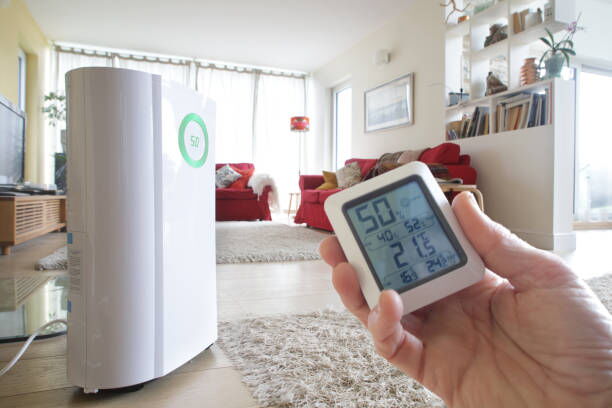
To combat invisible threats, many households and businesses are turning to indoor air quality (IAQ) monitors. These smart devices use sensors to track pollutants and environmental conditions in real time, providing insights that help people make healthier choices.
Carbon dioxide (CO₂): High levels indicate poor ventilation and can cause headaches, fatigue, and reduced concentration.
PM2.5 and PM10: By tracking particulate matter, monitors help users know when to ventilate or use air purifiers.
Volatile organic compounds (VOCs): Detects harmful gases released by everyday products.
Temperature and humidity: Crucial for comfort and respiratory health, since overly dry or humid air can worsen health conditions.
With real-time data, IAQ monitors empower individuals to take immediate action—whether by opening windows, turning on an air purifier, or reducing the use of products that emit VOCs.
Awareness is the first step, but reducing exposure to harmful particles requires proactive measures. Fortunately, small changes can make a big difference:
Ventilation is key: Use exhaust fans in kitchens and bathrooms. Open windows when outdoor air quality is good.
Cook smarter: Cover pans when frying, use induction stoves instead of gas where possible, and ensure kitchens are well-ventilated.
Use air purifiers: Devices equipped with HEPA filters are effective at removing PM2.5 and other pollutants.
Control indoor humidity: Aim for 30–50% humidity to prevent mold growth while keeping the air comfortable.
Avoid smoking indoors: Cigarette smoke is a leading source of PM2.5 indoors.
Choose low-VOC products: Look for paints, cleaning supplies, and household goods labeled as “low-VOC” or “VOC-free.”
Maintain your HVAC system: Regularly change filters to keep indoor air circulating cleanly.
By combining these practices with the use of air quality monitors, households can significantly reduce their exposure to harmful particles.
Air pollution is not just an individual problem—it’s a global crisis. According to the World Health Organization (WHO), air pollution contributes to over 7 million premature deaths annually. Cities across Asia, Africa, and parts of Europe and North America regularly exceed safe air quality thresholds.
Governments are responding with policies aimed at reducing emissions from vehicles, phasing out coal-fired power plants, and promoting renewable energy. But progress is uneven, and millions of people remain vulnerable.
Emerging technologies, such as electric vehicles, renewable power sources, and advanced filtration systems, offer hope for a cleaner future. However, individual actions—like reducing household emissions and monitoring indoor air—remain critical components of the solution.
The air we breathe is far from empty. It is a complex mixture of gases, particles, and chemicals—many of which pose risks to our health. Particulate matter, especially PM2.5 and ultrafine particles, is a silent but serious threat, capable of penetrating deep into the body and causing long-term damage.
While outdoor air pollution receives much of the attention, indoor air often harbors even higher concentrations of harmful substances. From kitchen fumes to VOCs in household products, the sources are diverse but manageable.
By using air quality monitors, improving ventilation, adopting cleaner cooking practices, and being mindful of product choices, individuals can take meaningful steps to safeguard their health. On a broader scale, collective efforts to reduce emissions and transition to cleaner energy sources are essential for a healthier planet.
Every breath matters. The more we understand about what’s in the air around us, the better equipped we are to protect ourselves and future generations from the invisible enemy drifting through our environment.
Previous: What Are Formaldehyde Sensors Used For?
Next: The Role of Carbon Dioxide Sensors in Modern Greenhouse Farming



