

Air pollution is a global concern that affects both human health and the environment. Among the different types of pollutants, particulate matter (PM) is particularly dangerous due to its microscopic size and ability to penetrate deep into the lungs and bloodstream. Monitoring particulate matter is crucial for protecting public health, improving indoor air quality, and even optimizing engine performance in vehicles equipped with diesel particulate filters (DPFs). But how exactly do PM sensors work? This article explores the science behind particulate matter, the functioning of PM sensors, and the importance of air quality monitoring, both indoors and outdoors.
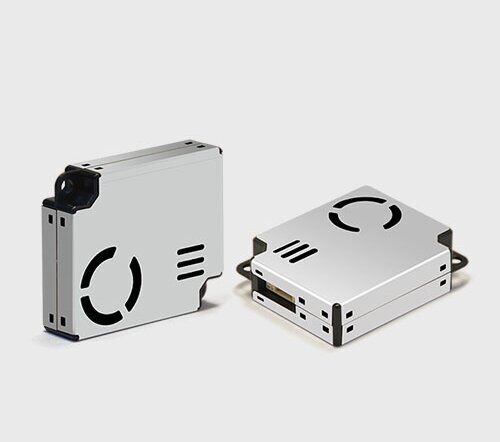
Particulate matter, often abbreviated as PM, refers to tiny solid or liquid particles suspended in the air. These particles are small enough to remain airborne for long periods, and they vary in size from visible dust to microscopic molecules invisible to the naked eye. PM is classified based on particle diameter:
PM10: Particles with diameters of 10 micrometers or less.
PM2.5: Particles with diameters of 2.5 micrometers or less.
Ultrafine particles (PM0.1): Particles smaller than 0.1 micrometers.
Sources of particulate matter are diverse. They can include:
Human activities: Fossil fuel combustion in vehicles, power plants, and industrial processes. Cooking smoke and aerosols from household products also contribute.
Construction and urban activities: Dust generated during construction or demolition, as well as soil particles stirred up by traffic.
Agriculture: Dust from plowing, harvesting, and the handling of fertilizers or feed.
Natural events: Wildfires, volcanic eruptions, and pollen release from plants.
Microplastics: Tiny plastic particles released into the air from various sources.
Particulate matter can affect not only human health but also the environment and climate. For example, soot particles can absorb sunlight, contributing to global warming, while other particles can scatter light and reduce visibility.
When studying PM, the term aerosol is often used. Aerosols are simply mixtures of air and particulate matter. They are not inherently man-made; sea spray, for instance, is a natural aerosol. Aerosols include both particles and gases suspended in the air, which makes them an important focus in air quality monitoring.
Monitoring particulate matter is critical for several reasons.
Exposure to PM, especially PM2.5 and ultrafine particles, can cause respiratory issues, cardiovascular problems, and even neurological effects. Prolonged exposure increases the risk of chronic diseases such as asthma, bronchitis, and heart disease. Vulnerable populations, including children, the elderly, and those with preexisting conditions, are particularly at risk.
Indoor environments can have unique sources of particulate matter, sometimes exceeding outdoor pollution levels. Common indoor PM sources include:
Dust from flooring, furniture, and daily activities.
Pet dander and human skin cells.
Mold spores from moisture issues.
Smoke and aerosols from cooking, smoking, or vaping.
Fibers released from textiles, carpets, or industrial processes.
Given that people spend the majority of their time indoors, accurate indoor PM monitoring is essential for maintaining healthy air quality.
Particulate matter contributes to smog formation, reduces visibility, and can deposit on water bodies and soil, impacting ecosystems. Certain PM particles, like black carbon, can accelerate climate change by absorbing heat in the atmosphere.
In industrial settings, PM sensors are used to monitor emissions and comply with environmental regulations. In vehicles, particularly those with diesel engines, PM sensors help detect soot accumulation in the diesel particulate filter (DPF). This allows the engine management system to trigger regeneration processes, ensuring efficient filter operation and reducing harmful emissions.
PM sensors detect particulate matter in the air using advanced technologies. Their operation can be divided into several types, each with specific mechanisms and applications.
In automotive applications, soot particle sensors are designed to monitor the accumulation of particles in diesel engines. The typical components of such a sensor include:
Interdigital electrodes (IDE): Comb-like structures with an initial infinite electrical resistance.
Internal heater: Regenerates the sensor before each measurement phase.
Positive temperature coefficient (PTC) resistor: Measures the sensor’s temperature.
The sensor operates on the principle of resistance measurement. As soot particles accumulate on the electrodes, they form conductive paths. Once the conductivity reaches a threshold, the sensor signals the engine control system to initiate DPF regeneration, burning off accumulated soot. This ensures that the filter continues to function efficiently.
Before each measurement cycle, the sensor element is heated to a defined state to remove residual particles, ensuring accurate readings in the next cycle.
One of the most common PM detection technologies, especially for indoor and outdoor air quality monitoring, is laser scattering. The principle is straightforward:
Air intake: A small fan draws air into the sensor chamber.
Laser illumination: A laser beam passes through the air sample.
Light scattering: Particles in the air scatter the laser light in various directions.
Detection: Photodetectors measure the intensity of scattered light.
Calculation: Using algorithms based on Mie scattering theory, the sensor calculates particle concentration and size distribution.
Laser scattering sensors provide near real-time data, making them highly suitable for continuous monitoring in homes, offices, and industrial environments. They are sensitive enough to detect PM2.5 and ultrafine particles, providing crucial information for health and safety.
Filter-based methods are another way to measure particulate matter. These sensors operate by:
Passing air through a filter that captures particles.
Weighing the filter before and after the sampling period.
Calculating the mass of particles collected per unit volume of air.
While filter-based methods are highly accurate, they are slower than optical sensors and less suitable for real-time monitoring. They are commonly used for regulatory compliance testing and long-term studies.
Some modern PM sensors combine optical and filter-based methods to improve accuracy and responsiveness. These sensors can provide both real-time data and long-term averaged measurements, offering a comprehensive picture of air quality.
PM sensors are used in a wide range of applications:
Governments and environmental agencies rely on PM sensors to track air pollution levels, issue health advisories, and enforce air quality regulations. Networks of PM monitoring stations provide data on urban air quality, industrial emissions, and pollution trends over time.
PM sensors are integrated into smart home devices, HVAC systems, and air purifiers. By monitoring indoor air quality, these devices can automatically adjust ventilation and filtration to reduce exposure to harmful particles.
As mentioned earlier, PM sensors are essential for diesel engines equipped with particulate filters. They help:
Detect soot accumulation in the filter.
Trigger regeneration processes to maintain filter efficiency.
Reduce harmful emissions and comply with emission standards.
Hospitals, laboratories, and cleanroom facilities use PM sensors to maintain sterile environments. Detecting even small amounts of particulate matter is critical for preventing contamination and protecting sensitive equipment and patients.
Manufacturing facilities, construction sites, and chemical plants deploy PM sensors to monitor workplace air quality. Early detection of harmful particles can prevent occupational health issues and ensure regulatory compliance.
PM sensors continue to evolve with technological advancements. Some emerging trends include:
Miniaturization: Smaller, portable PM sensors allow individuals to monitor air quality on the go.
Wireless connectivity: Integration with IoT systems enables real-time remote monitoring and data sharing.
Enhanced sensitivity: Advanced laser and optical technologies can detect ultrafine particles more accurately.
Data analytics: AI and machine learning algorithms improve interpretation of PM sensor data, helping predict pollution trends and sources.
Energy efficiency: Low-power PM sensors are being developed for battery-operated devices and sustainable applications.
These innovations are making PM sensors more accessible, reliable, and versatile, helping societies better understand and mitigate air pollution.
Particulate matter is a major air pollutant with serious implications for human health, indoor air quality, and environmental sustainability. PM sensors, whether based on soot detection, laser scattering, or filter collection, play a crucial role in monitoring these invisible threats. By measuring particle size, concentration, and composition, PM sensors provide actionable data for individuals, industries, and governments alike.
As technology continues to advance, PM sensors are becoming smaller, smarter, and more efficient, enabling real-time air quality monitoring across diverse settings. From homes and offices to industrial sites and vehicles, these sensors are indispensable tools for protecting health and promoting cleaner air worldwide.
Understanding how PM sensors work helps us appreciate the science behind air quality monitoring and emphasizes the importance of proactive measures to reduce particulate matter exposure. Whether for regulatory compliance, personal health, or environmental protection, PM sensors are a critical part of the modern fight against air pollution.
Previous: Understanding the Difference Between PM2.5 and PM10 Air Quality Sensors
Next: Laser PM2.5 Air Quality Sensors: Advancing Air Quality and Health Protection