

Formaldehyde is a colourless, flammable, and highly reactive gas that is widely used in modern industry. Its presence spans across multiple sectors, from the production of building materials and paper coatings to the formulation of cosmetics, adhesives, and disinfectants. While it is a useful industrial chemical, formaldehyde exposure poses serious health risks. Short-term contact may cause headaches, skin irritation, and breathing difficulties, while long-term exposure has been linked to chronic respiratory problems and even cancer. Because of these risks, monitoring formaldehyde levels in both residential and industrial environments has become a matter of public health and regulatory concern.
This is where formaldehyde sensors play a vital role. These devices are designed to detect and measure the concentration of formaldehyde gas (commonly referred to as HCHO) in the air. They provide a quantitative measure that helps homeowners, employers, researchers, and regulators ensure air quality meets safety standards. Over the years, sensor technologies have evolved, offering different methods of detection, including electrochemical, optical, and photochemical approaches. Each of these methods has distinct advantages and applications, making them suitable for specific needs.
In this article, we will explore how formaldehyde sensors work, the scientific principles behind their operation, the industries that rely on them, and the future directions of this critical technology.
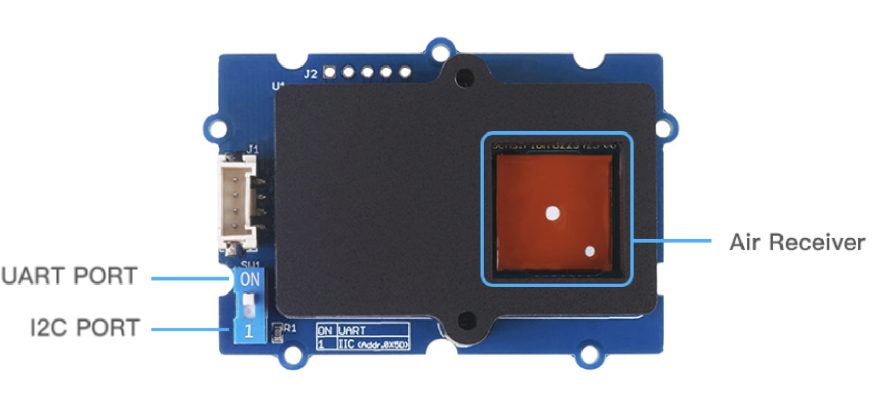
Formaldehyde is classified as a human carcinogen by major health organizations, including the World Health Organization (WHO) and the International Agency for Research on Cancer (IARC). Its health effects can vary depending on concentration and exposure time:
Short-term effects: Eye irritation, throat discomfort, coughing, nausea, and headaches.
Medium-term effects: Allergic skin reactions, asthma-like symptoms, and difficulty breathing.
Long-term effects: Chronic respiratory illnesses and increased cancer risk, particularly nasopharyngeal cancer and leukemia.
What makes formaldehyde particularly challenging to deal with is its common presence in indoor environments. New furniture, flooring, paints, and adhesives often emit formaldehyde in a process known as off-gassing, which can persist for months or even years. Poorly ventilated indoor spaces may accumulate concentrations that exceed safe levels, leading to chronic low-level exposure.
To safeguard human health, governments and regulatory agencies worldwide have set strict limits for permissible formaldehyde concentrations:
World Health Organization (WHO): 0.1 mg/m³ (0.08 ppm) as a 30-minute average exposure.
OSHA (U.S. Occupational Safety and Health Administration): 0.75 ppm as an 8-hour time-weighted average, with a short-term exposure limit of 2 ppm.
China Indoor Air Quality Standard: ≤0.08 ppm in residential spaces.
Monitoring technologies, particularly formaldehyde sensors, provide a way to measure these concentrations accurately in real time, ensuring compliance and protecting public health.
Formaldehyde is primarily encountered in its gaseous state, so most sensors are designed to detect airborne HCHO. The working principle depends on the chosen detection method, but the goal is the same: to translate the presence of formaldehyde into a measurable electrical or optical signal.
Electrochemical formaldehyde sensors are the most widely used due to their accuracy and relatively low cost. They operate on the principle of electrochemical reactions:
Formaldehyde molecules diffuse into the sensor chamber.
They interact with the working electrode coated with a catalytic material.
This reaction produces a small electrical current proportional to the concentration of HCHO in the air.
The sensor interprets this current and converts it into a readable value.
Electrochemical sensors often include a reference electrode and a counter electrode, ensuring accuracy and stability. Temperature compensation is also applied to account for environmental changes.
Advantages:
High sensitivity and selectivity.
Low detection limits, often down to parts per billion (ppb).
Compact and energy-efficient, making them suitable for portable devices.
Limitations:
May have limited lifespan due to electrode degradation.
Requires calibration for consistent accuracy.
Optical formaldehyde sensors use light-based detection methods, such as localized surface plasmon resonance (LSPR). In this setup, formaldehyde molecules adsorb onto a sensor surface, altering its dielectric environment. These changes shift the resonance frequency of surface electrons, which can be detected as variations in light absorption or reflection.
Advantages:
Highly sensitive.
Provides real-time continuous monitoring.
Non-contact measurement method.
Limitations:
More expensive compared to electrochemical sensors.
Requires precise instrumentation and calibration.
Photochemical sensors rely on chemical reactions that produce a visible colour change in the presence of formaldehyde. For instance, when HCHO reacts with a reagent, the resulting compound alters in colour. This change can be analyzed by a smartphone camera or a photodetector.
Advantages:
Simple and cost-effective.
Can be integrated into consumer-grade monitoring devices.
Limitations:
Less accurate than electrochemical and optical methods.
Influenced by environmental factors like humidity and lighting conditions.
Formaldehyde can be measured using various laboratory and field methods. High-end laboratory techniques include:
AHMT Spectrophotometry – Uses chromogenic reactions to measure formaldehyde.
Gas Chromatography (GC) – Separates and quantifies gas molecules with high precision.
Acetylacetone Fluorescence Spectrometry – Detects fluorescent compounds formed from formaldehyde reactions.
High-Performance Liquid Chromatography (HPLC) – Provides accurate quantitative results.
Mid-Infrared Laser Absorption Spectroscopy – Detects unique absorption features of formaldehyde molecules.
These methods are highly accurate but often expensive, time-consuming, and require skilled operators. They are primarily used in laboratories, not daily consumer applications.
For general users and households, simpler methods are accessible:
Metal Oxide Semiconductor (MOS) sensors
Electrochemical (EC) sensors
Phenol Reagent Spectrophotometry
Photoelectric Photometry
Among these, electrochemical formaldehyde sensors are preferred for consumer-grade detectors due to their balance of affordability, reliability, and sensitivity.
The most common application is ensuring safe indoor air quality. Sensors are integrated into home air purifiers, HVAC systems, and standalone detectors to alert residents of elevated HCHO levels.
Industries such as furniture manufacturing, plywood production, and textile processing use formaldehyde in large quantities. Workplace sensors provide continuous monitoring to protect workers and ensure compliance with occupational safety regulations.
Hospitals and research facilities sometimes use formaldehyde as a disinfectant or preservative. Sensors help control concentrations in labs, morgues, and disinfection rooms to prevent harmful exposure.
Interior components such as adhesives, seat foams, and plastic trims can off-gas formaldehyde. Automotive manufacturers deploy sensors to test and certify that vehicle cabins remain within safe exposure limits.
With the rise of smart homes, formaldehyde sensors are increasingly integrated into IoT-based monitoring systems. These systems allow homeowners to track air quality through smartphones, receive alerts, and even automate ventilation systems when unsafe levels are detected.
The future of formaldehyde sensing technology is moving toward higher sensitivity, portability, and affordability. Key research directions include:
Improving Sensitivity and Lower Detection Limits
Advances in nanomaterials (graphene, carbon nanotubes, and metal-organic frameworks) are being explored to enhance sensor responsiveness and lower detection thresholds to ppb levels.Miniaturization
Compact sensors integrated into smartphones, wearables, and portable air monitors are a growing trend, making real-time personal exposure tracking more accessible.Multi-Compound Detection
Combining formaldehyde sensors with other gas detectors (such as VOC, CO, and NO₂ sensors) enables comprehensive air quality monitoring.Cost Reduction
By simplifying manufacturing processes and optimizing materials, researchers aim to make high-performance sensors more affordable for mass-market adoption.Enhanced Stability and Durability
Longer lifespan sensors with self-calibration features are being developed to minimize maintenance.
Provides real-time monitoring of harmful gas exposure.
Can be designed for portable or fixed applications.
Essential for compliance with air quality regulations.
Protects human health and improves quality of life.
Accuracy can vary depending on sensor type and environmental conditions.
High-end sensors remain costly.
Regular calibration is required for consistent results.
Formaldehyde is an indispensable industrial chemical but also a dangerous pollutant when present in excessive amounts. Because it is invisible and often odorless at low concentrations, relying on smell is not a safe method of detection. Formaldehyde sensors provide the only reliable way to monitor and control exposure levels, whether in homes, workplaces, or laboratories.
Different types of sensors—electrochemical, optical, and photochemical—each offer unique advantages for specific applications. While electrochemical sensors dominate household and industrial use due to their cost-effectiveness and sensitivity, ongoing research is pushing the boundaries toward smarter, smaller, and more accurate detection technologies.
As society becomes increasingly aware of indoor air quality and environmental safety, formaldehyde sensors will continue to play a critical role. Their integration into smart devices, wearable technologies, and advanced building systems highlights their growing importance in safeguarding health and improving the environments where people live and work.
Previous: How Particulate Matter Sensors Are Shaping the Future of Air Quality Monitoring
Next: Unseen Threats in the Air You Breathe – How Air Quality Monitors Protect Your Health