

In recent years, air quality has become a focal point for public health, workplace safety, and smart building management. Among various environmental parameters, carbon dioxide (CO₂) levels serve as a key indicator of ventilation, occupancy, and overall indoor air quality (IAQ). From classrooms and offices to industrial facilities and urban outdoor environments, monitoring CO₂ concentrations allows for real-time evaluation of air freshness, human comfort, and energy efficiency.
Modern CO₂ sensors are no longer confined to research labs or industrial applications. They have become essential tools in smart buildings, connected devices, and environmental monitoring networks. CO₂ air quality sensors combine precision measurement, long-term stability, and digital connectivity to provide actionable insights that improve human health, enhance building performance, and reduce energy costs.

Carbon dioxide is naturally present in the atmosphere at around 400 parts per million (ppm). Indoors, however, CO₂ levels can rise significantly due to human respiration, which produces approximately 40,000 ppm in every exhaled breath. Elevated indoor CO₂ concentrations are a sign of inadequate ventilation, often leading to:
- Drowsiness and reduced focus
- Headaches and fatigue
- Decreased productivity and cognitive function
- Poor perception of indoor air quality
While CO₂ itself is not acutely toxic at standard indoor levels, it acts as a reliable proxy for air quality and ventilation performance. Maintaining optimal CO₂ levels ensures that occupants breathe fresh air and remain alert and comfortable.
Outdoor CO₂ monitoring, meanwhile, supports urban environmental management, climate research, and industrial emissions tracking. By providing accurate, real-time data, CO₂ sensors help cities, researchers, and facility managers understand how human activities and environmental factors influence air quality.
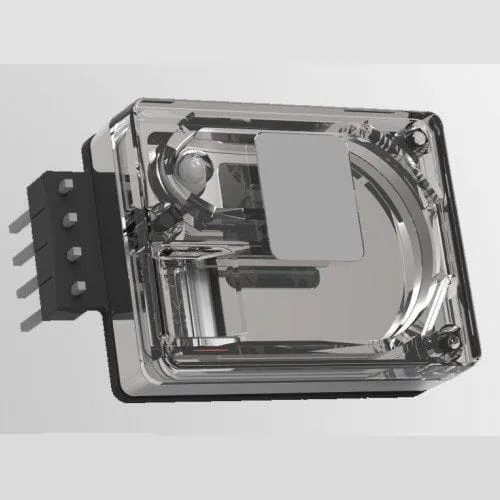
A CO₂ air quality sensor is an electronic device designed to measure the concentration of carbon dioxide in air, typically in ppm. Sensors detect CO₂ levels continuously and transmit data to controllers, building management systems, or cloud platforms for monitoring and analysis.
The primary technologies used in modern CO₂ sensors include:
NDIR sensors are the most widely adopted technology due to their high precision, reliability, and longevity. They operate by detecting the amount of infrared light absorbed by CO₂ molecules at a specific wavelength. Features include:
- Stable performance over years of operation
- Minimal interference from other gases
- Low maintenance requirements
- High accuracy across a wide range of concentrations
Photoacoustic sensors detect CO₂ by measuring pressure changes in air caused by absorption of light. These are generally more sensitive than NDIR sensors and are used in scientific or specialized industrial applications.
Although more commonly used for gases like CO or NO₂, electrochemical CO₂ sensors exist but are less prevalent in commercial air quality monitoring due to limited lifespan and higher maintenance needs.
One of the most significant uses of CO₂ sensors is in Demand-Controlled Ventilation (DCV) systems. Traditional HVAC systems operate at fixed airflow rates regardless of occupancy, often leading to energy inefficiency. With CO₂ monitoring:
- Ventilation adjusts automatically based on occupancy
- Air quality is maintained at safe and comfortable levels
- Energy consumption is optimized, reducing operational costs
High-occupancy areas like conference rooms and open-plan offices can experience rapid CO₂ buildup. Sensors detect these changes in real-time, allowing HVAC systems to maintain healthy and productive environments. Many smart office systems now integrate CO₂ monitoring with lighting, temperature, and occupancy sensors for holistic environmental control.
Classrooms often face ventilation challenges due to high occupant density. Elevated CO₂ levels have been linked to decreased concentration and learning performance. Installing CO₂ sensors allows schools to optimize ventilation, creating healthier environments for students and teachers.
Hospitals and clinics require strict air exchange to prevent infections and maintain patient safety. CO₂ sensors help verify ventilation performance in patient rooms, laboratories, and operating areas, supporting regulatory compliance and infection control protocols.
Smart homes are increasingly adopting CO₂ sensors to automate air quality management. Integration with ventilation systems and air purifiers ensures that indoor air remains fresh, particularly in bedrooms and living spaces where occupants spend long periods.
Factories, laboratories, and controlled facilities monitor CO₂ not only to protect workers but also to maintain process integrity. Elevated CO₂ can indicate air stagnation, which can compromise chemical or biological experiments, industrial processes, or personnel safety.
CO₂ sensors are not limited to indoor environments. Outdoor monitoring provides data essential for:
- Urban air quality management
- Industrial emissions assessment
- Climate research and carbon footprint tracking
- Environmental policy development
- Agriculture and greenhouse management
Outdoor sensors must be robust enough to handle varying temperatures, humidity, dust, and other environmental factors. Modern outdoor CO₂ sensors often include protective enclosures and weather-resistant designs to ensure long-term operation.
Contemporary CO₂ sensors combine measurement precision with smart connectivity and long-term durability. Key features include:
- Real-Time Monitoring: Continuous data on CO₂ concentrations.
- Digital Interfaces: UART, Modbus, BACnet, and other protocols simplify integration.
- Temperature and Humidity Compensation: Ensures accurate readings across varying conditions.
- Long Service Life: Many sensors operate reliably for years with minimal calibration.
- Low Power Consumption: Supports battery-powered or solar-powered systems.
- Multi-Parameter Capabilities: Some sensors measure CO₂ alongside temperature, humidity, VOCs, or particulate matter.
Ventilating a building requires heating, cooling, filtering, and moving air — all energy-intensive processes. CO₂-based demand-controlled ventilation prevents over-ventilation and reduces unnecessary energy use while maintaining optimal air quality.
An office building equipped with CO₂ sensors reduced HVAC energy consumption by 25% over a year while keeping indoor CO₂ levels below 1,000 ppm, demonstrating both energy and health benefits.
Studies confirm that elevated indoor CO₂ levels can negatively impact cognitive function, decision-making, and attention. CO₂ air quality sensors help maintain indoor concentrations within optimal ranges, supporting productivity, comfort, and overall well-being.
For accurate CO₂ monitoring, proper sensor placement is crucial:
- Height: Place at breathing zone levels (1–1.5 meters).
- Avoid Direct Airflow: Keep sensors away from vents, windows, or direct sunlight.
- Representative Location: Ensure the sensor reflects the air quality experienced by occupants.
- Indoor vs. Outdoor Considerations: Outdoor units require weatherproof housings and airflow exposure for accurate readings.
While NDIR sensors are highly stable, routine calibration ensures continued accuracy. Many modern CO₂ sensors incorporate automatic baseline calibration (ABC), which adjusts for long-term drift. Professional verification may be required in critical environments such as hospitals or laboratories.
CO₂ sensors play a pivotal role in IoT-enabled smart buildings. By linking CO₂ data with other environmental sensors, building management systems can:
- Automatically adjust ventilation rates
- Trigger alerts when CO₂ exceeds safe thresholds
- Monitor energy consumption
- Collect historical data for optimization and reporting
Integration also supports predictive maintenance, allowing facility managers to identify potential HVAC system issues before they affect occupants.
Emerging trends suggest that CO₂ sensors will continue evolving alongside smart infrastructure:
- Artificial Intelligence Integration: AI algorithms analyze CO₂ data to optimize ventilation, improve energy efficiency, and predict occupancy patterns.
- Multi-Parameter Sensor Modules: Sensors now combine CO₂, VOCs, particulate matter, temperature, and humidity monitoring in a single compact device.
- Wireless and Battery-Powered Sensors: Lower-cost, compact wireless sensors enable flexible deployment in both new and existing buildings.
- Urban Environmental Networks: CO₂ monitoring becomes part of smart city frameworks, contributing to emissions tracking, climate action, and urban planning.
- Enhanced Accuracy and Longevity: Continued material and optical advancements improve long-term stability and reduce calibration needs.
CO₂ air quality sensors are no longer optional; they are essential technology for modern environmental monitoring, energy-efficient building management, and human health protection. By providing accurate, real-time measurements of carbon dioxide concentrations, these sensors help maintain healthy indoor environments, optimize ventilation, reduce energy costs, and support sustainability initiatives.
From smart offices and schools to hospitals, industrial facilities, and outdoor urban networks, CO₂ sensors are driving smarter, healthier, and more energy-conscious environments. As global awareness of indoor air quality and climate change grows, the adoption of CO₂ air quality sensors will continue to expand, cementing their role as a cornerstone of environmental intelligence and smart building infrastructure.
Previous: Why TVOC Air Quality Sensors Are Essential for Indoor Environmental Control
Next: The Complete Guide to Infrared PM2.5 Sensors: Principles, Applications, and Trends