

Indoor air quality (IAQ) has become a major focus for homeowners, building managers, and health professionals alike. With people spending the majority of their time indoors—whether at home, in offices, schools, or commercial spaces—the quality of the air we breathe can significantly impact health, comfort, productivity, and even long-term wellbeing. Among the many pollutants in indoor environments, Total Volatile Organic Compounds (TVOCs) stand out as a key indicator of air quality.
TVOCs are a broad group of chemical compounds that easily vaporize at room temperature. They originate from everyday materials and activities, such as paints, cleaning products, building materials, adhesives, furnishings, cooking, and even personal care products. While not all VOCs are equally harmful, high concentrations of TVOCs can trigger symptoms ranging from headaches and irritation to more serious health concerns when exposures are prolonged.
In recent years, TVOC air quality sensors have emerged as an essential tool for understanding and managing indoor air quality. These sensors enable real-time monitoring of volatile compounds, giving users actionable insights that help create healthier, safer indoor environments.
This article explores the science behind TVOCs, the technology of TVOC sensors, their applications, benefits, challenges, and future trends shaping the landscape of indoor air quality monitoring.
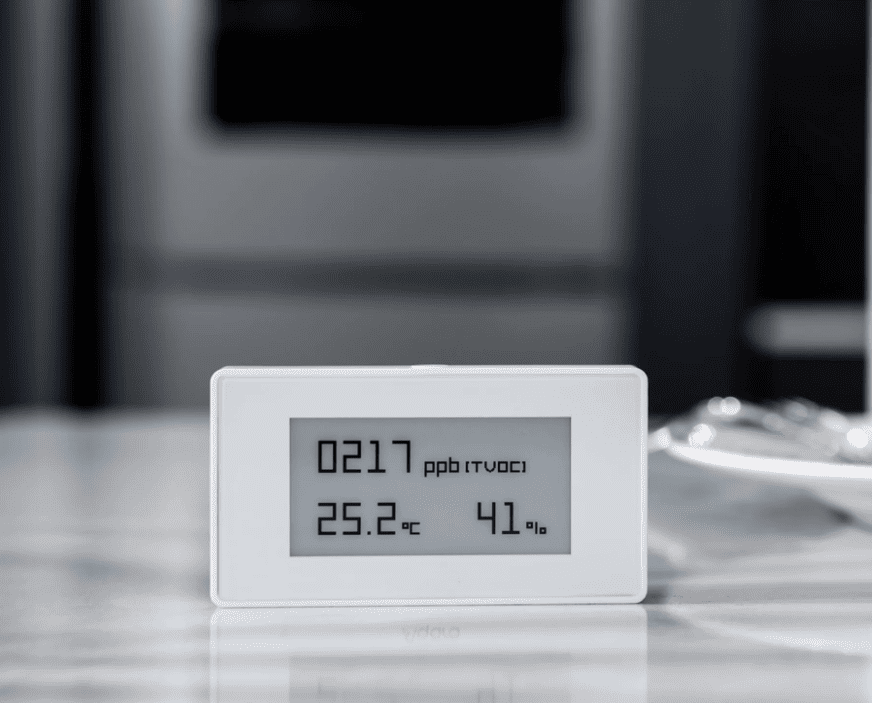
Volatile Organic Compounds (VOCs) are a class of organic chemicals that easily evaporate into the air at normal temperatures. They include hundreds of individual compounds, such as formaldehyde, benzene, toluene, xylene, acetone, and limonene. Because monitoring each VOC individually is complex and costly, TVOC refers to the total concentration of volatile organic gases present in the air, measured as a combined value usually expressed in parts per billion (ppb) or milligrams per cubic meter (mg/m³).
TVOCs are present in many indoor environments. Typical sources include:
- Building Materials: Paints, sealants, carpets, plywood, particleboard, and insulation emit VOCs as they off-gas.
- Household Products: Cleaning agents, disinfectants, air fresheners, cosmetics, and scented candles.
- Office Equipment: Printers, copiers, and other electronics emit VOCs during operation and as they heat up.
- Combustion Activities: Cooking, candles, and tobacco smoke.
- Personal Care Items: Perfumes, hairsprays, deodorants, and aerosols.
The variety and ubiquity of these sources mean that almost every indoor space contains some level of TVOCs. Concentrations can be elevated in poorly ventilated areas, newly renovated spaces, and environments with heavy use of VOC-emitting products.
Exposure to elevated TVOC levels can lead to a range of symptoms including:
- Eye, nose, and throat irritation
- Headaches and dizziness
- Fatigue and nausea
- Allergic reactions and respiratory discomfort
- Long-term health concerns with chronic exposure
The severity of effects depends on the specific compounds present, exposure duration, and individual susceptibility. While occasional exposure to low levels may be tolerable, consistent high concentrations require attention and mitigation.
TVOC air quality sensors are electronic devices designed to detect and quantify the concentration of volatile organic compounds in the air. These sensors play a critical role in both standalone air quality monitors and integrated building environmental systems.
TVOC sensors typically use one of several detection technologies. The most common types include:
MOS sensors detect TVOCs based on changes in electrical resistance. When VOC molecules interact with the sensor's heated metal oxide surface (often tin dioxide), the material's resistance changes. This change correlates to the concentration of VOCs.
Pros: Affordable, sensitive to a broad range of VOCs
Cons: Can be affected by humidity and temperature, require calibration
PID sensors use ultraviolet light to ionize VOC molecules. When UV light hits a VOC molecule, it releases charged particles. The sensor measures the resulting current, which correlates to VOC concentration.
Pros: Fast response, high sensitivity
Cons: More expensive, may require periodic maintenance and lamp replacement
While primarily used for specific gases like CO₂, in some advanced configurations NDIR modules are paired with catalytic or other sensing elements to estimate TVOCs.
Pros: Stable and precise for target gases
Cons: Not a standalone TVOC solution; expensive
Each technology has trade-offs, and many modern air quality monitors combine multiple sensors to provide comprehensive IAQ metrics.
When selecting a TVOC sensor or monitor, several key features influence performance and usability:
A good TVOC sensor should detect a wide range of VOC concentrations, from low background levels in clean environments to elevated levels during pollution events.
Fast response times enable real-time monitoring and alerting, critical in spaces where air quality can change rapidly (e.g., kitchens, laboratories, classrooms).
Sensors must maintain accuracy over time. Automatic baseline calibration and minimal drift help ensure reliable long-term monitoring.
Since humidity, temperature, and pressure can affect sensor performance, advanced sensors incorporate compensation algorithms or auxiliary sensors to adjust readings.
Modern TVOC sensors often include wireless connectivity (Wi-Fi, Bluetooth, LoRaWAN) and support integration with smart home systems, building management systems (BMS), or cloud platforms for remote monitoring and data analytics.
Clear display units, mobile apps, and alert systems help users understand air quality conditions and take action when TVOC levels rise.
TVOC sensors are used in a wide variety of settings, reflecting the broad importance of indoor air quality:
Homeowners use TVOC sensors as part of air quality monitors to maintain healthy living environments. By tracking TVOC levels alongside other indicators like CO₂, particulate matter, temperature, and humidity, families can pinpoint pollution sources and take steps to improve ventilation and reduce exposure.
Offices, retail spaces, and hospitality venues deploy TVOC sensors to enhance occupant comfort and comply with health and safety standards. Poor indoor air quality can reduce employee productivity, trigger complaints, and impact customer satisfaction.
Children are often more sensitive to air pollutants than adults. TVOC monitoring in classrooms and daycare centers helps ensure safe environments conducive to learning.
Hospitals, clinics, and nursing homes require strict air quality controls to protect patients and staff. TVOC sensors contribute to infection control, chemical safety, and overall environmental management.
Manufacturing plants, laboratories, and workshops often work with VOC-emitting materials. Continuous monitoring allows workers to avoid harmful exposures and maintain regulatory compliance.
In smart building ecosystems, TVOC sensors feed data into centralized platforms that automate ventilation, filtration, and climate control systems to optimize energy efficiency while maintaining healthy indoor air.
Libraries, airports, transit hubs, and entertainment venues benefit from distributed air quality monitoring that includes TVOC detection, enabling better crowd management and environmental control.
Detecting elevated TVOC levels empowers occupants to identify and mitigate pollution sources—whether it's cleaning chemicals, off-gassing materials, or poor ventilation.
TVOCs can include hazardous compounds. Early detection helps prevent acute exposures and supports occupational health strategies.
Long-term monitoring provides data trends that inform building design, HVAC management, and maintenance planning.
In many regions, building codes and occupational safety guidelines are increasingly incorporating indoor air quality metrics. TVOC data supports compliance and reporting.
Connected TVOC sensors help automate responses—such as increasing ventilation when air quality deteriorates—reducing energy waste and human intervention.
While TVOC sensors offer valuable insights, there are limitations users should understand:
Because TVOC represents a combined concentration of many VOCs, it does not identify specific compounds. High TVOC levels signal concern, but further analysis may be needed to pinpoint exact sources or hazardous chemicals.
Some sensors may respond to humidity, temperature, or non-VOCs, which can affect accuracy without proper compensation algorithms.
Over time, sensor sensitivity can drift. Regular calibration or self-calibrating designs help maintain accuracy, but users must plan for maintenance.
Unlike regulated metrics such as CO₂, TVOC lacks universal health-based exposure limits, leading to different interpretation frameworks across manufacturers and regions.
TVOC readings gain meaning when paired with occupancy data, ventilation rates, and information about materials and activities in the space.
To get the most value from TVOC monitoring, consider the following best practices:
Avoid placing sensors near windows, doors, or localized emission sources that may skew readings. Central locations within occupied zones provide more representative measurements.
TVOC data is more useful when combined with measurements for CO₂, particulate matter (PM2.5/PM10), temperature, and humidity.
When TVOC levels rise, increasing fresh air exchange helps dilute pollutants and improve comfort.
Make users aware of TVOC sources and encourage behaviors that reduce emissions, such as selecting low-VOC products and proper storage of chemicals.
Trend analysis reveals patterns and recurring issues that instantaneous readings may miss.
The field of indoor air quality sensing continues to evolve rapidly. Key trends include:
Advanced analytics and machine learning models enhance interpretation of TVOC data, predicting pollution events and recommending mitigation strategies.
Smaller, energy-efficient sensors enable deployment in wearables, smart thermostats, and distributed networks.
Research into sensor materials aims to improve selectivity, allowing identification of specific VOCs rather than just aggregate TVOC levels.
Cloud-based dashboards and remote management tools make it easier to monitor and control air quality across buildings and facilities from anywhere.
Air quality monitors with intuitive interfaces bring TVOC awareness into everyday homes, empowering individuals to take control of their indoor environments.
A multi-tenant office building deployed TVOC sensors integrated with HVAC systems. By correlating TVOC spikes with occupancy and cleaning schedules, facility managers optimized ventilation cycles, improved air quality, and reduced energy consumption.
A school district implemented TVOC and CO₂ sensors in classrooms. The combined data helped identify spaces needing better ventilation, enhancing student comfort and reducing absenteeism associated with poor indoor air.
In a paint production plant, continuous TVOC monitoring enabled real-time alerts whenever solvent emissions exceeded safe thresholds. Rapid response protocols prevented worker over-exposures and supported compliance with occupational safety regulations.
TVOC air quality sensors are an essential element of modern indoor environmental monitoring. They provide real-time, actionable data that helps protect health, enhance comfort, support safety programs, and optimize building performance. From homes and offices to industrial facilities and public spaces, TVOC monitoring empowers stakeholders to understand and improve the invisible air quality conditions that affect us all.
As sensor technology advances and awareness of indoor air quality grows, TVOC sensors will continue to play an increasingly central role in healthy building design, smart environmental controls, and community wellbeing. Whether deployed as part of a comprehensive IAQ strategy or as a standalone tool, these sensors offer invaluable insight into the dynamic nature of indoor air and the steps we can take to make it better for everyone.
Previous: Temperature and Humidity Sensors: Enabling Precision Control in a Connected World
Next: CO₂ Air Quality Sensors: Revolutionizing Indoor and Outdoor Environmental Monitoring