

Air quality has become an increasingly important concern in modern urban living. With rising pollution levels caused by industrialization, vehicle emissions, construction activities, and biomass burning, exposure to fine particulate matter (PM) is a major health concern. Among these pollutants, PM2.5—particles with a diameter of 2.5 microns or less—poses significant risks. These tiny particles are small enough to penetrate deep into the respiratory system and even enter the bloodstream, potentially causing cardiovascular and respiratory diseases, asthma, and other health complications.
In response to these challenges, modern air quality management increasingly relies on sophisticated monitoring tools. One of the most effective and widely adopted technologies is the PM2.5 sensor. These sensors, when integrated into air conditioning systems, are transforming how indoor environments are managed, ensuring healthier air in homes, offices, and public buildings.
A PM2.5 Sensor functions as a precise measurement device for fine particulate matter in the air. Its operation is primarily based on the principle of light scattering. A laser beam passes through an air sample, and when airborne particles intersect with this laser, they scatter the light. A photodetector captures the scattered light and translates it into measurable data, which can then be used to calculate the concentration of PM2.5 particles, usually expressed in micrograms per cubic meter (µg/m³).
Modern PM2.5 sensors are technically advanced, often equipped with active air sampling systems. These systems use small fans to draw air into the sensor, ensuring that the measurements are representative of the ambient environment. Additionally, environmental compensation algorithms help maintain accuracy despite fluctuations in temperature, humidity, and other atmospheric conditions. Communication interfaces such as UART or RS485 enable seamless data transfer to cloud platforms or edge computing devices, making real-time monitoring and data-driven air quality management possible.
Robust sensors are designed to withstand challenging conditions, including outdoor environments with extreme temperatures or high pollution levels. In regulatory frameworks, public health monitoring, and smart city projects, PM2.5 sensors are invaluable, providing the granular, real-time data necessary for informed decisions and interventions.
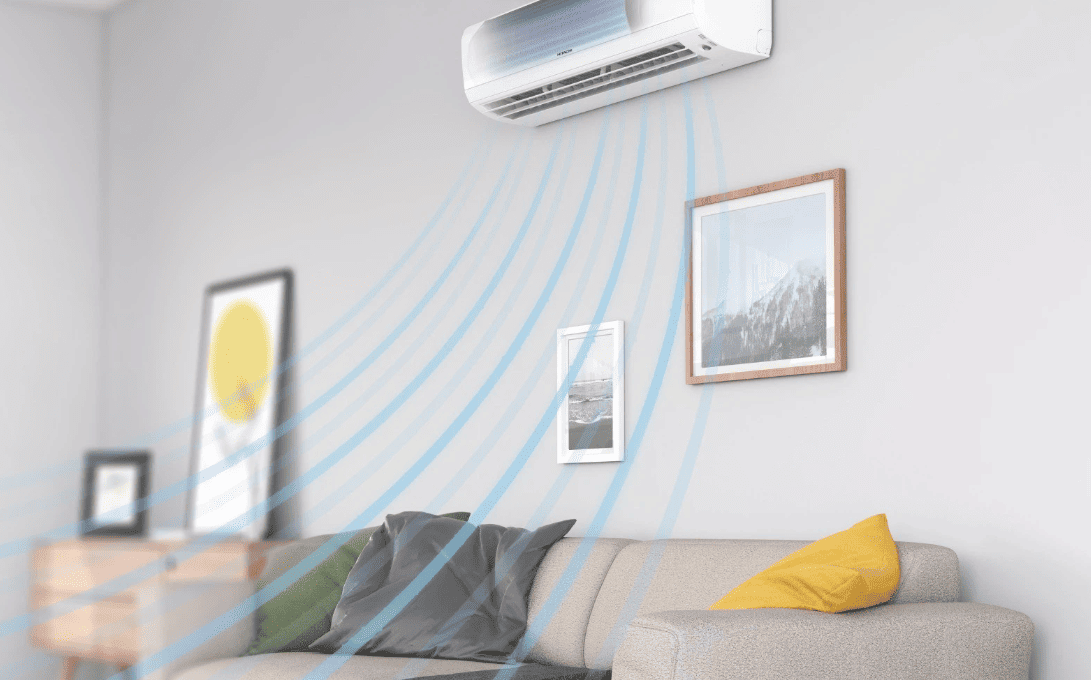
Air conditioning systems are typically associated with temperature control—keeping spaces cool in summer and warm in winter. However, modern air conditioners play a far more critical role in maintaining indoor air quality. This becomes particularly important in colder months when doors and windows remain closed to retain heat, inadvertently limiting fresh air circulation. Without proper ventilation, indoor air quality can degrade due to the accumulation of carbon dioxide, dust, and volatile organic compounds (VOCs).
To address this, many air conditioning systems include built-in ventilation features. These systems actively circulate indoor air while introducing fresh outdoor air, maintaining a healthy environment without compromising comfort. The design of ventilation devices varies across brands and models. Typically, a ventilation system comprises four key components: a volute, a DC motor, a wind turbine, and an exhaust pipe.
During ventilation, the system pumps part of the indoor air out, creating a pressure difference between indoor and outdoor environments. If air is expelled from the room, negative pressure is generated relative to the outside, drawing fresh air into the space through gaps in doors and windows. Conversely, when outdoor air is pumped directly into the room, positive pressure builds, displacing stale indoor air and preventing outdoor pollutants from infiltrating. By managing pressure differences strategically, air conditioning systems can efficiently replace polluted indoor air with fresh, filtered air, significantly improving indoor air quality.
The integration of PM2.5 sensors into air conditioning systems is a game-changer for indoor environmental control. By continuously monitoring particulate levels, these sensors allow the air conditioner to respond automatically to changes in air quality. For instance, if PM2.5 levels rise due to nearby traffic emissions or indoor dust, the system can increase ventilation, activate air purifiers, or adjust airflow to minimize exposure.
Smart air conditioners equipped with PM2.5 sensors often feature digital displays or mobile app connectivity, allowing occupants to view real-time air quality data. In commercial or public buildings, this data can feed into centralized building management systems (BMS) for large-scale monitoring and automated control across multiple rooms or floors. Such integration ensures that air quality is not just maintained for comfort, but actively managed for health and safety.
Traditional methods of measuring air pollution relied on periodic sampling, often providing delayed results. PM2.5 sensors provide continuous, real-time monitoring, enabling immediate responses to pollution events.
By detecting harmful particulate matter early, these systems help reduce occupants’ exposure, lowering the risk of respiratory and cardiovascular problems.
Smart integration allows air conditioners to operate efficiently. Ventilation can be increased only when needed, reducing unnecessary energy consumption while maintaining clean air.
Connected PM2.5 sensors enable AI-based or automated control systems to adjust fan speeds, filter operation, and airflow patterns based on air quality readings, ensuring a consistent and optimal indoor environment.
Collected data can be analyzed for trends and patterns, helping building managers or homeowners optimize air conditioning settings, schedule filter maintenance, or take preventive measures in anticipation of pollution peaks.
In homes, PM2.5 sensors ensure family members breathe clean air even in areas with high outdoor pollution. They are especially valuable in cities with heavy traffic or during periods of construction.
In workplaces, improved air quality contributes to better employee health, productivity, and comfort. Real-time monitoring enables facility managers to maintain a healthy environment without manual intervention.
Sensitive populations, including children, the elderly, and patients, benefit greatly from air quality control. PM2.5-equipped air conditioning helps minimize exposure to harmful particles.
In airports, subway stations, shopping malls, and other public spaces, integrated PM2.5 monitoring systems allow authorities to maintain safe air quality levels across large and complex environments. Data from these systems also contribute to city-wide air pollution management initiatives.
The future of PM2.5 sensors in air conditioning looks promising, with ongoing developments focused on increased accuracy, miniaturization, and advanced connectivity. Emerging trends include:
As the Internet of Things (IoT) expands, PM2.5 sensors are increasingly connected to smart home and building automation systems, enabling remote monitoring, predictive maintenance, and integration with other environmental sensors such as CO2, temperature, and humidity sensors.
AI algorithms can predict air quality trends based on historical data and real-time readings, allowing air conditioning systems to proactively adjust ventilation and filtration.
Next-generation sensors are being designed to withstand harsh conditions, resist contamination, and maintain accuracy over long periods, reducing maintenance costs and improving reliability.
Advances in materials and laser technology are making high-quality PM2.5 sensors more affordable, facilitating widespread adoption in residential, commercial, and public spaces.
Coupled with energy-efficient air conditioning and ventilation systems powered by solar or wind energy, PM2.5 sensors can contribute to sustainable, low-carbon indoor air management.
The integration of PM2.5 sensors in air conditioning systems represents a significant advancement in indoor air quality management. Beyond providing comfort through temperature control, modern air conditioners now actively monitor and respond to environmental threats, protecting occupants from harmful particulate matter.
As urban pollution continues to rise and public awareness of air quality grows, the role of PM2.5 sensors in smart air conditioning systems will become even more critical. By enabling real-time monitoring, automated control, and data-driven decision-making, these systems not only improve the comfort of indoor spaces but also safeguard health, enhance energy efficiency, and contribute to broader environmental management strategies.
Whether in homes, offices, schools, hospitals, or public infrastructure, the combination of advanced air conditioning technology and PM2.5 monitoring is shaping a future where indoor air quality is no longer a secondary consideration, but a primary feature of healthy living.
In summary, PM2.5 sensors are more than just measuring instruments—they are the bridge between environmental awareness and practical, automated indoor air management. As technology continues to evolve, these sensors will play an increasingly indispensable role in creating safe, clean, and comfortable indoor environments, allowing occupants to breathe easier, work better, and live healthier lives.
Previous: Home Air Quality Monitor: Breathing Easier with Smart Indoor Air Solutions
Next: Particulate Matter Sensors: A Comprehensive Guide to Air Quality Monitoring



