

Indoor air quality (IAQ) is a growing priority for businesses, public facilities, and commercial establishments worldwide. Studies show that poor indoor air quality can lead to health problems, including respiratory issues, allergies, fatigue, and even long-term cardiovascular risks. In commercial settings, it also impacts employee productivity, customer comfort, and brand reputation. Hospitals, offices, schools, retail spaces, and industrial facilities are increasingly investing in technologies to monitor and manage indoor environments, and smart air quality monitors have emerged as a leading solution.
Unlike traditional devices, smart monitors provide real-time, actionable data on pollutants, temperature, humidity, and ventilation efficiency. By integrating advanced sensors, IoT connectivity, and AI analytics, these devices enable facility managers to make informed decisions, optimize HVAC operations, and ensure occupant safety.
This article provides a comprehensive overview of smart air quality monitors for commercial use, exploring their technology, applications, benefits, challenges, market trends, integration with smart building systems, and future outlook.
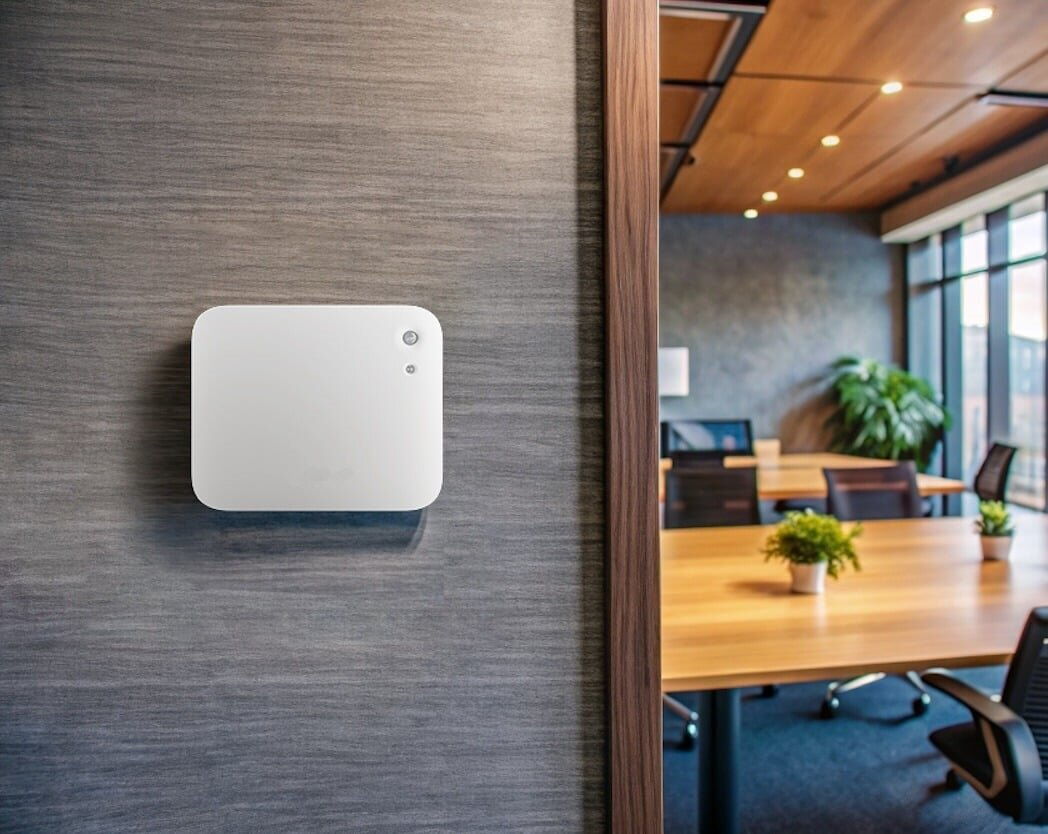
Smart air quality monitors track a wide range of environmental parameters simultaneously. These typically include:
- Particulate Matter (PM2.5, PM10): Fine particles that penetrate deep into the lungs, contributing to respiratory and cardiovascular diseases.
- Carbon Dioxide (CO₂): High concentrations indicate inadequate ventilation, often leading to reduced cognitive function and employee fatigue.
- Volatile Organic Compounds (VOCs): Emitted by cleaning chemicals, paints, furnishings, and plastics, VOCs can cause headaches, nausea, and long-term health effects.
- Carbon Monoxide (CO): A dangerous, odorless gas produced by incomplete combustion.
- Nitrogen Dioxide (NO₂) and Ozone (O₃): Often found in urban and industrial environments, these gases can irritate the respiratory system.
- Temperature and Humidity: Essential for occupant comfort and preventing mold or bacterial growth.
- Airborne Allergens and Pathogens: Some advanced monitors can detect pollen, dust mites, and microbial contamination, critical in hospitals, schools, and care facilities.
By providing continuous, precise measurements, smart monitors allow facility managers to proactively address indoor air quality issues.
Smart monitors combine sensor arrays, microcontrollers, and wireless connectivity modules. Sensors detect pollutants and environmental conditions, while microprocessors process the data in real time. Information is often transmitted to cloud-based platforms where AI analytics provide trend reports, predictive alerts, and actionable recommendations.
Many systems can automate ventilation, humidification, or filtration adjustments to maintain optimal air quality without manual intervention. Some monitors also provide mobile or desktop dashboards, offering visualization of real-time data, historical trends, and compliance reports.
Maintaining safe indoor air is critical in offices, schools, hospitals, and industrial facilities. Smart monitors allow managers to quickly identify pollutants such as PM2.5, CO₂, VOCs, and allergens. Immediate alerts enable corrective actions, such as increasing ventilation, activating air purifiers, or adjusting HVAC systems, protecting occupants from health risks.
Research shows that poor air quality directly reduces cognitive performance. High CO₂ levels, in particular, can cause drowsiness, lower concentration, and slow decision-making. Smart monitors ensure that indoor air is clean and well-ventilated, enhancing employee focus, efficiency, and overall workplace productivity.
Integration with HVAC and ventilation systems enables dynamic energy optimization. Instead of operating ventilation at full capacity continuously, smart monitors adjust airflow based on real-time pollutant levels and occupancy. This reduces energy consumption, lowers utility costs, and supports sustainability initiatives.
Many countries have regulations specifying acceptable indoor air quality levels. Smart monitors offer accurate logging and reporting, helping organizations comply with occupational health and safety standards, avoid penalties, and maintain certifications.
For customer-facing businesses such as retail stores, hotels, and restaurants, visibly monitoring air quality demonstrates a commitment to safety and well-being. Patrons are more likely to trust establishments that actively manage air quality, which can enhance brand reputation and loyalty.
Modern office environments often struggle with poor air circulation and pollutant buildup. Smart monitors track CO₂, PM2.5, and VOC levels, enabling data-driven ventilation strategies. Some systems also analyze occupancy patterns, optimizing airflow only in areas where employees are present, balancing comfort and energy efficiency.
High foot traffic and commercial equipment generate dust, VOCs, and odors. Smart monitors help maintain pleasant, safe air quality, improve customer experience, and reduce complaints. They can also be integrated into store management systems for real-time alerts.
Hospitals face strict air quality requirements to prevent infections and maintain sterile environments. Smart monitors detect airborne pathogens, VOCs, and particulate matter, ensuring critical areas such as ICUs, laboratories, and operating rooms meet safety standards.
Children are particularly sensitive to pollutants and allergens. Smart monitors help schools maintain safe learning environments by providing alerts on poor air quality, enabling interventions like opening windows, adjusting HVAC systems, or deploying air purifiers.
Indoor air quality directly affects guest satisfaction. Smart monitors track kitchen fumes, VOCs, and temperature variations, allowing hospitality operators to maintain a comfortable, safe environment for diners, guests, and staff.
Factories and warehouses produce dust, fumes, and chemical pollutants. Smart monitors provide continuous air quality tracking, enabling management to implement timely protective measures and comply with occupational health regulations.
- Real-Time Monitoring: Continuous measurements for multiple pollutants allow immediate corrective actions.
- IoT Connectivity: Wi-Fi, Ethernet, and cellular connectivity enable remote monitoring across multiple sites.
- Cloud Analytics: Long-term data storage and AI-driven analytics identify trends, predict risks, and optimize building systems.
- Alerts and Automation: Devices trigger alarms, notifications, or automated HVAC adjustments when thresholds are exceeded.
- Multi-Parameter Detection: Advanced monitors track PM2.5, CO₂, VOCs, temperature, humidity, and more.
- User-Friendly Interfaces: Touchscreens and mobile apps allow intuitive monitoring, historical analysis, and reporting.
Laser particle sensors detect fine particulate matter accurately.
Electrochemical sensors measure CO, NO₂, and O₃ levels.
Metal oxide semiconductor (MOS) sensors identify VOCs and other gases.
Temperature and humidity sensors ensure comfortable and safe conditions.
AI algorithms analyze sensor data to predict pollutant accumulation, HVAC maintenance needs, and occupancy-based ventilation adjustments. Predictive insights reduce energy waste and prevent potential health risks.
Smart monitors can integrate with BMS platforms to:
Centralize air quality control across multiple floors or buildings
Adjust HVAC, ventilation, and filtration automatically
Optimize energy consumption
Provide comprehensive compliance reporting
The demand for smart air quality monitoring in commercial spaces is growing rapidly due to:
Increased awareness of indoor air pollution and health impacts
Post-pandemic focus on ventilation and pathogen control
Adoption of smart building and IoT technologies
Urbanization and the need for efficient indoor environmental management
Government regulations mandating indoor air quality monitoring in workplaces
Market studies indicate that the global commercial air quality monitoring market is expected to experience double-digit growth over the next decade, driven by technology adoption and environmental awareness.
While the benefits are clear, commercial adoption faces challenges:
High initial investment for advanced monitors in large facilities
Sensor calibration and maintenance for long-term accuracy
Integration with existing HVAC and building systems may require specialized expertise
Data security concerns with cloud-connected devices
Addressing these challenges involves selecting reliable devices, planning maintenance schedules, and partnering with experienced vendors.
Office Buildings: A multinational corporation deployed smart monitors across three floors, reducing CO₂ peaks by 40% and improving employee alertness and productivity.
Schools: A school district implemented monitors in classrooms, detecting high VOC levels from cleaning agents, prompting ventilation adjustments that improved student focus.
Hospitals: A regional hospital used monitors to maintain sterile conditions in ICUs, reducing airborne pathogen exposure and improving patient safety outcomes.
The future of commercial air quality monitoring is being shaped by:
Miniaturized, low-cost sensors for widespread deployment
AI-powered predictive monitoring to anticipate air quality issues before they occur
Integration with occupancy and energy management systems for fully automated smart buildings
Real-time pathogen detection in high-risk environments
Sustainable, energy-efficient designs supporting green building initiatives
Smart air quality monitors are expected to become ubiquitous in commercial spaces, forming a central part of modern building management and occupational health strategies.
Smart air quality monitors are transforming the way commercial establishments manage indoor environments. By delivering real-time data, predictive insights, and automated control, these devices protect occupant health, enhance productivity, reduce energy consumption, and ensure regulatory compliance.
From offices and schools to hospitals, retail outlets, and industrial facilities, smart monitors are increasingly a critical component of modern building management systems. With advances in sensor technology, AI analytics, and IoT connectivity, they provide actionable intelligence that enables businesses to create healthier, safer, and more sustainable indoor environments.
In an era where indoor environmental quality directly affects well-being, operational efficiency, and reputation, smart air quality monitors have become more than a technological luxury—they are a strategic necessity for commercial success.
Previous: The Growing Role of Infrared Dust Sensors in Environmental Measurement
Next: How IoT Sensors Are Transforming Monitoring, Automation, and Control