

Air quality has become one of the most pressing public health and environmental concerns of the modern era. Rapid urbanization, industrial expansion, increased vehicle usage, and construction activities have significantly elevated levels of airborne particulate matter in many regions worldwide. These microscopic particles—commonly referred to as dust or particulate matter (PM)—pose serious risks to human health, infrastructure, and the environment.
As awareness grows and regulations tighten, the need for accurate, reliable, and real-time air quality monitoring has never been greater. Among the many technologies available today, infrared dust sensors have emerged as a cornerstone of modern particulate detection systems. Widely used in environmental monitoring, industrial process control, smart buildings, and consumer electronics, infrared dust sensors offer a practical balance of accuracy, durability, and cost-effectiveness.
This article explores how infrared dust sensors work, why they are critical for air quality monitoring, where they are used, and how they are shaping the future of environmental sensing in an increasingly data-driven world.
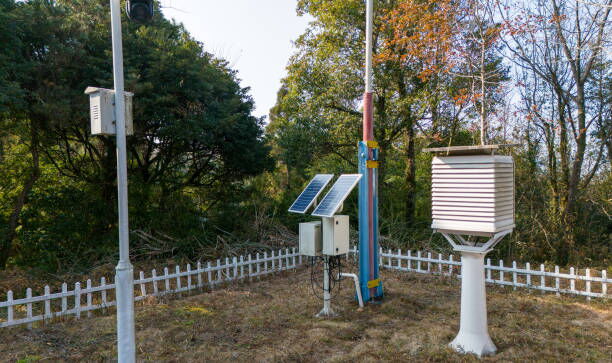
Dust is a broad term used to describe fine solid particles suspended in the air. In air quality monitoring, dust is often categorized as particulate matter (PM) and classified by particle size:
- PM10: Particles with a diameter of 10 micrometers or less
- PM2.5: Fine particles with a diameter of 2.5 micrometers or less
- PM1.0: Ultra-fine particles smaller than 1 micrometer
The smaller the particle, the deeper it can penetrate into the respiratory system, making fine and ultra-fine particles particularly dangerous.
Prolonged exposure to elevated particulate matter levels is linked to:
- Respiratory diseases
- Cardiovascular conditions
- Asthma and allergies
- Reduced lung function
- Premature mortality
Beyond human health, dust pollution also affects visibility, damages equipment, contaminates manufacturing processes, and degrades indoor environments.
Infrared dust sensors detect airborne particles by using an infrared (IR) light source and a photodetector. When dust particles pass through the sensor’s detection chamber, they scatter or block the infrared light. The sensor measures changes in light intensity, which are then converted into electrical signals proportional to the concentration of dust particles in the air.
This method is commonly referred to as optical scattering detection, and it forms the basis of many compact, real-time particulate sensors.
Infrared light is particularly suitable for dust detection because it:
Is less affected by visible light interference
Offers stable performance across varying lighting conditions
Allows compact sensor design
Provides consistent results for a wide range of particle sizes
These advantages make infrared dust sensors ideal for both indoor and outdoor monitoring applications.
Typically an infrared LED or laser diode, the emitter produces a stable beam of infrared light within the sensing chamber.
A photodiode or phototransistor detects scattered or attenuated infrared light caused by passing dust particles.
The chamber is designed to guide airflow while minimizing external light interference. Its geometry plays a critical role in measurement accuracy.
Analog signals from the photodetector are amplified, filtered, and converted into digital output data that represents dust concentration.
Modern infrared dust sensors include algorithms to compensate for temperature, humidity, and aging effects, improving measurement consistency.
Infrared dust sensors provide near-instantaneous readings, enabling continuous monitoring and rapid response to air quality changes.
Their small form factor allows easy integration into portable devices, wall-mounted monitors, and embedded systems.
Compared to traditional gravimetric methods, infrared dust sensors consume minimal power, making them suitable for battery-powered and IoT applications.
Infrared dust sensors offer a favorable balance between performance and cost, enabling widespread deployment across large monitoring networks.
With no moving parts and solid-state components, infrared dust sensors are highly durable and require minimal maintenance.
Government agencies and environmental organizations deploy infrared dust sensors to monitor PM levels in urban and suburban environments. These sensors support:
- Air quality index (AQI) calculations
- Pollution trend analysis
- Regulatory compliance
Infrared dust sensors are commonly used in:
- Residential air purifiers
- HVAC systems
- Office buildings
- Schools and hospitals
They help maintain healthy indoor environments by triggering ventilation or filtration when dust levels rise.
In manufacturing and industrial facilities, dust monitoring is essential for:
- Worker safety
- Product quality
- Explosion prevention
- Equipment protection
Infrared dust sensors provide continuous monitoring in environments such as cement plants, mines, and metal processing facilities.
As cities adopt smart infrastructure, infrared dust sensors play a key role in distributed air quality sensing networks, providing real-time data for traffic management, urban planning, and public health initiatives.
Compact infrared dust sensors are integrated into household appliances such as vacuum cleaners, air conditioners, and smart home air quality monitors.
Gravimetric Methods
Gravimetric sampling provides highly accurate measurements but requires filters, laboratory analysis, and long sampling times. Infrared sensors offer faster, real-time results.
Beta Attenuation Monitors (BAM)
BAM systems are accurate and widely used in regulatory monitoring but are expensive, bulky, and maintenance-intensive compared to infrared sensors.
Laser Scattering Sensors
Laser-based sensors offer higher sensitivity but typically cost more and consume more power. Infrared sensors provide a practical alternative for many applications.
Several factors influence infrared dust sensor performance:
- Particle size distribution
- Particle shape and composition
- Humidity and condensation
- Airflow rate through the sensor
Manufacturers calibrate infrared dust sensors using standard test aerosols. Advanced models include software compensation to improve accuracy across varying environmental conditions.
While infrared dust sensors may not replace laboratory-grade instruments, they deliver reliable data for trend analysis, alerts, and real-time decision-making.
Many regions have established air quality standards based on PM concentrations. Infrared dust sensors support compliance with these regulations by providing continuous monitoring data aligned with international guidelines.
As standards evolve, sensor accuracy, consistency, and traceability continue to improve, further validating infrared dust sensing technology.
Sensitivity to Environmental Conditions
High humidity or condensation can affect optical measurements if not properly managed.
Particle Composition Variability
Different dust types scatter infrared light differently, which can introduce measurement uncertainty.
Periodic Calibration Needs
Although low-maintenance, infrared dust sensors still benefit from periodic calibration to maintain accuracy over time.
Improved Optical Design
Advances in optical engineering have enhanced sensitivity while reducing noise and interference.
Integration with AI and Data Analytics
Artificial intelligence and machine learning algorithms are increasingly used to improve data interpretation, anomaly detection, and predictive air quality modeling.
Miniaturization and IoT Connectivity
Smaller, smarter infrared dust sensors with wireless connectivity are enabling large-scale, distributed monitoring networks.
Rising Awareness of Air Quality
Public concern about pollution is driving demand for accessible air quality monitoring solutions across residential, commercial, and public sectors.
Expansion of Smart Infrastructure
Smart buildings and cities are integrating infrared dust sensors into broader environmental monitoring platforms.
Growth in Industrial Safety Applications
Stricter occupational health regulations are increasing sensor adoption in industrial environments.
Supporting Pollution Control Strategies
Accurate dust monitoring enables better policy decisions and pollution mitigation strategies.
Energy-Efficient Monitoring
Low-power infrared sensors reduce energy consumption across large monitoring networks.
Enabling Preventive Maintenance
Early detection of dust buildup helps prevent equipment damage and extends system lifespan.
Higher Accuracy and Wider Detection Range
Ongoing research aims to improve sensitivity to ultra-fine particles while maintaining affordability.
Integration with Multi-Sensor Platforms
Future air quality systems will combine dust sensors with gas, temperature, and humidity sensors for comprehensive environmental monitoring.
Greater Accessibility
As costs continue to decrease, infrared dust sensors will become more widely available to consumers and communities.
Infrared dust sensors have become an indispensable tool in modern air quality monitoring. By offering real-time detection, compact design, and cost-effective performance, they bridge the gap between laboratory-grade instruments and widespread, everyday monitoring needs.
From industrial safety and smart cities to homes and workplaces, infrared dust sensors are helping societies better understand and manage airborne particulate pollution. As technology continues to advance and environmental awareness grows, these sensors will play an increasingly vital role in protecting public health, improving environmental quality, and supporting a cleaner, more sustainable future.
In an era where clean air is both a necessity and a right, infrared dust sensors stand at the forefront of innovation, quietly measuring the invisible threats in the air and empowering informed action worldwide.
Previous: PM2.5 Particle Sensors: A Critical Technology for Modern Air Quality Monitoring
Next: Smart Air Quality Monitors for Commercial Use: Revolutionizing Indoor Environmental Management



