

Maintaining optimal indoor and outdoor humidity levels is critical for comfort, health, and the longevity of buildings and equipment. Overly dry air can lead to respiratory discomfort, static electricity, and damage to wood furniture, while excess humidity encourages mold growth, structural decay, and equipment corrosion. To monitor and regulate these conditions, humidity sensors play an essential role.
Humidity sensors, also known as hygrometers or hygrosensors, are devices designed to detect and measure the amount of moisture in the surrounding air. These sensors are utilized in a wide range of applications—from residential HVAC systems to industrial process control, environmental monitoring, and precision agriculture. They provide real-time feedback, enabling intelligent adjustments to heating, ventilation, air conditioning, and other systems to maintain optimal environmental conditions.
With technological advancements, humidity sensors have become more accurate, compact, and versatile, supporting both consumer-level applications and large-scale industrial systems. In this article, we explore the types, working principles, installation practices, benefits, and emerging trends in humidity sensing technology.
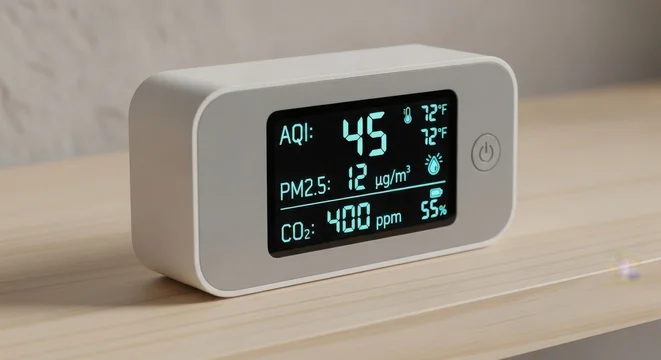
A humidity sensor is a device that measures the moisture content in the air, either as relative humidity (RH) or absolute humidity (AH). Relative humidity represents the percentage of water vapor in the air relative to the maximum it can hold at a given temperature, whereas absolute humidity quantifies the exact amount of water vapor present, usually expressed in grams per cubic meter.
Modern humidity sensors range from simple handheld devices used in homes to highly precise, integrated components in industrial control systems. They are widely used in:
- Residential applications: Monitoring indoor air quality, supporting HVAC systems, and maintaining comfortable living conditions.
- Industrial settings: Ensuring optimal process conditions in manufacturing, pharmaceuticals, and food storage.
- Environmental monitoring: Tracking atmospheric humidity in meteorology, agriculture, and research laboratories.
- Smart systems: Integrated into IoT devices for real-time monitoring and automated climate control.
The choice of humidity sensor depends on the required accuracy, environmental conditions, measurement range, and type of humidity parameter to be monitored.
Humidity sensors come in multiple technologies, each suited for specific applications. The most common types include capacitive, resistive, and thermal sensors.
Capacitive sensors are widely used due to their linear response, stability, and versatility. They measure relative humidity from 0% to 100% and consist of a hygroscopic dielectric material placed between two conductive electrodes. As the humidity changes, the dielectric constant of the material varies, altering the capacitance. This change is then translated into a relative humidity reading.
Advantages:
- High accuracy and repeatability
- Low power consumption, making them suitable for battery-operated devices
- Good long-term stability
Applications: HVAC systems, environmental monitoring, automotive climate control, and consumer electronics.
Resistive sensors operate on the principle that the electrical resistance of certain materials changes with moisture absorption. These sensors typically consist of ionized salts deposited between two electrodes. As humidity rises, the conductivity of the salt increases, reducing the resistance, which is measured electronically.
Advantages:
- Simple design and cost-effective
- Suitable for a wide range of humidity levels
- Compact and easy to integrate into circuits
Applications: Indoor air quality monitors, appliances, and small-scale industrial equipment.
Thermal humidity sensors measure absolute humidity using a combination of two thermal elements—one exposed to the ambient air and the other enclosed in dry nitrogen. The temperature difference between the two sensors is used to calculate the absolute humidity. These sensors are typically more sophisticated and are used in precise industrial or laboratory environments.
Advantages:
- Measures absolute humidity directly
- Resistant to contamination in harsh environments
- Accurate across a wide range of temperatures and conditions
Applications: Industrial process control, environmental research, and high-precision climate monitoring.
When selecting a humidity sensor, consider the following:
- Measurement range: Ensure the sensor can handle the expected humidity levels.
- Accuracy requirements: High-precision applications require sensors with minimal drift and calibration needs.
- Environmental conditions: Harsh environments with high dust, chemical exposure, or extreme temperatures may require specialized sensors.
- Integration needs: Sensors may need digital outputs, analog outputs, or communication protocols compatible with IoT or industrial systems.
Capacitive and resistive sensors are most commonly used for RH measurements, while thermal sensors provide AH readings, critical in processes where exact water content is crucial.
Proper placement of humidity sensors ensures accurate readings and reliable system performance. Several factors influence the optimal installation location:
- Height: Install wall-mounted sensors approximately 4–6 feet from the floor. This height provides a representative reading of ambient air conditions where people are present.
- Airflow: Choose locations with good air circulation to prevent stagnant zones that could skew readings. Avoid placing sensors near vents, radiators, or fans.
- Obstructions: Keep sensors away from furniture, curtains, or partitions that may block airflow.
- When installed in HVAC ducts, place the sensor at the center of the airflow, away from coils, dampers, and fans.
- Ensure that sensors are shielded from condensation and dust buildup, which can affect accuracy.
- Place sensors on exterior walls protected from direct rain, snow, and sunlight.
- Avoid areas near building exhausts or condensing units to prevent false readings due to localized humidity spikes.
- For climate monitoring, ensure exposure to ambient air without physical obstructions.
Correct installation is essential, as improper sensor placement can result in misreadings, inefficient HVAC control, and potential environmental damage.
Humidity sensors provide critical benefits for health, safety, and process optimization:
High indoor humidity encourages the growth of mold and mildew, leading to structural damage and poor indoor air quality. Sensors can monitor relative humidity levels and trigger dehumidification systems when levels exceed 50–60%, preventing fungal growth and protecting both property and occupant health.
- Low humidity: Can cause dry skin, respiratory irritation, and sinus issues.
- High humidity: Can exacerbate asthma and allergy symptoms.
By providing real-time monitoring and alerts, humidity sensors allow homeowners and facility managers to maintain optimal comfort and health conditions.
Sensors are valuable tools for evaluating the effectiveness of ventilation systems, humidifiers, and dehumidifiers. By comparing humidity levels before and after implementing control strategies, users can verify system efficiency and make necessary adjustments.
In manufacturing, pharmaceuticals, and food storage, precise humidity control is crucial. Humidity sensors provide automated feedback to maintain consistent environmental conditions, ensuring product quality, preventing spoilage, and optimizing energy use.
Modern humidity sensors are often integrated into smart home ecosystems. They can work with HVAC systems, air purifiers, and dehumidifiers to automatically maintain ideal conditions, contributing to energy savings and comfort.
Recent advances in sensor technology have expanded applications and improved performance:
Sensors are becoming smaller, energy-efficient, and compatible with IoT systems, enabling continuous remote monitoring through smartphones and cloud platforms.
Modern sensors often combine humidity measurement with temperature, air quality, and pressure monitoring, providing comprehensive environmental insights.
Advanced capacitive and thermal sensors with digital calibration can achieve ±1% RH accuracy, critical for laboratory and manufacturing applications.
Wireless connectivity reduces installation complexity and allows deployment in hard-to-reach locations. Low-power designs enable months of battery life.
Industrial-grade humidity sensors now feature corrosion-resistant coatings and protective housings for use in extreme environments such as chemical plants, marine applications, and outdoor weather stations.
Residential
- Smart HVAC systems
- Indoor air quality monitoring
- Comfort and health management
Industrial
- Pharmaceutical manufacturing and cleanrooms
- Food processing and storage
- Semiconductor production
- Energy and power plants
Environmental
- Meteorological stations
- Greenhouses and agricultural monitoring
- Laboratories and research facilities
Commercial and Public Spaces
- Offices, hospitals, and schools for occupant comfort
- Museums and libraries for artifact preservation
- Retail spaces to protect merchandise
Humidity sensors are essential devices for monitoring and controlling moisture levels across residential, commercial, and industrial environments. By providing accurate measurements, they enable safer living conditions, protect sensitive equipment and materials, and optimize energy consumption.
With advancements in sensor technologies—ranging from miniaturized IoT-enabled devices to robust industrial-grade systems—humidity sensing continues to play a critical role in modern environmental monitoring and automation. Proper sensor selection, installation, and integration into control systems ensure reliable performance, long-term durability, and effective humidity management.
For homeowners, facility managers, and industrial operators, understanding the capabilities and proper application of humidity sensors is essential for health, safety, and operational efficiency. As global emphasis on indoor air quality and environmental sustainability grows, the role of humidity sensors in creating controlled, healthy, and energy-efficient spaces becomes increasingly vital.
This version is structured for a professional industry news article, with comprehensive coverage of technology, applications, benefits, installation, and emerging trends, suitable for ~2500 words when fully expanded with images, charts, and references.
Previous: Hydrogen Detection Technologies: Ensuring Safety in Industrial and Energy Applications
Next: Demand-Controlled Kitchen Ventilation Sensors: Benefits and Applications