

As the global energy landscape undergoes a profound transformation toward cleaner, low-carbon solutions, hydrogen has emerged as one of the most promising resources for the world's future energy needs. Its ability to serve as a clean fuel, industrial feedstock, and long-term energy storage medium makes it a cornerstone of decarbonization strategies across transportation, manufacturing, power generation, and chemical processing.
However, hydrogen's potential comes with a serious challenge: safety.
Hydrogen (H₂) is colorless, odorless, tasteless, and highly flammable, with properties that make leak detection both essential and inherently difficult. Because hydrogen molecules are extremely small and diffuse rapidly through materials, an undetected leak can accumulate and ignite with minimal energy. This makes hydrogen detection systems a critical component of any operation that produces, stores, transports, or uses hydrogen.
Hydrogen detection refers to the process of identifying and measuring the presence of hydrogen gas in the air to prevent leaks, fires, and explosions. Technologies such as electrochemical sensors, catalytic bead detectors, metal-oxide semiconductors, thermal conductivity sensors, and advanced ultrasonic detection systems are commonly deployed to monitor environments and alert operators before dangerous conditions emerge. Increasingly, industries are adopting new detection technologies—including optical sensors, palladium-based detectors, MEMS devices, and fiber-optic solutions—to meet rising safety standards and accommodate the growth of hydrogen infrastructure.
Hydrogen is widely used across major industries today. It plays a key role in ammonia production via the Haber-Bosch process, is essential in petroleum refining for desulfurization, and is utilized in the manufacturing of hydrochloric acid. Hydrogen also supports welding operations, metal reduction processes, and the development of rocket fuels. Beyond traditional uses, hydrogen is gaining traction as a leak-tracing gas, a carrier gas for high-power machinery, and a major energy vector capable of replacing hydrocarbons.
With the rapid rise of hydrogen applications—and expanding global investment in hydrogen fuel technologies—demand for robust hydrogen detection systems is accelerating. This article explores the evolution of hydrogen detection technologies, the drivers behind market growth, industrial requirements, emerging trends, and the role detection will play in enabling the hydrogen economy.
Hydrogen is increasingly deployed in environments where safety and uptime are mission-critical. Its physical and chemical properties create specific hazards:
- Highly flammable: Hydrogen ignites at concentrations as low as 4% in air.
- Invisible flames: Hydrogen burns with a nearly invisible flame, making fires difficult to detect visually.
- Rapid diffusion: Hydrogen escapes quickly through small openings, cracks, and permeable materials.
- Low ignition energy: A spark from static electricity can ignite hydrogen.
- Wide flammability range: Hydrogen is flammable between 4% and 75% concentration.
These properties demand continuous monitoring with sensitive, fast-responding detection systems.
As countries implement net-zero policies, hydrogen demand is increasing for:
- Fuel cell electric vehicles (FCEVs)
- Hydrogen-powered buses, trucks, trains, and maritime vessels
- Green hydrogen production from renewable energy
- Long-duration energy storage
- Hydrogen blending with natural gas
- Hydrogen-based industrial heat
Each of these sectors requires reliable hydrogen detection to maintain compliance and safety. The rapid expansion of hydrogen infrastructure—pipelines, refueling stations, electrolyzers, and storage facilities—will push the demand for advanced detection systems even higher.
Hydrogen detection systems are deployed in a wide range of industries. Below are some of the most important applications.
Electrolyzers, steam methane reformers (SMR), and ammonia plants produce and process large volumes of hydrogen. Any leak poses an immediate safety risk, making detection a core requirement for compliance.
Hydrogen plays an essential role in hydrotreating and desulfurization. Refineries employ fixed gas detection networks to monitor hydrogen levels in reactors, pipelines, compressors, and storage tanks.
Fuel cells for vehicles, forklifts, drones, and stationary power systems must integrate onboard and external hydrogen detection sensors to prevent accumulation in enclosed spaces.
Hydrogen fuelling stations for cars, buses, and trucks rely on multiple layers of detection—including fixed sensors, area monitors, and equipment-level leak testing.
Certain battery chemistries, including lead-acid batteries, generate hydrogen during charging. Battery rooms are required to install hydrogen detectors to prevent accumulation.
Some turbo-generators use hydrogen as a cooling gas due to its high thermal conductivity. Detection systems monitor potential leaks within casings and enclosures.
Hydrogen fuels are widely used in rocket propulsion systems. Detection is critical in launch pads, fuel lines, storage tanks, and vehicle assembly buildings.
Hydrogen is common in R&D labs as a carrier gas or reagent. Detectors protect personnel and ensure compliance with safety standards.
Hydrogen is essential in hydrogenation, reduction, and chemical synthesis processes requiring continuous leak monitoring.
Hydrogen may accumulate in enclosed areas due to industrial processes, requiring mobile or fixed monitoring systems.
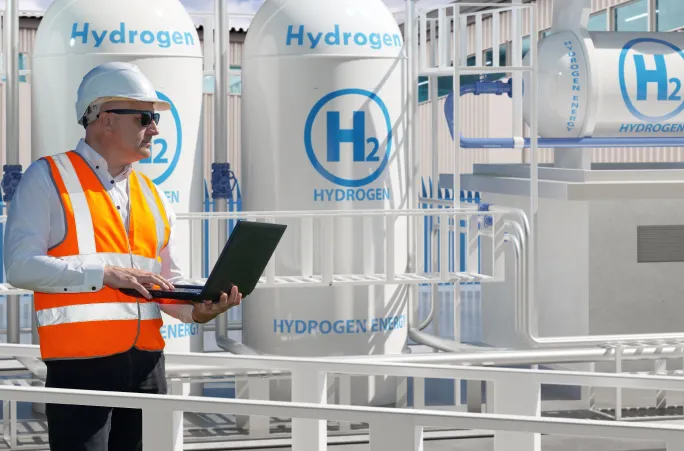
Hydrogen detection technology continues to evolve in response to safety demands, cost pressures, and the proliferation of hydrogen-based energy systems. Below are leading and emerging detection technologies.
How they work:
Catalytic bead sensors detect hydrogen through oxidation on a heated catalyst, producing a response proportional to concentration.
Advantages:
- Cost-effective
- Durable
- Reliable for high concentrations
Limitations:
- Can be poisoned by contaminants
- Require periodic calibration
- Higher power consumption
How they work:
These sensors measure the electrical current generated when hydrogen reacts with an electrolyte.
Advantages:
- Highly sensitive
- Low power consumption
- Good for low-level leak detection
Limitations:
- Shorter lifespan
- Affected by environmental conditions
How they work:
Hydrogen alters the conductivity of metal-oxide materials, producing measurable signals.
Advantages:
- Fast response
- Long lifespan
- Suitable for harsh environments
Limitations:
- May respond to other gases
- Affected by humidity and temperature
How they work:
Hydrogen's high thermal conductivity changes heat transfer characteristics in the sensor.
Advantages:
- Excellent for high-concentration monitoring
- No need for frequent recalibration
Limitations:
Not ideal for low-level detection
How they work:
Detect hydrogen leaks by identifying the ultrasonic acoustic signals from escaping pressurized gas.
Advantages:
- Detect leaks regardless of gas direction
- Immune to wind or ventilation
- Effective in noisy industrial environments
Limitations:
- Do not measure gas concentration
- Best used as part of multi-layer monitoring
Advancements in materials science, microelectronics, and photonics are enabling the development of next-generation hydrogen detection solutions.
Why palladium?
Palladium absorbs hydrogen and forms palladium hydride, causing measurable electrical or physical changes.
Benefits:
- High sensitivity
- Selective to hydrogen
- Fast response times
These sensors are gaining interest for fuel cell vehicles, hydrogen storage tanks, and industrial pipelines.
Hydrogen does not absorb IR strongly, but emerging technologies use:
- Raman spectroscopy
- Tunable diode laser absorption spectroscopy (TDLAS)
- Optical interference patterns
These specialized techniques allow ultra-low hydrogen detection in high-tech applications like aerospace and semiconductor manufacturing.
These sensors use optical fibers coated with hydrogen-reactive materials.
Advantages:
- Immune to electromagnetic interference
- Ideal for hazardous or remote locations
- Suitable for pipeline monitoring
Fiber-optic sensors are already used in offshore platforms and refineries.
Micro-electro-mechanical systems (MEMS) integrate mechanical and electrical components on a miniature silicon chip.
Advantages:
- Extremely compact
- Low power consumption
- Fast and stable
- Ideal for consumer electronics and vehicle OEM integration
MEMS sensors are a promising solution for hydrogen appliances, drones, and fuel-cell vehicles.
With hydrogen infrastructure expanding globally, safety standards are becoming increasingly stringent. Key organizations driving regulations include:
- ISO (International Organization for Standardization)
- NFPA (National Fire Protection Association)
- IECEx (Explosion-Proof Certification)
- FM Global
- UL (Underwriters Laboratories)
- CSA Group
Standards govern:
- Detector placement
- Sensor calibration intervals
- Alarm thresholds
- System redundancy
- Ventilation requirements
- Hazardous zone classifications
Multinational projects must often comply with multiple standards, making certification a major factor in sensor technology selection.
Governments worldwide are investing heavily in hydrogen infrastructure. Examples include the U.S. Inflation Reduction Act (IRA), Europe's Hydrogen Strategy, and major hydrogen roadmaps in Japan, Korea, and Australia.
Hydrogen refueling stations are growing to support fuel cell vehicles and heavy-duty transportation, all requiring rigorous detection systems.
Industries such as steel, chemicals, and ammonia production are transitioning to green hydrogen, increasing facility-level monitoring requirements.
Large-scale electrolyzers—from PEM to alkaline to solid oxide—must integrate multi-layer hydrogen detection.
Battery rooms, especially lead-acid and nickel-based chemistries, require hydrogen monitoring due to gas evolution during charging.
Hydrogen appliances, backup power units, and micro fuel cells all involve onboard detection sensors.
Despite rapid technological advancements, challenges remain:
- Sensor cross-sensitivity to other gases
- Humidity and temperature effects
- Need for regular calibration
- False alarms due to environmental factors
- Limited lifespan of some sensor technologies
- Integration complexity in large facilities
Manufacturers continue working to develop more robust, selective, and long-lasting hydrogen sensors.
Next-generation detectors are being integrated with:
- Predictive maintenance
- Real-time leak mapping
- AI-based anomaly detection
- IoT wireless networks
Hydrogen plants and pipelines increasingly use digital twins, enabling virtual modeling of leak scenarios and sensor network performance.
Wearable hydrogen monitors for technicians working in enclosed or hazardous environments will become more common.
Hybrid sensors capable of detecting hydrogen, methane, CO, and oxygen simultaneously will reduce overall infrastructure costs.
Miniaturized MEMS and nanomaterial sensors will be built directly into:
- Fuel-cell cars
- Hydrogen boilers
- Residential hydrogen systems
As hydrogen solidifies its place at the center of the global clean energy transition, the importance of hydrogen detection technology cannot be overstated. With applications ranging from industrial production plants and fuel cell systems to pipelines, refueling stations, and aerospace operations, hydrogen safety monitoring has become a foundational requirement for accelerating hydrogen adoption.
Emerging innovations—including palladium-based materials, advanced optical systems, MEMS devices, and fiber-optic sensors—are pushing detection capabilities to new levels of sensitivity, durability, and intelligence. Meanwhile, expanding regulatory frameworks underscore the need for reliable leak-detection systems and standardized safety protocols.
In the years ahead, hydrogen detection will remain critical to enabling the safe and scalable deployment of hydrogen technologies worldwide. From industrial mega-projects to consumer fuel cell devices, the next generation of hydrogen detection will help unlock the full potential of the hydrogen economy—supporting growth, ensuring safety, and driving progress toward a sustainable future.
Previous: The Ultimate Guide to Environmental Sensor Monitoring for Modern Facilities
Next: Complete Guide to Humidity Sensors: How They Work and Why You Need Them



