

As public awareness of indoor air quality (IAQ) grows, so does concern over invisible yet harmful pollutants that affect health, productivity, and long-term wellbeing. Among these contaminants, formaldehyde (CH₂O) stands out as one of the most prevalent and dangerous. Emitted from furniture, building materials, adhesives, textiles, and household products, formaldehyde can accumulate indoors at levels far exceeding outdoor concentrations. Prolonged exposure has been linked to respiratory irritation, headaches, allergic reactions, and even increased cancer risk.
In response, formaldehyde gas sensors are rapidly becoming essential tools in residential, commercial, and industrial environments. These sensors provide real-time detection of CH₂O concentrations, enabling proactive ventilation, compliance with safety standards, and protection of human health. As governments tighten air quality regulations and consumers demand healthier living spaces, formaldehyde detection technology is moving from specialized laboratories into everyday buildings.
This article explores what formaldehyde is, why it matters, how formaldehyde (CH₂O) gas sensors work, the technologies behind them, and how they are reshaping indoor air monitoring across homes, workplaces, and public facilities.
Formaldehyde (chemical formula CH₂O) is a colorless gas with a pungent odor, widely used in industrial and consumer applications. It is found in resins, pressed-wood products, insulation materials, textiles, disinfectants, cosmetics, and even some medical products. Because of its versatility and low cost, formaldehyde has become deeply embedded in modern manufacturing and construction.
In indoor environments, formaldehyde commonly originates from:
- Pressed wood products such as plywood, particleboard, and MDF
- Furniture and cabinetry made with urea-formaldehyde resins
- Flooring materials, including laminate and engineered wood
- Paints, varnishes, and adhesives
- Textiles and carpets treated with wrinkle-resistant finishes
- Cleaning products and disinfectants
- Combustion processes, including smoking and cooking
Unlike many outdoor pollutants, formaldehyde does not quickly dissipate. Instead, it can be continuously released (“off-gassed”) over months or even years, particularly in newly constructed or renovated spaces.
Formaldehyde is classified as a human carcinogen by organizations such as the World Health Organization (WHO) and the International Agency for Research on Cancer (IARC). Even at low concentrations, it can cause immediate discomfort and long-term health effects.
Exposure to elevated formaldehyde levels can result in:
- Eye, nose, and throat irritation
- Coughing and wheezing
- Headaches and dizziness
- Skin rashes
Exacerbation of asthma and respiratory conditions
Chronic exposure has been associated with:
- Increased risk of nasopharyngeal and leukemia-type cancers
- Sensitization and allergic reactions
- Reduced lung function in children
- Cognitive and sleep disturbances linked to poor indoor air quality
Given that people spend up to 90% of their time indoors, continuous exposure to even moderate formaldehyde concentrations poses a significant public health concern.
Historically, indoor air quality monitoring focused on carbon dioxide (CO₂), particulate matter (PM2.5), and volatile organic compounds (VOCs) in general. However, formaldehyde’s toxicity, prevalence, and long-term health implications have elevated it to a priority pollutant in many countries.
Governments and health agencies worldwide are introducing stricter IAQ guidelines. Recommended exposure limits for formaldehyde typically range between 0.03–0.1 ppm (parts per million), depending on the standard. In many regions:
- Building codes now require low-emission materials
- Schools and childcare facilities must meet specific IAQ thresholds
- Workplaces are required to monitor hazardous air contaminants
These regulations create demand for accurate, reliable, and affordable formaldehyde sensors.
Modern consumers are increasingly health-conscious. Homebuyers, tenants, and parents now expect transparent air quality information, particularly in newly built or renovated spaces. Formaldehyde sensors allow individuals to verify that their environments are safe and take action when levels exceed recommended limits.
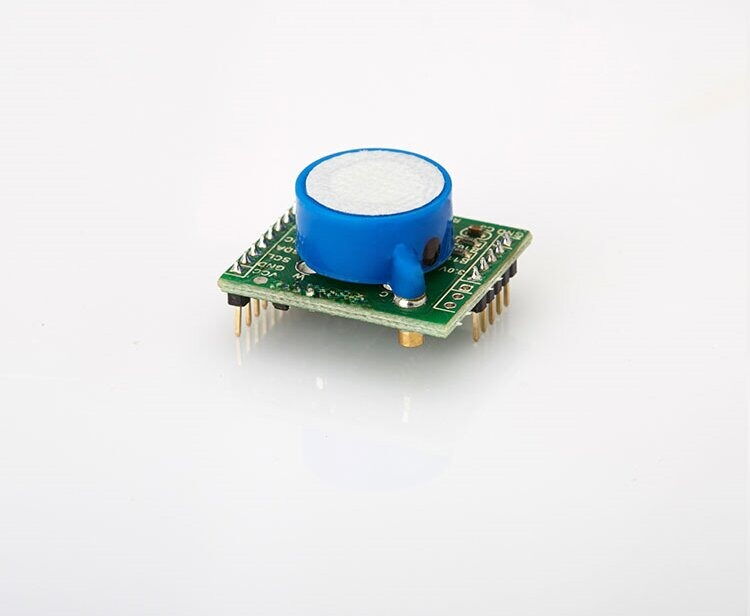
A formaldehyde gas sensor is a device designed to detect and measure the concentration of CH₂O in the air. It converts chemical interactions between formaldehyde molecules and the sensing element into electrical signals, which are then processed and displayed as numerical values or alerts.
These sensors can be:
- Standalone detectors
- Integrated into indoor air quality monitors
- Embedded in smart home systems
- Installed within HVAC and building automation platforms
Depending on the application, sensors may offer real-time monitoring, data logging, wireless connectivity, and integration with ventilation systems.
Multiple sensing technologies are used to detect formaldehyde, each with its own strengths, limitations, and ideal use cases.
Electrochemical formaldehyde sensors operate by oxidizing CH₂O molecules at an electrode surface. This reaction generates an electrical current proportional to the gas concentration.
Advantages:
High sensitivity and selectivity
Good accuracy at low concentrations
Low power consumption
Limitations:
Limited lifespan due to electrode degradation
Sensitivity to temperature and humidity variations
Periodic calibration required
Electrochemical sensors are widely used in professional IAQ monitors and portable detectors.
MOS sensors detect gases by measuring changes in electrical resistance when formaldehyde interacts with a heated metal oxide surface.
Advantages:
Long lifespan
Low manufacturing cost
Robust for continuous monitoring
Limitations:
Lower selectivity (may respond to other VOCs)
Higher power consumption due to heating elements
Drift over time
MOS sensors are commonly used in consumer-grade air quality devices and smart home products.
These advanced sensors use infrared or ultraviolet light to identify formaldehyde based on its unique absorption characteristics. Some rely on photoacoustic effects, where absorbed light causes measurable pressure waves.
Advantages:
Exceptional accuracy and selectivity
Minimal cross-sensitivity
Long-term stability
Limitations:
Higher cost
More complex electronics
Typically used in industrial or laboratory settings
Optical sensors are ideal for regulatory compliance and scientific monitoring.
Colorimetric detection uses chemical reagents that change color when exposed to formaldehyde. The color intensity corresponds to concentration.
Advantages:
Simple and low-cost
Visual indication without electronics
Limitations:
Limited accuracy
Not suitable for continuous monitoring
Reagents must be replaced
These sensors are mainly used for spot testing rather than real-time monitoring.
When selecting a CH₂O gas sensor, several technical factors determine its suitability for a given application:
Effective sensors must detect concentrations in the 0–1 ppm range with high resolution, as health effects occur at very low levels.
Cross-sensitivity to other VOCs, alcohols, or humidity can distort readings. High-quality sensors employ filtering algorithms or material engineering to isolate formaldehyde responses.
Fast response ensures timely alerts when concentrations rise, while quick recovery enables accurate tracking of ventilation effectiveness.
Long-term stability reduces maintenance and recalibration needs, critical for building automation systems.
In homes, formaldehyde sensors are commonly installed in:
- Living rooms and bedrooms
- Newly renovated spaces
- Areas with new furniture or flooring
Homeowners use these sensors to identify off-gassing sources, optimize ventilation, and ensure safe conditions for children and sensitive individuals.
Office buildings prioritize employee health and productivity. Poor air quality has been linked to reduced concentration, higher absenteeism, and lower performance. Formaldehyde sensors integrated into HVAC systems allow facility managers to:
- Monitor pollutant levels in real time
- Adjust ventilation automatically
- Comply with occupational safety regulations
Children are particularly vulnerable to air pollutants. Many education authorities now require formaldehyde monitoring in classrooms, especially in buildings with new construction materials or furniture. Sensors help ensure safe learning environments and reassure parents.
Hospitals, clinics, and laboratories may encounter formaldehyde from sterilization products, specimen preservation, and building materials. Continuous monitoring protects patients and staff from harmful exposure.
In factories producing resins, textiles, furniture, or chemicals, formaldehyde may be present at higher concentrations. Industrial-grade sensors are essential for:
Worker safety compliance
Leak detection
Process control and environmental reporting
Modern formaldehyde sensors are no longer standalone devices. They are increasingly integrated into smart building ecosystems that combine multiple environmental parameters.
Connected sensors transmit data to cloud platforms for:
- Centralized monitoring across multiple sites
- Trend analysis and reporting
- Predictive maintenance and early-warning systems
Facility managers can access real-time air quality dashboards and receive alerts when thresholds are exceeded.
When formaldehyde levels rise, integrated systems can automatically:
- Increase fresh air intake
- Activate exhaust fans
- Trigger air purification devices
This closed-loop control improves air quality without manual intervention.
Despite technological advancements, formaldehyde sensing presents unique challenges.
Formaldehyde shares chemical properties with other VOCs, making selective detection difficult. High-quality sensors require advanced materials or algorithms to minimize false readings.
Temperature, humidity, and airflow can affect sensor performance. Compensation mechanisms are necessary to maintain accuracy under varying indoor conditions.
Some sensor types require periodic calibration to ensure reliable data. In large building deployments, maintenance costs must be carefully managed.
The concept of healthy buildings is reshaping architecture and real estate. Certification programs such as WELL and LEED increasingly emphasize IAQ, creating demand for formaldehyde monitoring as part of compliance and marketing strategies.
As smart home ecosystems expand, consumers seek integrated solutions that monitor air quality alongside temperature, humidity, and CO₂. Formaldehyde sensors are becoming standard components of premium indoor monitoring devices.
Property owners face growing liability risks related to indoor air quality. Proactive monitoring provides documented proof of compliance and due diligence.
Research continues to improve sensor performance through:
- Nanomaterials that enhance sensitivity and selectivity
- Micro-electromechanical systems (MEMS) for compact, low-power designs
- AI-driven signal processing to distinguish formaldehyde from similar compounds
These innovations are enabling affordable, high-performance sensors suitable for mass-market applications.
As indoor air quality becomes a core component of public health, formaldehyde sensors will play a central role in building design, renovation, and operation.
Future buildings may feature embedded sensor networks that continuously track formaldehyde and other pollutants, providing transparent IAQ data to occupants in real time.
Advanced systems will not only detect formaldehyde but actively neutralize it using filtration, adsorption, or catalytic oxidation technologies.
By correlating sensor data with health outcomes, organizations can design evidence-based strategies to improve wellbeing, productivity, and long-term safety.
Formaldehyde (CH₂O) may be invisible, but its impact on human health is undeniable. As awareness of indoor air quality grows, formaldehyde gas sensors are emerging as indispensable tools for safeguarding homes, workplaces, schools, and public spaces. Through continuous monitoring, intelligent integration with building systems, and ongoing technological innovation, these sensors empower individuals and organizations to identify hidden risks, comply with evolving regulations, and create healthier environments.
In a world increasingly defined by sustainability, wellness, and smart infrastructure, formaldehyde detection is no longer a niche capability—it is a fundamental requirement for modern living. As sensor technology continues to advance, real-time formaldehyde monitoring will become as routine as temperature control or smoke detection, quietly ensuring that the air we breathe indoors is as safe as it should be.
Previous: Commercial Indoor Air Quality Monitoring Becomes a Core Business Priority
Next: Temperature and Humidity Sensors: Enabling Precision Control in a Connected World



