

In today’s world, where people spend nearly 90% of their time indoors—whether at home, work, or school—the quality of the air we breathe inside buildings has never been more important. Indoor air pollution is often invisible but can be just as harmful as outdoor pollution, causing a range of health issues from headaches and allergies to chronic respiratory diseases. As awareness about indoor environmental health continues to grow, Indoor Air Quality (IAQ) monitoring devices have become essential tools in modern living and building management.
These devices provide valuable data about pollutants and environmental factors that influence health, comfort, and productivity. With the increasing number of smart homes and green buildings, IAQ devices are no longer optional—they are fundamental to ensuring a healthy indoor environment. But what exactly do they measure? How do they differ? And how can you choose the right one for your needs? Let’s explore.
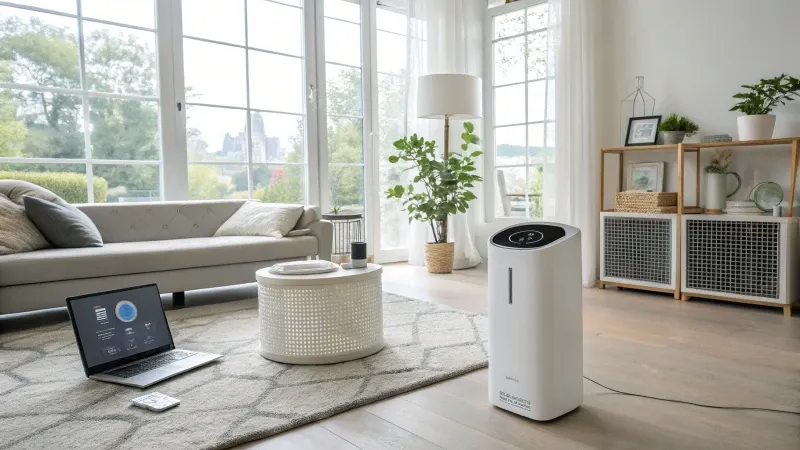
A basic indoor air quality (IAQ) device typically measures several key parameters that directly impact human health and comfort. The most common measurements include Carbon Dioxide (CO₂), Particulate Matter (PM), and Volatile Organic Compounds (VOC). More advanced systems may include temperature, humidity, and additional gases such as carbon monoxide (CO), formaldehyde (HCHO), and ozone (O₃).
Let’s look more closely at the primary pollutants these devices track:
Particulate Matter refers to microscopic solid or liquid particles suspended in the air. These particles—ranging in size from 0.5 microns to 10 microns—can be inhaled deep into the lungs, and in some cases, even enter the bloodstream. Common examples include dust, soot, and smoke.
Most indoor air monitors measure PM0.5, PM2.5, and PM10. The numbers represent particle diameter in microns, with PM2.5 being particularly dangerous as it penetrates deep into the respiratory system. Long-term exposure can lead to cardiovascular and respiratory diseases, especially in vulnerable populations like children and the elderly.
VOCs are gases emitted from everyday products such as paints, cleaning supplies, adhesives, furniture, and electronic equipment. These compounds can cause eye irritation, headaches, nausea, and long-term damage to the liver or nervous system.
When VOCs react with other gases in warm environments, they can form more harmful substances like ozone, which intensifies respiratory problems. IAQ devices equipped with VOC sensors can help identify pollution peaks and guide ventilation or purification responses.
While CO₂ is a natural component of the air, high indoor concentrations can cause drowsiness, fatigue, and reduced cognitive performance. Elevated CO₂ levels are often a sign of poor ventilation. Monitoring this parameter ensures that fresh air circulation meets healthy standards, especially in schools, offices, and meeting rooms.
As technology and regulations evolve, modern IAQ devices now also measure:
Temperature and Relative Humidity (RH): For comfort and to prevent mold growth.
Carbon Monoxide (CO): A colorless, odorless, yet deadly gas from incomplete combustion.
Formaldehyde (HCHO): Released from furniture, building materials, and smoke; a known carcinogen.
Ozone (O₃): Both a beneficial and harmful gas, depending on where it is found.
Such comprehensive monitoring not only provides insight into pollution levels but also helps facility managers optimize HVAC performance and comply with building health standards.
Not all IAQ devices are the same. Depending on their design and placement, air quality monitors fall into three main categories: outdoor, in-duct, and interior monitors. Each serves a specific purpose within an integrated air management strategy.
Outdoor air quality monitors are designed to measure ambient pollution in the external environment. They detect pollutants like particulate matter (PM2.5 and PM10), nitrogen oxides (NOx), sulfur dioxide (SO₂), carbon monoxide (CO), and ozone (O₃). These weather-resistant devices must pass strict durability tests and are often certified under environmental and building standards.
Their applications include:
Environmental research: Studying trends in pollution and its effects on local ecosystems.
Public safety: Ensuring that outdoor conditions are safe for schools, playgrounds, and sports facilities.
Building efficiency: Working alongside indoor monitors to optimize HVAC operation.
For instance, if outdoor air quality is good, a building can reduce mechanical ventilation and instead use natural airflow, saving energy and operational costs.
In-duct monitors are installed directly within a building’s HVAC (Heating, Ventilation, and Air Conditioning) system. Their role is to monitor air quality as it moves through the ventilation ducts.
Key parameters measured include:
Temperature and humidity
Carbon dioxide (CO₂)
Carbon monoxide (CO)
Volatile organic compounds (VOC)
These monitors ensure that air circulating through the building remains clean and comfortable. Additionally, by continuously analyzing duct air quality, facility managers can adjust HVAC performance for optimal energy use, minimize equipment strain, and maintain ideal air conditions.
In smart buildings, in-duct monitors connect to automation systems that adjust airflow rates or trigger filtration systems when pollutants rise above safe limits.
Interior air quality monitors are the most common type used within rooms, offices, and commercial spaces. They provide real-time readings of indoor pollutants like CO₂, TVOCs (Total Volatile Organic Compounds), and particulate matter, as well as environmental comfort factors like humidity and temperature.
Unlike in-duct monitors, these devices are placed directly within occupied spaces to evaluate air quality where people actually breathe. Some models can connect to smart building management systems (BMS), while others operate as standalone units with mobile app connectivity.
Interior monitors are widely used in:
Office buildings: To enhance productivity and meet WELL or LEED certification standards.
Healthcare facilities: To protect patients with weakened immune systems.
Schools and universities: To provide a safe and healthy learning environment.
Residential settings: For personal health awareness and comfort.
Each type of IAQ device complements the others, forming an integrated system that ensures air quality from intake to distribution to occupant space.
Selecting the right air quality monitoring device depends on your specific environment and objectives. There’s no one-size-fits-all solution, so it’s essential to evaluate the following five key factors before making your decision:
Compact designs are often more practical, especially for home use or confined spaces. Smaller monitors are easier to install discreetly while maintaining aesthetic appeal. However, make sure the reduced size doesn’t compromise the device’s sensor quality or performance. For industrial or large commercial applications, slightly larger units may offer enhanced durability and sensor range.
If the device is battery-powered, battery life is crucial. Replacing or recharging batteries frequently can be inconvenient—particularly when monitors are mounted in hard-to-reach places. For long-term stability, opt for models with extended battery life or wired power options. Some modern units even come with solar-assisted charging for outdoor use.
Accuracy varies between devices. While high-precision professional monitors provide laboratory-level accuracy, they may also come with higher costs. Consider the purpose of your monitoring—do you need detailed pollutant analysis or general air quality trends?
Devices with automatic or manual calibration functions ensure long-term reliability. For commercial applications, calibration traceability to national standards is recommended.
Each air quality monitor uses different sensors to detect specific pollutants. The type and quality of these sensors largely determine the monitor’s performance and cost.
Optical particle counters (for PM): Measure particles by light scattering.
Electrochemical sensors (for CO and O₃): Provide precise gas concentration readings.
Metal-oxide sensors (for VOCs): Detect changes in electrical resistance due to gas presence.
Choose a monitor with sensors that align with your specific air quality goals—whether it’s allergen tracking, chemical safety, or general comfort management.
Modern air quality monitors often feature wireless connectivity for real-time monitoring and remote control. Depending on your needs, you can select between Bluetooth, Wi-Fi, or even LoRaWAN and NB-IoT for industrial-scale systems.
Devices with cloud-based dashboards allow continuous data tracking, historical analysis, and integration with other smart systems such as air purifiers or HVAC automation. For buildings aiming for smart certification (like WELL or BREEAM), connectivity is a major advantage.
As green building certifications and sustainability initiatives become more widespread, air quality monitoring has evolved from a health feature to a compliance requirement. WELL, LEED, and RESET certifications all emphasize continuous IAQ monitoring to ensure safe, healthy indoor environments.
Smart buildings use these devices not only to monitor but to automatically respond to changes in air quality. For example, when CO₂ levels rise, the ventilation system increases fresh air intake. When VOC concentrations spike, filtration systems activate. This automation promotes occupant wellbeing and helps reduce operational costs through intelligent energy management.
Additionally, real-time air quality data improves transparency. Tenants, employees, and visitors can view live readings through display panels or mobile apps, reinforcing trust and accountability in building management.
Indoor air quality is a silent yet powerful determinant of human health and comfort. With modern lifestyles increasingly centered indoors, understanding and managing IAQ has become a fundamental responsibility for both individuals and organizations.
From tracking particulate matter and volatile gases to optimizing HVAC performance, air quality monitoring devices empower us to make informed decisions for cleaner, healthier living environments. Whether you are selecting a compact home unit or deploying a commercial-grade monitoring system, consider factors like sensor accuracy, connectivity, and intended use.
As technology continues to advance, IAQ monitors will become smarter, smaller, and more integrated—helping us breathe cleaner air and build safer, more sustainable spaces for the future.
Previous: TVOC Gas Sensor: The Key to Cleaner and Healthier Indoor Air
Next: Smart Sensors Revolutionizing the Automotive Industry