

As concerns over air quality, energy efficiency, and workplace safety continue to grow, the demand for accurate gas detection technologies has increased significantly. Carbon dioxide (CO₂), while naturally present in the atmosphere, can become harmful at elevated concentrations, particularly in enclosed or poorly ventilated environments. Excessive CO₂ levels may affect human health, reduce cognitive performance, and signal inefficiencies in ventilation systems.
To address these challenges, NDIR CO₂ gas sensors have emerged as one of the most reliable and widely used technologies for carbon dioxide measurement. Known for their high accuracy, long-term stability, and minimal maintenance requirements, NDIR sensors are now standard components in HVAC systems, indoor air quality monitoring, industrial process control, agriculture, and environmental protection.
This article provides a comprehensive overview of NDIR CO₂ gas sensors, explaining what NDIR technology is, how it works, its structural components, key features, typical application environments, and why it remains the preferred solution for precise CO₂ measurement.
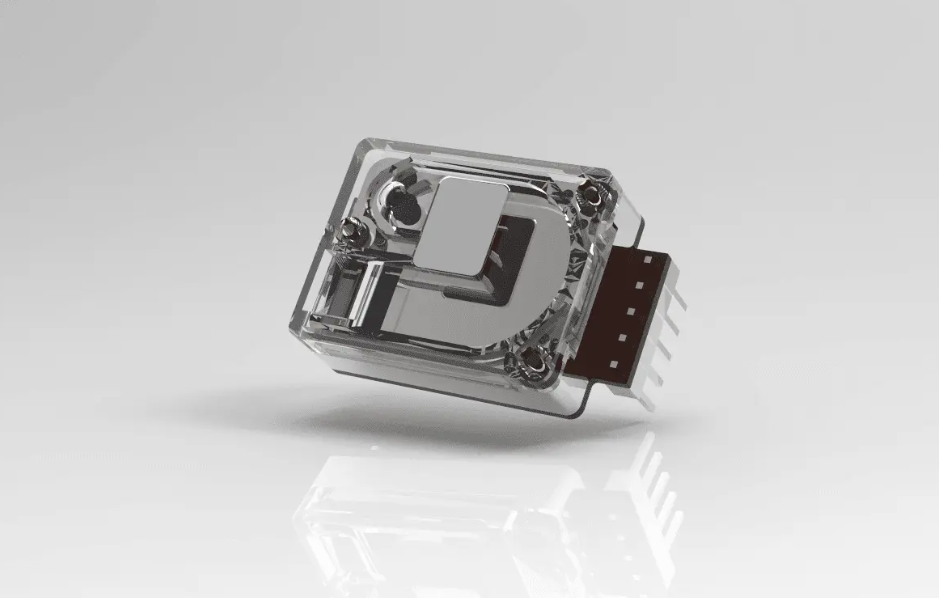
NDIR, or Non-Dispersive Infrared, is a gas sensing technology that measures gas concentration based on the absorption of infrared (IR) radiation by gas molecules. Certain gases, including carbon dioxide, have unique absorption characteristics at specific infrared wavelengths. When infrared light passes through a gas sample, part of the light is absorbed by the gas molecules. The amount of absorbed energy is directly related to the concentration of the gas.
An NDIR gas sensor uses this principle to calculate CO₂ levels with high accuracy. The sensor is typically equipped with:
An infrared light emitter
An infrared detector
An optical filter
A gas chamber (also called a gas cell)
Signal-processing electronics
The performance of an NDIR CO₂ sensor depends heavily on the quality of these components, especially the infrared source and detector. Advanced NDIR sensors are designed to provide stable and repeatable measurements over long operating periods, even in challenging environmental conditions.
Unlike chemical or electrochemical sensors, NDIR sensors do not rely on consumable materials or chemical reactions. This gives them a longer lifespan and makes them particularly suitable for continuous monitoring applications.
The working principle of an NDIR CO₂ sensor is based on infrared absorption spectroscopy. When infrared light at a specific wavelength passes through a gas sample, CO₂ molecules absorb part of the light energy. By measuring the reduction in light intensity, the sensor determines the gas concentration.
The measurement process typically follows these steps:
An infrared light source emits broadband infrared radiation into the gas chamber.
As the infrared light travels through the chamber, CO₂ molecules absorb light at characteristic wavelengths.
Optical filters ensure that only specific wavelengths—those relevant to CO₂ absorption—reach the detector.
The infrared detector measures the remaining light intensity after absorption.
The sensor electronics analyze the signal and calculate the CO₂ concentration based on calibrated reference values.
Because the absorption wavelength of CO₂ is well-defined, NDIR sensors achieve high selectivity, meaning they are largely unaffected by other gases or environmental contaminants.
NDIR CO₂ gas sensors offer a range of features that make them suitable for both commercial and industrial applications.
The core advantage of NDIR technology is its use of infrared absorption without dispersive elements such as prisms or diffraction gratings. This simplifies the optical design while maintaining excellent measurement accuracy and selectivity.
Most NDIR CO₂ sensors are designed for straightforward installation, with compact form factors and standard electrical interfaces. They can be easily integrated into existing systems such as HVAC controllers, building management systems (BMS), or standalone air quality monitors.
NDIR sensors have an exceptionally long operating life because they do not rely on chemical reactions or consumable sensing elements. After undergoing strict reliability and durability testing, many NDIR CO₂ sensors can operate continuously for 10 years or more.
Advanced NDIR sensors support automatic baseline calibration (ABC). This function periodically recalibrates the sensor based on expected minimum CO₂ levels, ensuring long-term accuracy without manual intervention.
Because NDIR sensors do not degrade chemically, they require minimal maintenance. This significantly reduces operating costs, especially in large-scale or hard-to-access installations.
NDIR sensors are highly sensitive and selective to carbon dioxide. They can detect small changes in concentration, making them ideal for indoor air quality monitoring and precise process control.
Modern NDIR CO₂ sensors are optimized for energy efficiency. Low power consumption makes them suitable for battery-powered devices, wireless sensor networks, and smart building applications.
NDIR CO₂ sensors are available in a wide range of measurement capacities. Standard models typically measure up to 5,000 ppm, while customized versions can exceed 10,000 ppm or even higher, making them suitable for industrial and agricultural environments.
Temperature fluctuations can affect gas measurement accuracy. NDIR sensors incorporate full-range temperature compensation algorithms to ensure stable and reliable readings across varying environmental conditions.
Dual-channel NDIR sensors use two optical paths: a measurement channel and a reference channel. This design compensates for aging of the infrared source and contamination of optical components, ensuring consistent accuracy over time.
NDIR CO₂ gas sensors are used across a wide range of environments due to their robustness and precision.
In fresh air systems, NDIR sensors monitor indoor CO₂ levels to ensure adequate ventilation. Demand-controlled ventilation (DCV) systems rely on CO₂ data to adjust airflow, improving comfort while reducing energy consumption.
Modern HVAC systems use NDIR CO₂ sensors to optimize air exchange rates. By supplying fresh air only when needed, buildings can significantly reduce heating and cooling costs while maintaining healthy indoor air quality.
In agriculture, CO₂ concentration directly affects plant growth and animal health. NDIR sensors are widely used in greenhouses, livestock facilities, and controlled-environment agriculture to maintain optimal CO₂ levels.
Industrial processes often generate or consume CO₂. NDIR sensors provide continuous monitoring to ensure process efficiency, regulatory compliance, and workplace safety, particularly in enclosed or high-risk environments.
NDIR CO₂ sensors play an important role in environmental monitoring, including air quality assessment, emissions tracking, and climate research. Their accuracy and stability make them suitable for long-term data collection.
An NDIR gas sensor consists of several key components, each playing a critical role in accurate gas detection.
The infrared source emits broadband IR radiation. Common sources include incandescent lamps and infrared LEDs. The stability and lifetime of this source directly affect sensor performance.
The gas cell is the chamber where the target gas interacts with the infrared light. High-quality gas cells feature reflective inner surfaces to increase the optical path length and improve measurement sensitivity.
Optical filters allow only specific wavelengths of infrared light to reach the detector. One filter is tuned to the absorption wavelength of CO₂, while another acts as a reference.
Detectors measure the intensity of infrared light after it passes through the gas cell. Dual-wavelength designs use two detectors to enhance accuracy and stability.
The electronics process detector signals, apply calibration algorithms, compensate for temperature variations, and output the final gas concentration value.
A common and highly effective design is the single light source, dual-wavelength NDIR sensor. This configuration uses one infrared source and two detectors, each paired with a different optical filter.
Measurement Channel: Detects infrared light absorbed by CO₂
Reference Channel: Detects infrared light unaffected by CO₂
The difference between these two signals is used to calculate gas concentration. Because the reference channel automatically compensates for light source aging and contamination, dual-wavelength sensors provide excellent long-term stability.
NDIR spectroscopy is widely used to detect gases such as carbon dioxide, nitrogen dioxide, sulfur dioxide, and others. Many of these gases can be hazardous at high concentrations, making reliable detection essential in industrial and safety-critical environments.
The term “non-dispersive” refers to the fact that NDIR sensors do not use dispersive optical elements like prisms or diffraction gratings. Instead, wavelength selectivity is achieved using optical filters.
Most NDIR sensors employ:
A broadband infrared light source
A reflective gas chamber
Optical filters for wavelength selection
Infrared detectors
Signal-processing electronics
Because each gas absorbs infrared energy at a specific wavelength, NDIR sensors offer excellent selectivity and resistance to cross-interference.
NDIR CO₂ gas sensors have become a cornerstone of modern gas detection technology. Their ability to deliver accurate, stable, and long-term measurements makes them ideal for applications ranging from indoor air quality control and HVAC optimization to industrial monitoring and environmental protection.
With advantages such as low maintenance, long service life, high sensitivity, and strong resistance to interference, NDIR sensors continue to outperform many alternative technologies. As smart buildings, sustainable agriculture, and environmental awareness expand worldwide, the role of NDIR CO₂ gas sensors will only become more critical.
By providing reliable real-time data, NDIR CO₂ sensors help create safer, healthier, and more energy-efficient environments—supporting both technological progress and environmental responsibility.
Previous: How Smart Sensors Are Transforming Modern Agriculture
Next: How Smart Home Sensors Power Safer, Smarter Living Spaces



