

Carbon dioxide (CO₂) sensors play an essential role in air quality monitoring, environmental control, HVAC systems, and industrial safety. As CO₂ levels rise due to factors such as human activity, industrial emissions, and poor ventilation, accurate monitoring becomes increasingly critical for both environmental and health-related concerns.
Among the technologies used to detect CO₂ concentrations, Non-Dispersive Infrared (NDIR) and electrochemical sensors are the most prevalent. This article explores how these sensors work, particularly the principles behind NDIR sensing, and how each technology translates gas concentration into usable data. With an emphasis on the science behind the sensors, we will also look at their practical applications, accuracy, and why they matter in our daily lives.
NDIR, short for Non-Dispersive Infrared, is the most widely used technology for detecting CO₂ in the air. Its reliability, accuracy, and low maintenance make it ideal for applications ranging from indoor air quality monitoring to industrial process control.
NDIR sensors operate by measuring how much infrared light is absorbed by CO₂ molecules. The principle is grounded in the fact that each gas absorbs light at specific wavelengths, creating a unique absorption pattern — a kind of spectral fingerprint.
In the case of CO₂, it absorbs infrared light most effectively around 4.26 microns in the infrared spectrum. NDIR sensors utilize this characteristic to detect and measure concentrations of carbon dioxide.
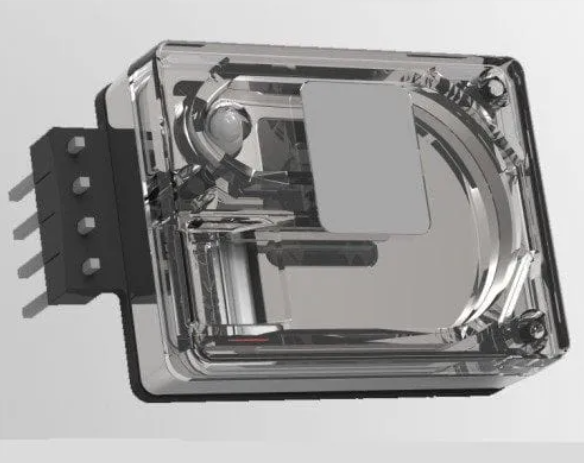
At its core, an NDIR sensor includes several key components:
Infrared (IR) light source
Gas sample chamber (or optical tube)
Optical filter
IR light detector
Here's how these components work together:
Infrared Emission: A lamp emits infrared light, which travels through the chamber containing a sample of ambient air.
Selective Filtering: An optical filter in front of the detector only allows light at the target wavelength (around 4.26 microns) — the specific absorption band of CO₂ — to pass through.
Light Absorption: As CO₂ molecules absorb some of this IR radiation, less light reaches the detector.
Detection and Calculation: The IR detector measures how much light made it through. The more CO₂ present, the more light gets absorbed, and the lower the intensity of the received signal.
The difference between the original IR light emitted and the light detected is directly proportional to the concentration of CO₂ in the air. This method is highly selective because of CO₂’s unique absorption pattern.
To appreciate how NDIR works, it's useful to understand how molecules interact with light. Each type of molecule absorbs light at specific frequencies based on its atomic structure. For instance, a carrot appears orange because it reflects orange wavelengths and absorbs others. Similarly, CO₂ molecules "absorb" specific wavelengths in the infrared spectrum.
Even though we cannot see infrared light with our eyes, detectors in NDIR sensors can measure the intensity of light that passes through a gas sample. This principle allows the sensor to identify not just the presence of CO₂, but its concentration.
While NDIR technology is widely used, electrochemical sensors provide an alternative method for CO₂ detection. These sensors detect changes in electrical conductivity or current caused by a chemical reaction when CO₂ interacts with the sensor's internal elements.
Here’s a breakdown of how electrochemical CO₂ sensors work:
Chemical Reaction: When CO₂ enters the sensor, it reacts with a chemical solution or material inside.
Electrical Change: This reaction alters the electrical characteristics of the sensor — either generating a new current or changing the flow of an existing one.
Signal Interpretation: The magnitude and nature of this electrical change correspond to the CO₂ concentration in the air.
While electrochemical sensors are less common for CO₂ than for gases like carbon monoxide or ozone, they are still used in specialized applications where compact form factor and low power consumption are priorities.
Feature | NDIR Sensors | Electrochemical Sensors |
Detection Principle | Light absorption at specific IR wavelengths | Electrical change due to chemical reaction |
Selectivity | Highly selective for CO₂ | May be affected by cross-sensitivity to other gases |
Accuracy | High | Moderate |
Power Consumption | Moderate | Low |
Cost | Higher | Lower |
Lifespan | 5–10 years or more | 2–3 years |
Typical Applications | Air quality monitors, HVAC, laboratories | Portable devices, wearables, low-power environments |
While NDIR sensors inherently produce analog signals (in microvolt ranges), many models integrate analog-to-digital converters on their printed circuit boards (PCBs). These digital outputs are typically formatted for communication protocols such as:
UART (Serial)
RS-485
I2C or SPI
Digital outputs make integration with microcontrollers like Arduino or Raspberry Pi much easier. These platforms can interpret the data to display real-time CO₂ levels or trigger events such as alarms or ventilation systems.
This makes NDIR sensors not just effective but also flexible for developers building smart home systems, greenhouse monitors, or classroom ventilation monitors.
One of the advantages of NDIR sensors is their long-term stability. However, they still require periodic calibration to maintain accuracy. Two main calibration methods are used:
Manual Calibration: Involves exposing the sensor to a known concentration of CO₂ (typically fresh outdoor air at 400 ppm) and adjusting the reading accordingly.
Automatic Baseline Calibration (ABC): Some sensors automatically recalibrate over time by assuming the lowest CO₂ reading over a period (e.g., 7 days) represents fresh air.
Electrochemical sensors, on the other hand, are typically factory-calibrated and have shorter calibration cycles due to drift over time.
Monitoring CO₂ indoors has become increasingly important, especially in schools, offices, and homes. High CO₂ levels can cause:
Headaches
Drowsiness
Reduced concentration
Poor decision-making
Building management systems (BMS) often use NDIR sensors to optimize HVAC operation based on CO₂ levels, improving both energy efficiency and occupant comfort.
Maintaining optimal CO₂ levels in greenhouses promotes plant growth. CO₂ sensors help regulate supplemental CO₂ injection, ensuring conditions remain ideal for photosynthesis without overuse.
In industrial settings, CO₂ sensors are used to monitor processes involving fermentation, combustion, or dry ice storage. High concentrations can be dangerous, so accurate detection is essential for worker safety and regulatory compliance.
CO₂ levels in vehicle cabins are monitored to manage air recirculation and ensure fresh air intake, especially in long-haul trucks, airplanes, and public transport.
With the rise of smart home ecosystems, compact and affordable CO₂ sensors are increasingly embedded in connected devices. These provide real-time air quality data that can be accessed remotely and used to automate ventilation or air purification.
With increasing global awareness of indoor air quality and environmental issues, the demand for accurate, low-cost CO₂ sensors is rapidly growing. Trends include:
Miniaturization: Sensors are becoming smaller and more integrated for mobile and wearable devices.
Wireless Integration: CO₂ sensors are now commonly embedded in Wi-Fi or Bluetooth-enabled systems.
AI & Data Analytics: Sensors paired with AI-driven analytics can predict trends, detect anomalies, and trigger preventative actions.
Environmental Monitoring Networks: Cities are deploying sensor networks for large-scale CO₂ and pollution tracking to support smart urban planning.
CO₂ sensors — especially those using NDIR and electrochemical technologies — are critical tools in today’s increasingly air-quality-conscious world. By leveraging the unique properties of CO₂ and translating them into readable signals, these sensors empower industries, institutions, and individuals to make informed decisions about ventilation, safety, and environmental health.
Whether you’re managing a high-tech smart building or designing a low-power IoT device, understanding how CO₂ sensors work and what type to use is key to building efficient, responsive systems that protect health and improve quality of life.
As the world continues to prioritize sustainability and public health, CO₂ sensors will remain at the heart of monitoring and managing the invisible — yet vital — air we breathe.
Previous: Understanding the Working Principle of Electrochemical Formaldehyde Sensors
Next: The Importance of Indoor Air Quality and How Air Sensors Are Transforming Our Living Spaces