
Our Products
Our Applications
News
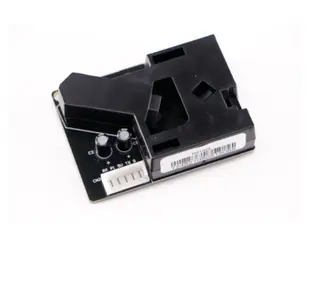
- Dec 30, 2025Infrared dust sensors are essential tools for real-time air quality monitoring, detecting particulate matter (PM1.0, PM2.5, PM10) with compact, low-power, and cost-effective designs. Using optical scattering of infrared light, these sensors measure airborne particles, providing critical data for environmental monitoring, industrial safety, indoor air quality, and smart city applications. While not replacing laboratory-grade instruments, they enable trend analysis, alerts, and regulatory compliance....
- Dec 26, 2025PM2.5 particle sensors are critical tools for monitoring fine particulate matter in air, a major contributor to respiratory and cardiovascular health risks. These sensors detect particles smaller than 2.5 micrometers using technologies such as laser scattering and provide real-time data for urban, industrial, indoor, and healthcare environments. Compact, cost-effective, and increasingly IoT-enabled, PM2.5 sensors support smart city initiatives, environmental compliance, and public health protection....
- Dec 23, 2025Air quality detection sensors play a critical role in monitoring environmental pollution and protecting public health. These sensors measure key air pollutants such as particulate matter, carbon dioxide, carbon monoxide, volatile organic compounds, and ozone, providing accurate, real-time data for analysis and control. Widely used in smart cities, industrial facilities, commercial buildings, and residential environments, air quality sensors support improved ventilation, energy efficiency, and regulatory...
- Dec 19, 2025Introduction Smart home sensors are often overlooked when people think about home automation, yet they are the true backbone of any intelligent living environment. While smart lights, thermostats, locks, and appliances tend to receive most of the attention, it is sensors that give these devices awareness and purpose. Acting as the eyes, ears, and sometimes even the “nervous system” of a smart home, sensors continuously monitor environmental conditions and human activity, enabling automated...
- Dec 15, 2025Introduction As concerns over air quality, energy efficiency, and workplace safety continue to grow, the demand for accurate gas detection technologies has increased significantly. Carbon dioxide (CO₂), while naturally present in the atmosphere, can become harmful at elevated concentrations, particularly in enclosed or poorly ventilated environments. Excessive CO₂ levels may affect human health, reduce cognitive performance, and signal inefficiencies in ventilation systems. To address these challenges,...
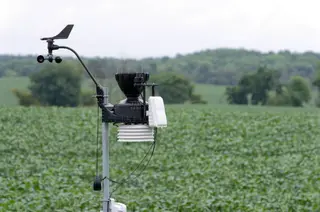
- Dec 12, 2025Introduction Agriculture is undergoing a historic transformation. As global food demand rises and climate conditions become increasingly unpredictable, farmers are turning to modern technologies to improve efficiency, productivity, and sustainability. One of the most essential advancements driving this transformation is the widespread adoption of smart sensors. From monitoring soil conditions to tracking weather patterns and controlling greenhouse environments, sensors are reshaping how farmers...
- Dec 08, 2025Introduction Particulate Matter (PM) has increasingly become one of the most scrutinized air pollutants of the modern era. As global conversations grow louder around pollution, climate change, and public health, PM stands out because of its direct, measurable, and severe impacts on the human body. Defined by its small size and ability to enter the respiratory system, PM is linked to a wide range of illnesses—from asthma and chronic obstructive pulmonary disease (COPD) to lung cancer and cardiovascular...
- Dec 05, 2025Introduction Indoor air quality has become a major health priority in homes, offices, and public buildings. With individuals spending the majority of their time indoors, the quality of the air we breathe can significantly influence our comfort, well-being, and long-term health. Among the many pollutants that circulate inside modern environments, volatile organic compounds (VOCs) stand out as some of the most widespread and potentially harmful. VOCs are gases emitted from various solids and liquids,...
- Dec 02, 2025Introduction Air pollution is one of the most pervasive environmental threats affecting human health and the planet. While gases like carbon monoxide (CO) and nitrogen dioxide (NO₂) receive much attention, fine particulate matter, known as PM2.5, is particularly insidious. PM2.5 particles are so small—measuring 2.5 micrometers or less in diameter, roughly 30 times smaller than the width of a human hair—that they can bypass many of the body’s natural defenses, penetrate deep into...
- Nov 28, 2025Introduction Air pollution is a global concern that affects both human health and the environment. Among the different types of pollutants, particulate matter (PM) is particularly dangerous due to its microscopic size and ability to penetrate deep into the lungs and bloodstream. Monitoring particulate matter is crucial for protecting public health, improving indoor air quality, and even optimizing engine performance in vehicles equipped with diesel particulate filters (DPFs). But how exactly do...
- Nov 25, 2025Introduction Air pollution has become one of the most urgent global environmental and public health challenges of the 21st century. As urbanisation accelerates and industrial activities expand, more people are exposed to airborne particles that pose serious health risks. Among the many pollutants found in the atmosphere, particulate matter (PM)—especially PM10 and PM2.5—has attracted significant attention. According to the World Health Organization (WHO), particulate matter affects more...
- Nov 22, 2025Introduction Particulate matter, particularly PM2.5, has increasingly become a pressing concern in the automotive industry, both in manufacturing plants and repair workshops. PM2.5 refers to airborne particles with diameters of 2.5 micrometers or smaller, roughly 30 times thinner than a human hair. Their small size allows them to penetrate deep into the lungs, bypassing the body’s natural defenses such as the nasal passage and mucociliary clearance mechanisms. Once lodged in the alveoli, these...